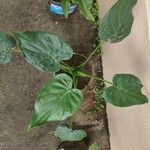
Alocasia cucullata
Buddha's hand · Chinese Taro · Chinese ape · Hooded dwarf elephant ear · Tiny dancer
Description
Source: leafsnapAlocasia cucullata, commonly known as Chinese taro or Buddha's hand, is a tropical plant native to Southeast Asia. Belonging to the Araceae family, it is prized as an ornamental plant for its large, attractive leaves. These heart-shaped leaves, marked by prominent veins, can grow up to 30 cm long. The plant itself can reach a height of up to 1 meter and thrives in moist, well-drained soil, preferring partial shade or filtered sunlight. Alocasia cucullata is often grown as an indoor houseplant but can also flourish outdoors in warm climates. It requires regular watering, though care must be taken to avoid overwatering, which can cause root rot. The plant is generally resistant to major pests and diseases, although dry air can attract spider mites. Overall, Alocasia cucullata is an easy-to-care-for tropical houseplant that brings a touch of exotic beauty wherever it is placed.
🌳 Chinese taro thrives as an ornamental plant in shade gardens with rich soil. It's also a great addition to pollinator-friendly gardens, thanks to its unique flowers. These flowers have the remarkable ability to generate heat, releasing a strong fragrance that attracts beneficial insects. This natural process enhances pollination when the flowers are in full bloom.
🎭 Fabulous, extraordinary, divine, hopeful.
Care Guide
💧 Water Every 7 days
Chinese taro thrives in environments with high humidity and consistent moisture, requiring soil that remains evenly moist but not waterlogged. To maintain its lush foliage, it's best to water it twice a week. This plant prefers dappled light conditions and flourishes as an evergreen, benefiting from high humidity to display its leaves year-round.
How should I water my Chinese taro plant?
There are several ways to water your Chinese taro. If you have a small potted plant indoors, you can take it to the kitchen sink and use the faucet to add water until it starts to drain out of the bottom. However, avoid doing this in cold weather as it could harm the roots. If your tap water has high levels of fluorine, chlorine, or salts, consider using rainwater or lake water instead. Additionally, you can also water your Chinese taro using a watering can, hose, or any other watering tool that you prefer.
What should I do if I give my Chinese taro plant too much or too little water?
If you realize that your Chinese taro is not getting enough water, the first thing you should do is water it thoroughly until excess water drains out of the container. If you are growing it outside, make sure the soil is completely moist. On the other hand, if your Chinese taro is getting too much water, start by watering it less frequently. It's also important to consider the soil and container in which your plant is growing. If the soil is compacted or the container doesn't have good drainage, your plant is likely to be overwatered again. To fix this, transfer your plant to looser soil or a container with better drainage. Additionally, check the location of your plant. If it's in a closed-off area, consider moving it near a window or door to improve ventilation. Keeping your plants in a well-ventilated area can help prevent overwatering to some extent.
How often do I need to water my Chinese taro?
The Chinese taro plant does not need to have consistently moist soil. In fact, it is better to let the soil dry out between waterings. If you have Chinese taro plants in containers, you can determine when to water them by checking how dry the soil is inside the container. For example, if the top half of the soil in your container is dry, it's time to water. You can check this by feeling the soil with your fingers or with a soil moisture meter. If you are growing Chinese taro outdoors, you can plan to water them once every other week, unless there has been recent rainfall.
How much water does my Chinese taro plant need?
To rehydrate the soil around your Chinese taro's root, wait until the top half of the soil is dry. Then, add enough water to make the soil moist again. The amount of water needed depends on the size of the container and the plant itself. For a small Chinese taro in a small to medium-sized container, one to two cups of water should be enough. Increase the volume of water for larger plants. You can check if the soil is moist enough by inserting your finger or a trowel into the soil. Alternatively, water until you see excess water draining from the container's bottom holes.
How can I know if I'm giving enough water to my Chinese taro?
Both overwatering and underwatering can negatively affect the health of your Chinese taro. However, they do present with subtly different signs. If your Chinese taro doesn't receive enough water, its leaves may turn yellow. Additionally, underwatering may cause the leaf margins to become brown and brittle. On the other hand, if you overwater your Chinese taro, you may notice both yellow and brown marks on the leaves. Overwatering can also result in diseases like root rot, which may be visible on your plant. But don't worry, if you are familiar with the signs of overwatering and underwatering, you have a good chance of resolving both issues.
☀️ Light Partial sun
Chinese taro grows best in places that get regular but not continuous sunlight. It can tolerate conditions from full-day sun to very little light. However, some gentle sun is necessary for strong, healthy growth. Too much or too little light can impair its development and reduce its vigor.
What are the sunlight requirements for Chinese taro?
Chinese taro requires partial sun, meaning about 3-6 hours of sunlight, but it can also thrive in full sun or full shade, which is above 6 hours of sunlight. The plant adapts well to various light conditions, either all day sunlight or very minimal sunlight, yet moderate sun exposure is crucial for its healthy, vigorous growth. Excessive or insufficient light can adversely affect the plant's development. It's important to watch how sunlight moves through your garden and choose spots that provide a balance of light and shade for the plants, ensuring their happiness.
How can artificial lighting be used for Chinese taro?
Artificial lighting provides a vital solution for Chinese taro especially when natural sunlight is insufficient, such as during winter or in less sunny spaces. Optimal growth is promoted with adequate lighting. LED lights are preferred for indoor plant lighting as they can be customized to deliver specific wavelengths needed by the plants. Full sun plants need 30-50W/sq ft, partial sun plants 20-30W/sq ft, and full shade plants 10-20W/sq ft of artificial light. The light source should be placed 12-36 inches above the plant, mimicking natural sunlight, and the duration should match the length of natural daylight hours, typically 8-12 hours per day.
What are the symptoms of inadequate light for Chinese taro?
Symptoms of light deficiency in Chinese taro are not always noticeable, but inadequate conditions can stunt the plant's growth. Poor light can lead to slower or no new growth, as the plant enters a survival mode causing leaf production to halt or stop. Leaves may develop lighter colors or appear pale due to insufficient sunlight affecting chlorophyll and nutrient absorption. Other symptoms include small leaves, chlorosis (loss of leaf green color), sunscald (damage from intense sunlight), leaf curling as a defense mechanism against extreme sunlight, wilting due to increased water loss, and leaf scorching from excessive sunlight.
How should Chinese taro be cared for to optimize light exposure?
To optimize light exposure for Chinese taro, indoor plants should be gradually moved to sunnier spots each week until they receive 3-6 hours of direct sunlight daily, allowing them to adapt to changing light conditions. For plants that are large or not easily movable, considering the use of artificial light like desk or ceiling lamps for at least 8 hours daily, or professional plant grow lights might be beneficial. Outdoors, plants should be gradually moved to sunnier locations while avoiding sudden changes in light intensity to prevent sunburn. Reducing obstructions like pruning nearby trees helps increase sunlight exposure. For smaller plants, transplanting during their dormant period in late winter or early spring to a location with ample sunlight and good drainage can improve their condition. Note that parts of the plant affected by insufficient sunlight may not fully recover, but new growth after increasing light exposure will be healthy.
🌡️ Temperature 20–37.8°C
The Chinese taro plant is native to tropical areas, so it needs a warm, humid environment to do well. It prefers temperatures from 68 to 100 ℉ (20 to 38 ℃), with about 82 ℉ (28 ℃) being ideal. In cooler conditions the plant can go dormant, while too much heat may stress the foliage. In winter, it is advised to keep temperatures above 60 ℉ (15.5 ℃) to prevent leaf drop and root rot.
What are the essential growing conditions for Chinese Taro?
The Chinese Taro plant, or Alocasia cucullata, thrives in tropical climates and requires a warm and humid environment. Its preferred temperature range is between 68 to 100°F (20 to 38°C), with an optimal temperature of around 82°F (28°C). It's important to keep the plant in temperatures above 60°F (15.5°C) during winter to prevent leaf drop and root rot. Since Chinese Taro is sensitive to cold, it is advisable to bring outdoor plants indoors during autumn and place them near a bright window, while making sure they are not too close to heaters to avoid stress on the plant.
How does low temperature affect Chinese Taro and what are the solutions?
Chinese Taro is not tolerant of low temperatures and shows optimal growth above certain warmth thresholds. During winter, keeping it above specified warmer temperatures prevents stress. If the temperature falls excessively, leaf color may lighten before turning brown or black post-frost, with wilting or drooping likely indicating cold damage. To manage frost damage, it's recommended to trim off the damaged parts and move the plant to a warmer indoor space, ideally near a south-facing window for ample sunlight. Avoid placing the plant near heat sources like heaters or air conditioning vents which could dry out the plant excessively.
What should be done if Chinese Taro is affected by high temperatures?
During the summer, it's important to keep Chinese Taro below a maximum appropriate temperature to prevent the leaves from lightening in color and becoming susceptible to sunburn. If the plant experiences excessively high temperatures, the recommendation is to trim away any sunburned or dried-up parts. Relocating the plant to a shaded area during the peak sun hours and ensuring the soil remains moist with watering in the morning and evening can help mitigate the stress from high temperatures.
💨 Humidity high (>60%)
This plant needs special care because it loves high humidity levels of 60-80% or more. The best way to achieve this is by placing a humidifier near the plant. Daily misting is also essential! Make sure the room has good ventilation.
🪴 Soil 5-7
🌱 Fertilizer
Chinese taro needs the most fertilizer during its active growth period, which takes place mainly in spring, summer, and early autumn. Fertilizing is needed to supply essential nutrients the soil may lack, encouraging healthy root and stem growth and the attractive foliage that is a defining characteristic of this plant.
Why should I put fertilizer on my Chinese taro plant?
Plants, including Chinese taro, need soil nutrients for healthy growth. However, there is no guarantee that the soil will have all the necessary nutrients. Fertilization and soil amendments are important to provide the basic and specific nutrients needed by your garden plants. For the Chinese taro, fertilizer is needed to support the development of its roots and stems throughout the growing season. Fertilization also helps the plant produce attractive leaves, which are key to its ornamental appeal.
When should I fertilize my Chinese taro for the best results?
During the active growth phase of a Chinese taro, which typically occurs during spring, summer, and early fall, it requires the highest amount of fertilizer. After winter, you should feed your Chinese taro once every two to four weeks until fall arrives. During fall, you can gradually reduce the amount of fertilizer given until you stop feeding entirely in preparation for winter when the Chinese taro has minimal growth.
When is the best time to not fertilize my Chinese taro?
For most of the year, including spring, summer, and most of fall, you should regularly feed your Chinese taro. The only exception is if you notice your Chinese taro has received too much fertilizer or if you have fertilized it incorrectly, causing fertilizer burn or another issue. You'll need to fix this before resuming the regular feeding schedule. The only time you should not fertilize a Chinese taro is during winter, especially if it is grown indoors in a cold area. In winter, the plant enters a dormant phase and doesn't need or benefit from feeding. In fact, feeding it during this phase is likely to cause fertilizer burn.
What kind of fertilizer should I use for my Chinese taro?
When fertilizing Chinese taro, it is important to provide a specific blend of nutrients, with each nutrient present in relatively low amounts. An ideal fertilizer will have an N-P-K ratio of 3-1-2. However, in some cases, a general-purpose fertilizer with an even blend of nutrients can also work well. Even when using a balanced fertilizer, it is recommended to keep the ratio number representing the volume of each nutrient at 10 or lower. You can choose between using a granular or liquid-based fertilizer. If you opt for a liquid-based fertilizer, it is often best to dilute its strength by half. While there are not many downsides to using granular fertilizer, it is often more practical to use liquid fertilizer, especially if you plan on feeding your Chinese taro while providing water.
How should I add fertilizer to my Chinese taro?
When buying fertilizer for Chinese taro, it's important to follow the application instructions. Typically, you should fertilize just before or while watering the soil to avoid damaging the plant's roots. If you are using slow-release granular fertilizer, sprinkle it on the soil and water immediately. For liquid-based fertilizer, dilute it with water, apply to the soil, and then water a bit more. Diluting the fertilizer by at least half is crucial in spring and fall when the plant's growth is increasing or decreasing.
🪴 Pot & Repot Once a year
Repot Chinese taro in spring or summer once it’s warm enough, choosing a pot slightly larger with good drainage. After repotting, water it thoroughly and set it in bright, indirect light. You can add a moss pole for support as the plant grows.
✂️ Pruning
Chinese taro is known for its lush, heart-shaped leaves and benefits greatly from proper care. To encourage healthy growth and improve air circulation, prune the plant in early spring by removing any spent or damaged leaves. Regular maintenance not only enhances the plant's appearance and vigor but also promotes its overall health.
🌿 Propagating
🐛 Diseases & pets
☠️ Toxicity
Characteristics
- Plant Type
- Herb
- Life Cycle
- Perennial
- Genus
- Alocasia
- Family
- Araceae
- Hardiness Zone
- 9-12
- Mature Height
- 61 cm to 91 cm
- Mature Spread
- 2.13 m
- Leaf Color
- Green
- Leaf Type
- Evergreen
- Flower Color
- White, Yellow, Green
- Flower Size
- 5.08 cm to 6.35 cm
- Bloom Time
- Late spring, Early summer, Mid summer
- Planting Time
- Spring, Summer
- Harvest Time
- Mid summer, Late summer
- Native Area
- Nepal, Sri Lanka, India, Vietnam, Myanmar, Bangladesh, Laos, Thailand, China