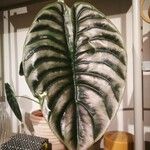
Alocasia cuprea
Giant caladium · Jewel alocasia · Red secret
Description
Source: leafsnapAlocasia cuprea, commonly known as the "Mirror Plant," is a stunning tropical plant belonging to the Araceae family. Native to Southeast Asia, this plant is celebrated for its shiny, metallic-like leaves. The large, heart-shaped leaves are dark green with a coppery sheen on top and deep purple underneath, while the stems boast a coppery hue, adding to its unique visual appeal. The Mirror Plant thrives in bright indirect light and high humidity levels, making it an ideal houseplant for tropical climates or indoor environments in cooler regions. It requires well-draining soil and regular watering, but care must be taken to avoid overwatering, as this can lead to root rot. Indoors, Alocasia cuprea can grow up to 2-3 feet tall, though in its natural outdoor habitat, it can reach heights of up to 6 feet. Additionally, it produces small flowers on long stems that resemble calla lilies. Overall, Alocasia cuprea is a striking addition to any indoor or outdoor garden. Its unique metallic appearance and straightforward care requirements make it a favorite among plant enthusiasts.
Care Guide
💧 Water Every 7 days
Jewel Alocasia thrives in humid environments and prefers balanced moisture levels, although it can tolerate brief dry periods. Watering it weekly helps maintain its health. As an evergreen plant, it needs consistent moisture throughout the year, even during the colder months.
☀️ Light Partial sun
Jewel alocasia originates from habitats like forest understories or rocky sites, where it grows in natural shade. It prefers partial sun but can tolerate full sun or full shade, reflecting its versatile and hardy nature.
🌡️ Temperature 20–37.8°C
Jewel alocasia comes from tropical areas where the climate is generally warm and humid. Consequently, it is suited to high temperatures and humidity. It does not like sudden temperature changes and prefers a consistent temperature, so avoiding temperature fluctuations indoors is important. It typically cannot tolerate cold and needs warmer conditions to grow. If the ambient temperature falls too low, the plant may stop growing or even die.
💨 Humidity high (>60%)
This plant needs special care because it loves high humidity levels of 60-80% or more. The best way to achieve this is by placing a humidifier near the plant. Daily misting is also essential! Make sure the room has good ventilation.
🪴 Soil 5-6
🌱 Fertilizer
Proper fertilization is vital for a Jewel alocasia's health and appearance. Fertilize the Jewel alocasia during summer, repeating the treatment every month throughout the season. Nutrients drive growth and help maintain the plant's parts. Fertilizing improves the Jewel alocasia's flower display, ensuring the best blooms.
🪴 Pot & Repot Once a year
Repot Jewel alocasia in spring or summer once it's warm enough, choosing a pot slightly larger with adequate drainage. After repotting, water thoroughly and place the plant where it will receive bright, indirect light. Consider installing a moss pole to support the plant as it grows.
✂️ Pruning
The Jewel Alocasia is known for its stunning metallic leaves. To keep your plant healthy, prune any yellow or damaged leaves in early spring. Trim crowded stems to improve airflow around the plant. Make sure to use sharp, sterilized tools to prevent the spread of disease. Regularly inspecting and trimming your plant will improve its shape, aesthetics, and overall vitality.
🌿 Propagating
🐛 Diseases & pets
☠️ Toxicity
The dazzling leaves of Red Secret might appear to be wonderful and attractive, but they can be potentially toxic to people and pets. Its foliage contains calcium oxalate crystals that can cause injury and digestive symptoms when ingested.
Characteristics
- Plant Type
- Herb
- Life Cycle
- Perennial
- Genus
- Alocasia
- Family
- Araceae
- Hardiness Zone
- 10-11
- Mature Height
- 91 cm
- Mature Spread
- 76 cm
- Leaf Color
- Brown, Bronze, Purple
- Leaf Type
- Evergreen
- Flower Color
- White, Green
- Flower Size
- 10.16 cm to 15.24 cm
- Bloom Time
- Summer, Early fall
- Planting Time
- Spring, Summer, Autumn
- Harvest Time
- Late summer, Fall