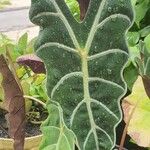
Alocasia longiloba
آلوکازیا لانگیلوبا، بابا آدم لانگیلوبیا، نوعی گوش فیل · Rare Alocasia Amazonica · Elephant's ears · Kris plant · Alocasia longiloba velvety
Description
Source: leafsnapAlocasia longiloba is a tropical plant that belongs to the Araceae family. Native to Southeast Asia, this plant can grow up to 6 feet tall. Its large, arrow-shaped leaves, which are green with prominent veins, can extend to 2 feet in length and are supported by sturdy stems. Alocasia longiloba thrives in warm, humid environments with bright, indirect light. It requires well-draining soil and regular watering, but care must be taken to avoid overwatering, as this can lead to root rot. Often grown as an ornamental houseplant due to its striking foliage, Alocasia longiloba also holds medicinal properties in traditional Southeast Asian medicine. It is used to treat various ailments such as fever, coughs, and headaches. In summary, Alocasia longiloba makes a stunning addition to any indoor garden or tropical landscape. Its unique foliage pattern ensures it will be an eye-catching feature wherever it is planted.
Care Guide
💧 Water Every 7 days
The kris plant, native to humid tropical regions, thrives when its soil is kept evenly moist and can withstand moderate drought. To maintain optimal moisture levels, water it weekly. Additionally, increasing humidity with misting or using pebble trays can promote healthy growth. With this care regimen, your kris plant will stay lush and vibrant throughout its growing season.
☀️ Light Partial sun
Kris plant is native to habitats like forest understories and rocky areas, where it grows in natural shade. It prefers partial sun but can tolerate full sun or full shade, demonstrating its versatility and hardiness.
🌡️ Temperature 20–41.1°C
The Kris plant comes from tropical regions, where the climate is generally warm and humid. As a result, it is well adapted to high temperatures and humidity. It does not tolerate sudden temperature changes and prefers a stable temperature environment, so it is important to avoid temperature fluctuations indoors. It usually cannot withstand cold temperatures and requires higher temperatures for growth. If the environmental temperature drops too low, the plant may stop growing or even die.
💨 Humidity normal (40-60%)
This plant will thrive in moderate humidity, which is probably the level in your home. However, misting it a few times a week can be very beneficial. Make sure the room has good ventilation.
🪴 Soil 5-7
🌱 Fertilizer
Proper fertilization is essential for the Kris plant's health and appearance. Fertilize the Kris plant in summer, repeating the treatment monthly throughout the summer. Nutrients provide the energy for growth and upkeep of the plant's parts. Fertilization improves the Kris plant's flower display, ensuring the best blooms.
🪴 Pot & Repot Once a year
Repot the Kris plant in spring or summer when temperatures are warm enough, choosing a slightly larger pot with good drainage. Water thoroughly after repotting, and place it where it will receive bright, indirect light. Consider adding a moss pole to support the plant as it grows.
✂️ Pruning
Kris plants have broad, arrow-shaped leaves with striking silver veins. To encourage growth and enhance bushiness, prune the plant in early spring. Remove any dead leaves and trim back leggy stems. Be sure to sterilize your tools before pruning to prevent diseases. Pruning not only improves air circulation but also reduces the risk of pests, promoting overall plant health.
🌿 Propagating
🐛 Diseases & pets
☠️ Toxicity
The Tiger Haro is toxic if eaten by dogs, cats or human beings. It will often cause light-headedness and vomiting, as well as other severe gastrointestinal disorders in humans. Keep your children and pets away from this plant, and ensure to contact your veterinarian if any member of your household consumes any part of the plant.
Characteristics
- Plant Type
- Herb
- Life Cycle
- Perennial
- Genus
- Alocasia
- Family
- Araceae
- Hardiness Zone
- 10-13
- Mature Height
- 0.61 m to 1.22 m
- Mature Spread
- 49 cm to 91 cm
- Leaf Color
- Dark Green, Forest Green
- Leaf Type
- Evergreen
- Flower Size
- 5.08 cm to 7.62 cm
- Bloom Time
- Summer, Early fall
- Planting Time
- Spring, Summer, Autumn, Winter
- Harvest Time
- Late summer, Fall
- Native Area
- Malaysia, Indonesia, Cambodia, Vietnam, Singapore, Laos, Brunei, Thailand, China