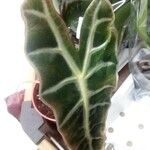
Alocasia sanderiana
الوکازیا · Sander's alocasia · Polly · Elephant ear · African mask
Description
Source: leafsnapAlocasia sanderiana, commonly known as the kris plant or Sander's alocasia, is a plant in the family Araceae. It is endemic to Northern Mindanao in the Philippines, but is commonly grown as an ornamental plant worldwide. It is classified as critically endangered in the wild by the International Union for Conservation of Nature.
🌳 Although mainly recognized for its striking appearance, kris plant has potential beyond mere aesthetics. Scientists are interested in its value for studying plant structural features, such as the waxy, iridescent leaves that might inform materials science. Possibilities still to be fully explored include cosmetic uses, where its distinctive pigments could serve in natural dyes or in creating skin-care products with a natural appeal. While not a mainstream resource at present, the plant’s attraction within scientific circles points to untapped potential.
Care Guide
💧 Water
The Kris plant originates from tropical rainforests and thrives best in evenly moist soil. To maintain optimal moisture levels, it's essential to water it weekly. While the plant can withstand short periods of dryness, it truly flourishes in high humidity, which makes it an excellent choice as an indoor ornamental plant. This kind of care mirrors its natural habitat in the humid understorey of the rainforest.
How should I water my Kris plant?
When it comes to watering your Kris plant, there are several options available. If you have an indoor pot, bringing it to the kitchen sink and using the faucet is a convenient method for small pots. Hold the pot in your hands and stop watering once the water starts flowing through the drainage holes. However, avoid doing this during winter or in cold climates as it can harm the plant's roots. Generally, using the faucet is fine for watering, unless your tap water contains high levels of fluorine, chlorine, or salts. In that case, consider using rainwater or lake water. Additionally, the Kris plant can handle overhead watering or watering directly into the soil, so feel free to use a watering can, hose, or any other tool you prefer.
If I give my Kris plant too much or too little water, what should I do?
If you realize that your Kris plant isn't getting enough water, the first thing to do is to give it some water. Water it deeply until excess water comes out of the drainage hole, or if it's outside, water it until the soil is fully moist. On the other hand, if you notice that your Kris plant is getting too much water, you should start by reducing how often you water it. You should also take a look at the soil and container it's in. If the soil or container doesn't allow for efficient drainage, your plant will likely get overwatered again. To fix this, you can transfer your plant to soil that drains better or a container with larger drainage holes or a more porous material. Additionally, consider the location of your plant. If it's in a spot that doesn't have much ventilation, it's recommended to move it near a window or door to improve airflow. Placing your plants in a well-ventilated area can help prevent overwatering to some extent.
How many times should I water my Kris plant?
The Kris plant does not need constant soil moisture. Instead, it's better to let the soil dry out between waterings. If you grow Kris plants in containers, you can check if it's time to water by feeling how dry the soil is. When about half of the soil in the container is dry, water the plant. You can test this by sticking your finger, a stick, or using a soil moisture meter. If you grow the Kris plant outdoors, you can water it about once every other week, unless it has rained recently.
How much water does my Kris plant need? can be rewritten as: How often do I need to water my Kris plant?
To rehydrate the soil surrounding your Kris plant's roots, start by waiting for the top half of the soil to dry out. Once dry, add enough water to make the soil moist again. The amount of water needed depends on factors such as the size of the container and the plant itself. For small Kris plants in small to medium-sized containers, one to two cups of water should be enough. Adjust the water volume accordingly for larger plants. To ensure proper hydration, you can check the soil by sticking your finger or a trowel into it to feel its moisture level. Alternatively, you can water until you see excess water draining from the bottom of the container.
How can I know if I am giving enough water to my Kris plant?
Both overwatering and underwatering can harm your Kris plant's health, but they display different symptoms. If your plant is not getting enough water, its leaves may turn yellow or have brown, brittle margins. On the other hand, overwatering can cause yellow and brown marks to appear simultaneously on the leaves. Overwatering can even lead to diseases like root rot, which may be visible on your plant. Nonetheless, if you can identify the signs of overwatering and underwatering, you have a good chance of fixing both issues.
☀️ Light Partial sun
The Kris plant grows best in spots with a mix of sun and shade, resembling its native jungle setting. Excessive sun exposure can cause leaf burn, while too little light can result in stunted growth. Throughout its development, it needs steady amounts of moderate sunlight, though it can adjust to lower light conditions.
What are the sunlight requirements for a Kris plant?
Kris plant, or Alocasia sanderiana, thrives in areas that mimic its native jungle habitat, requiring a balance of sun and shade. It should receive about 3-6 hours of sunlight daily, termed as partial sun exposure. Too much sunlight can cause leaf burn, and too little can lead to stunted growth. During its growth stages, consistent exposure to moderate sunlight is necessary, but the plant can adapt to lesser light conditions. It's important to watch how sunlight moves through your garden to choose spots that offer the right balance for your plant.
How can artificial lighting be used for Kris plants?
Indoor Kris plants require adequate lighting, especially when natural sunlight is insufficient. Artificial lights, such as LED lights, are recommended because they can provide the specific wavelengths of light plants need. The requirements vary based on plant type: full sun plants need 30-50W/sq ft, partial sun plants need 20-30W/sq ft, and full shade plants need 10-20W/sq ft of artificial light. The light source should be placed 12-36 inches above the plant, mimicking natural sunlight distance, and the duration should replicate natural daylight hours, usually 8-12 hours per day for most plants.
What are the signs of inadequate lighting for a Kris plant?
When a Kris plant receives inadequate light, several symptoms may occur: New leaves might grow smaller in size, the plant may exhibit leggy or sparse growth, leading to a stretched-out appearance. There could be faster leaf drop as the plant conserves resources, slower or no new growth as the plant enters survival mode, and lighter-colored new leaves indicating a lack of chlorophyll. Excessive sunlight can cause chlorosis, sunscald, leaf curling, wilting, and even leaf scorching, where leaves turn brown and crispy. Recognizing these signs early can help in adjusting light conditions to support the plant's health.
What solutions are available for light-related issues in Kris plants?
To address light-related issues in both indoor and outdoor Kris plants, the following solutions can be implemented: For indoor plants, gradually shift them to sunnier spots each week to receive 3-6 hours of sunlight daily or use artificial light such as desk or ceiling lamps for at least 8 hours daily. For outdoor plants, move them gradually to sunnier locations without causing sunburn. If external factors like trees block sunlight, consider pruning or transplanting the plant during its dormant period. Though parts of the plant affected by inadequate light might not recover, new growth will be healthy with adjusted light exposure.
🌡️ Temperature 20–37.8°C
The Kris plant comes from regions where temperatures range from 68 to 100 °F (20 to 38 °C). It does best in warm, stable conditions. In cold seasons, make sure the temperature does not fall below 68 °F (20 °C) to keep it healthy.
What is the native environment of the Kris plant?
The Kris plant, botanically known as Alocasia sanderiana, is native to environments where temperatures range from 68 to 100 °F (20 to 38 °C). It thrives in warm, consistent climates. During colder seasons, it's important to ensure the temperature does not fall below 68 °F (20 °C) to keep the plant healthy. Kris plants are extremely heat-loving, and exposure to cold temperatures can be detrimental. In autumn, it's advisable to move outdoor-grown Kris plants indoors, placing them near a bright window but away from direct heat sources to maintain appropriate temperatures above 20°C during the winter. Exposure to temperatures approaching 5°C can harm the plant.
How does low temperature affect the Kris plant, and what are the solutions?
Kris plants prefer warm temperatures and do not tolerate low temperatures well. They flourish when temperatures remain above 20°C. During winter, it's vital to keep the plant in conditions warmer than 5°C. Exposure to temperatures below 1°C can cause the leaves to lighten in color, and following frost damage, they may turn brown or black, exhibiting symptoms like wilting and drooping. The remedy for frost damage includes trimming the affected parts and moving the plant indoors to a warmer spot, preferably near a south-facing window to ensure ample sunlight. Additionally, it's important to avoid placing the plant near heaters or air conditioning vents, as these can cause the air to become excessively dry.
What should be done if the Kris plant is exposed to high temperatures?
During summer, it's crucial to ensure the Kris plant is not subjected to temperatures exceeding 38°C. When temperatures go beyond 43°C, the plant's leaves may lighten in color and become more prone to sunburn. To address this, trim away the sunburned and dried-up parts and relocate the plant to a spot where it can be shielded from the harsh midday and afternoon sun. Watering the plant in the morning and evening will help keep the soil adequately moist, which is particularly important during hot periods.
💨 Humidity high (>60%)
This plant needs special care because it loves high humidity levels of 60-80% or more. The best way to achieve this is by placing a humidifier near the plant. Daily misting is also essential! Make sure the room has good ventilation.
🪴 Soil 5-6
🌱 Fertilizer Every 1 month
The Kris plant requires the most fertilizer during its active growth phase, which occurs primarily in spring, summer, and early fall. Fertilization supplies essential nutrients the soil may lack, encouraging healthy root and stem development and the attractive foliage that is a key characteristic of this plant.
Why should I put fertilizer on my Kris plant?
Plants, including the Kris plant, need soil nutrients for growth. However, it's not always guaranteed that the soil will have all the necessary nutrients. Fertilization and soil amendments help ensure that garden plants have the basic and specific nutrients they need. For the Kris plant, fertilizer is important for healthy root and stem development throughout the growing season. Fertilization also contributes to a fantastic set of ornamental leaves, which are a key aspect of its visual appeal.
What is the preferred time to add fertilizer to my Kris plant?
During the active growth phase of a Kris plant, which occurs mainly during spring, summer, and early fall, it requires the most fertilizer. After winter ends, you should feed the plant every two to four weeks until fall. As fall arrives, gradually decrease the fertilization rate until you stop completely in preparation for winter, when the plant's growth slows down significantly.
When should I not put fertilizer on my Kris plant?
For most of the year, including spring, summer, and most of the fall, it's important to regularly feed your Kris plant. However, there are a couple of exceptions to this. If you notice that your plant has received too much fertilizer or if you've made a mistake in fertilizing it which has caused issues like fertilizer burn, you'll need to address those problems before resuming regular feeding. The only season when you should avoid fertilizing your Kris plant is winter. If you're growing it indoors in a cold winter area, the plant will go dormant during this time. Feeding the plant during its dormant phase is not necessary or beneficial, and can actually cause fertilizer burn.
What kind of fertilizer does my Kris plant require?
The fertilizer for a Kris plant contains a specific blend of nutrients, but each nutrient is present in low amounts. The ideal fertilizer will have a ratio of 3 parts nitrogen, 1 part phosphorus, and 2 parts potassium (N-P-K ratio of 3-1-2). However, a general-purpose fertilizer with an even blend of nutrients can also work well in some cases. When using any fertilizer, including a balanced one, the ratio representing the volume of each nutrient should be 10 or lower. You can choose to use either granular or liquid-based fertilizer. If you opt for liquid fertilizer, it is often recommended to dilute its strength by half. Granular fertilizer does not have many drawbacks, but using liquid fertilizer, especially when watering your Kris plant, is usually the most sensible option.
How do I make my Kris plant grow better?
When purchasing fertilizer for your Kris plant, it is important to follow the instructions provided. For Kris plants, it is best to fertilize just before or during a watering session to prevent damage to the roots. If using a slow-release granular fertilizer, sprinkle it on the soil and then water immediately. If using a liquid-based fertilizer, dilute it with water, apply it to the soil, and then supply additional water. Particularly in spring and fall, when the plant's growth is changing, it is crucial to dilute the fertilizer by at least half.
🪴 Pot & Repot Once a year
Repot the Kris plant in spring or summer when temperatures are warm enough, choosing a slightly larger pot with good drainage. Water thoroughly after repotting, and place it where it will receive bright, indirect light. Consider adding a moss pole to support the plant as it grows.
✂️ Pruning
Kris plant has distinctive arrow-shaped leaves with silver veins and benefits from pruning in early spring. To promote new growth and better airflow, remove any yellowing leaves, trim back faded flower stalks, and cut leggy stems. Make sure to use clean, sharp tools to prevent the spread of disease.
🌿 Propagating
🐛 Diseases & pets
☠️ Toxicity
Characteristics
- Plant Type
- Herb
- Life Cycle
- Perennial
- Genus
- Alocasia
- Family
- Araceae
- Hardiness Zone
- 10-11
- Mature Height
- 61 cm
- Mature Spread
- 49 cm
- Leaf Color
- Dark Green, Forest Green
- Leaf Type
- Evergreen
- Flower Color
- Green
- Flower Size
- 10.16 cm to 15.24 cm
- Bloom Time
- Mid spring, Late spring, Summer
- Planting Time
- Spring
- Harvest Time
- Late spring, Summer, Fall
- Native Area
- Philippines