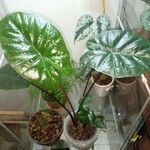
Alocasia sarawakensis
Yucatan princess
Description
Source: leafsnapAlocasia sarawakensis is a species of flowering plant in the elephant ear genus Alocasia (family Araceae), native to Borneo. Unusually for an aroid, it is a freshwater swamp forest obligate, preferring well-lit situations. A large species, it can reach 8 ft (2.4 m). A cultivar, 'Yucatan Princess', is commercially available.
Care Guide
💧 Water Every 2-3 days
Alocasia sarawakensis is a highly adaptable plant that thrives in average to wet conditions. It can even tolerate some standing water. To ensure its optimal growth, keeping the soil's surface consistently moist at all times is recommended. In a low-humidity environment, you can expect to water this plant every 2-3 days to maintain the necessary moisture levels. By providing adequate watering and keeping the soil consistently moist, you can support the healthy development of Alocasia sarawakensis. It is important to consider the plant's specific needs and adjust the watering frequency accordingly, considering its environment's humidity levels.
☀️ Light Partial sun
Yucatan Queen Elephant Ear grows naturally in settings like forest understories or rocky locations, where it gets natural shade. It prefers partial sun but can tolerate full sun or full shade, reflecting its adaptable and hardy character.
🌡️ Temperature 20–37.8°C
Yucatan Queen Elephant Ear comes from tropical areas where the climate is typically warm and humid. As a result, it is well suited to high temperatures and humidity. It does not tolerate sudden temperature changes and prefers a stable thermal environment, so avoiding indoor temperature fluctuations is important. It generally cannot withstand cold and requires relatively high temperatures for growth. If the surrounding temperature falls too low, the plant may stop growing or even die.
💨 Humidity
🪴 Soil 6-7
🌱 Fertilizer
Yucatan Queen elephant ear needs the most fertilizer during its active growth period, which takes place mainly in spring, summer, and early fall. Fertilizing provides essential nutrients that the soil may lack, supporting healthy root and stem development and attractive foliage, a key feature of this plant.
🪴 Pot & Repot
✂️ Pruning
Pruning your Alocasia Sarawakensis is as simple as removing fading leaves. It is natural for leaves to wilt and die as new ones emerge.
🌿 Propagating
🐛 Diseases & pets
☠️ Toxicity
This plant is very poisonous and may be lethal if consumed. It also irritates the skin severely. The whole plant is toxic and contains calcium oxalate crystals. This material is poisonous and feels like little needles are digging into the lips, tongue, and throat. It is poisonous by ingestion, dermatitis, and eye damage.
Characteristics
- Plant Type
- Herb
- Life Cycle
- Perennial
- Genus
- Alocasia
- Family
- Araceae
- Hardiness Zone
- 10-11
- Mature Height
- 2.13 m
- Mature Spread
- 2.13 m
- Leaf Color
- Dark Green, Forest Green
- Leaf Type
- Evergreen
- Flower Color
- White
- Flower Size
- 5.08 cm to 7.62 cm
- Bloom Time
- Summer, Early fall
- Planting Time
- Spring, Summer, Autumn
- Harvest Time
- Late summer, Fall
- Native Area
- Tropical and subtropical regions of Asia, eastern Australia