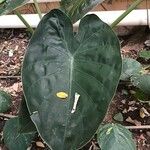
Alocasia wentii
Alocasia Elephant Ears · Hardy elephant ear
Description
Source: leafsnapAlocasia wentii, also known as the Giant Taro or Elephant Ear plant, is a tropical species native to the Philippines. Belonging to the Araceae family, this plant is known for its large, glossy, heart-shaped leaves, which can grow up to 3 feet long and 2 feet wide. The dark green leaves are marked by prominent veins and have slightly wavy edges. This plant thrives in warm, humid environments with bright, indirect light but can also tolerate partial shade. It requires well-draining soil that remains consistently moist without becoming waterlogged. In traditional Filipino culture, the Giant Taro holds both ornamental and medicinal value. Its large leaves are often used to wrap food during cooking or as serving plates during special occasions. Additionally, the roots of Alocasia wentii have been used in traditional medicine to treat various ailments, including fevers, coughs, and skin infections. Overall, Alocasia wentii is an impressive tropical houseplant that adds an exotic touch to any indoor space with its striking foliage and significant cultural heritage in Filipino tradition.
Care Guide
💧 Water Every 7 days
Originating from tropical regions, the hardy elephant ear plant thrives in moist soil and prefers to be watered weekly, taking care to avoid waterlogging. It has moderate drought tolerance, which provides a bit of flexibility in watering. When grown outdoors, the plant benefits from natural rainwater and high humidity during its active growing season.
☀️ Light Partial sun
Hardy elephant ear occurs naturally in habitats like forest understories or rocky areas, where it grows in natural shade. It favors partial sun but can also tolerate full sun or full shade, reflecting its adaptable, hardy nature.
🌡️ Temperature 15–35°C
Hardy elephant ear comes from tropical areas, where the weather is generally warm and humid. Because of this, it is adapted to high heat and moisture. It does not tolerate sudden shifts in temperature and prefers a consistent thermal environment, so avoiding indoor temperature variations is important. It typically cannot withstand cold and needs warmer conditions to grow. If the surrounding temperature falls too low, the plant may stop growing or even die.
💨 Humidity
🪴 Soil 6-7
🌱 Fertilizer
Appropriate fertilization is essential for the health and appearance of Hardy elephant ear. Fertilize Hardy elephant ear during summer, repeating the treatment monthly through the season. Nutrients support growth and sustain the plant's parts. Fertilization improves Hardy elephant ear's flower display, ensuring the best blooms.
🪴 Pot & Repot Every 12 months
✂️ Pruning
Hardy elephant ear is a vibrant and adaptable tropical plant known for its large leaves. To encourage new growth and maintain its shape, prune the plant in early spring. Use clean scissors to remove dead leaves at the base, which helps prevent disease and improves air circulation. This practice promotes a healthier and more vigorous plant.
🌿 Propagating
🐛 Diseases & pets
☠️ Toxicity
If consumed in high numbers, elephant ear plants are poisonous. Oxalic acid, which the plant's leaves and stems contain, can seriously ill children or animals. However, heating makes the toxins innocuous, so many civilizations have eaten them for years without any ill effects (specifically taro root, or Colocasia esculenta).
Characteristics
- Plant Type
- Herb
- Life Cycle
- Perennial
- Genus
- Alocasia
- Family
- Araceae
- Hardiness Zone
- 8-10
- Mature Height
- 2 4
- Mature Spread
- 0.91 m to 1.22 m
- Leaf Color
- Green, Purple
- Leaf Type
- Evergreen
- Flower Color
- White
- Flower Size
- 10.16 cm to 15.24 cm
- Bloom Time
- Summer, Early fall
- Planting Time
- Spring, Summer
- Harvest Time
- Late summer, Fall
- Native Area
- Asia