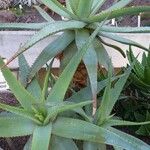
Aloe africana
Uitenbage aloe · African aloe · Uitenhage aloe
Description
Source: leafsnapAloe africana (known as the Uitenhage Aloe) is an arborescent (tree-like) species of aloe plant, indigenous to the Eastern Cape Province, South Africa.
Care Guide
💧 Water
African aloe is a drought-tolerant species perfectly adapted to arid environments by storing water in its succulent leaves. It needs watering only once every three weeks. As an evergreen plant, it retains its foliage throughout the year, making it exceptionally efficient at conserving water, even when grown outdoors.
☀️ Light Full sun
Originating from dry regions, African aloe does best in full sun; its native habitat has intense sunlight and very little shade. It can also tolerate partial sun, providing some flexibility in its growth.
What are the sunlight requirements for African aloe?
African aloe, being native to arid regions, thrives best in full sun conditions, which means it requires more than 6 hours of sunlight daily. It can, however, also adapt to partial sun, receiving about 3-6 hours of sunlight. Observing how sunlight moves through your garden is crucial, as selecting spots with the ideal balance of light and shade will ensure your plants' health and happiness.
How does artificial lighting support African aloe growth indoors?
When natural sunlight is insufficient, especially during winter or in less sunny spaces, artificial lighting becomes essential for the growth of indoor plants like African aloe. Adequate lighting promotes faster, healthier growth. LED lights are recommended for their customizability to provide specific wavelengths needed by the plants. Full sun plants require 30-50W per square foot, partial sun plants need 20-30W per square foot, and full shade plants should have 10-20W per square foot of artificial light. The artificial light source should be placed 12-36 inches above the plant, and most plants benefit from 8-12 hours of light per day to mimic natural daylight.
What are the symptoms of insufficient light for African aloe?
African aloe shows several symptoms when subjected to suboptimal lighting, including smaller new leaves compared to older ones, leggy or sparse growth, faster leaf drop, slower or halted growth, lighter-colored new leaves, chlorosis (leaves turning yellow), sunscald (damaged leaves from intense sunlight), leaf curling (a defense mechanism against extreme sunlight), wilting from loss of water, and leaf scorching (brown, dry edges on leaves). These symptoms indicate the plant's struggle with light deficiency and excessive sunlight exposure.
How can you address light deficiency issues in African aloe?
To combat light deficiency in African aloe, gradually moving the plant to a more sunlit location can be beneficial. For indoor plants, allowing at least 6 hours of direct sunlight daily through a south-facing window or using assistive artificial lights like a desk or ceiling lamp for at least 8 hours a day can help. Outdoor plants should be moved to sunnier spots to adapt without shock. Blighted parts might not recover but improving light exposure will encourage healthy new growth. Furthermore, reducing blocking elements like tree branches or transplanting to sunnier locations are grounds solutions for outdoor plants needing more light.
🌡️ Temperature 20–37.8°C
African aloe does well in warm conditions and needs relatively high temperatures during the growing season to support growth and metabolism. It prefers plenty of sunlight, suitable moisture, and good airflow. However, it can be harmed by very low temperatures and by overwatering. It’s also important to maintain a balance and avoid both excessively high temperatures and overly dry conditions.
What are the ideal growing conditions for African Aloe?
African Aloe thrives in warm environments and benefits from higher temperatures during its growing season to promote growth and metabolism. It prefers ample sunlight, appropriate moisture levels, and good ventilation. The plant is susceptible to damage from excessively low temperatures and overwatering. Striking a balance is crucial, as overly high temperatures and dry conditions should also be avoided. During winter, when outdoor temperatures fall below -5°C, it's recommended to move the plant indoors and place it near a south-facing window to ensure it receives as much sunlight as possible. If natural light is insufficient, supplemental lighting can be considered. As the temperature dips below 15°C, its growth slows, requiring reduced or ceased watering to prevent root rot.
How should I care for African Aloe in low temperatures?
African Aloe thrives best in temperatures above 15°C and is not tolerant of low temperatures. During winter or when temperatures drop below -5°C, special care is needed to prevent damage. In cases where temperatures fall below -10°C, the plant may become weak, wilt, and be prone to root rot. If mild frost damage occurs, symptoms may not be immediate but the plant will gradually wither over a week. The solution is to trim off the frostbitten areas and inspect the roots for rot. Rotten roots need to be removed, and the plant can be propagated through cuttings. Moving the plant to a warm indoor environment and placing it near a south-facing window for ample sunlight is advisable. Supplemental lighting is recommended if sunlight is insufficient.
What should I do if my African Aloe experiences high temperatures?
During the summer, it's important to ensure that African Aloe is kept below 38°C to avoid ceasing its growth, experiencing water loss, wilting, and becoming susceptible to sunburn when the temperature exceeds 43°C. If the plant suffers from sunburn or root rot, remove the damaged parts. It's beneficial to shield the plant from afternoon sunlight until it recovers and begins to grow again. For instances of root rot, cease watering until new roots emerge. Adopting these measures can help manage the impact of high temperatures on African Aloe, aiding in its recovery and continued growth.
💨 Humidity
🪴 Soil 6-7
🌱 Fertilizer
For African aloe, light applications of fertilizer once or twice a year during the growing season are enough. Do not fertilize in winter and summer when the plant is dormant. Reduce fertilizer for repotted plants, and wait a couple of months after repotting before applying fertilizer. Fertilizing promotes healthy growth and encourages flowering.
🪴 Pot & Repot
✂️ Pruning
To care for African aloe, pruning is minimal and involves only the removal of spent flower stalks and dead leaves. To promote better nutrient delivery to the healthier parts of the plant, trim away any orange or brown leaves. For smaller plants, you can use a knife for pruning, while larger plants require pruning shears.
🌿 Propagating
🐛 Diseases & pets
☠️ Toxicity
Characteristics
- Plant Type
- Succulent
- Life Cycle
- Perennial
- Genus
- Aloe
- Family
- Asphodelaceae
- Hardiness Zone
- 9-11
- Mature Height
- 0.91 m to 2.13 m
- Mature Spread
- 0.91 m to 1.52 m
- Leaf Color
- Green, Dark Green
- Leaf Type
- Evergreen
- Flower Color
- Orange, Yellow
- Flower Size
- 3.05 cm to 4.06 cm
- Bloom Time
- Spring
- Planting Time
- Spring, Summer, Autumn
- Harvest Time
- Summer
- Native Area
- South Africa