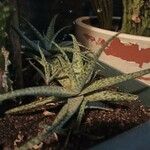
Aloe barbadensis
Barbados aloe · Aloe · Aloes · True aloe · Mediterranean aloe
Description
Source: leafsnapAloe vera () is a succulent plant species of the genus Aloe. It is widely distributed, and is considered an invasive species in many world regions.An evergreen perennial, it originates from the Arabian Peninsula, but grows wild in tropical, semi-tropical, and arid climates around the world. It is cultivated for commercial products, mainly as a topical treatment used over centuries. The species is attractive for decorative purposes, and succeeds indoors as a potted plant.It is used in many consumer products, including beverages, skin lotion, cosmetics, ointments or in the form of gel for minor burns and sunburns. There is little clinical evidence for the effectiveness or safety of Aloe vera extract as a cosmetic or topical drug. The name derives from Latin as aloe and vera ("true").
🌳 People rely on the convenience of aloe vera for holistic health, not because it is the only medicinal species in its group, but because of its noticeable leaves and easy cultivation. Although its relatives also have useful properties, aloe vera is preferred for its accessibility and practicality, matching human convenience with nature’s gifts.
🎭 Being pure, restoration, love of oneself, eternal life
Care Guide
💧 Water Every 3 weeks
Ideally, it’s best to water Aloe Vera plants every 2 to 3 weeks from spring to summer and less frequently during fall and winter. To prevent overwatering, you can allow the top third of the soil surface to dry out before the next watering.
☀️ Light Partial sun
Aloe vera thrives under moderate sun exposure, though it can tolerate conditions with intense or minimal sunlight. The herb comes from environments where sunlight levels fluctuate, which contributes to its robust adaptability. Excessive sunlight, or a lack of it, can impair the plant's health, potentially causing an unhealthy appearance or stunted growth.
🌡️ Temperature 20–37.8°C
In its natural habitat, aloe vera grows best at an average temperature of 68 to 100 ℉ (20 to 38 ℃). It does well in warm, dry conditions with low humidity. Across seasons, it’s advisable to adjust temperatures to keep them within this preferred range.
💨 Humidity
🪴 Soil 6-7
🌱 Fertilizer
For Aloe vera, light applications of fertilizer once or twice a year during the growing season are adequate. Avoid fertilizing in winter and during the summer dormancy. Reduce feeding for plants that have been repotted and wait a couple of months after repotting before applying fertilizer. Fertilizing helps maintain healthy growth and encourages flowering.
🪴 Pot & Repot Every 2 years
When repotting Aloe vera, choose a pot slightly larger than the current one that provides good drainage. Use a gritty, well-draining cactus or succulent mix. Gently remove the plant from its old pot, brush away excess soil, and set it in the new pot at the same planting depth. Wait a few days before watering so any root damage can heal. Repot in spring or fall and place it in a brightly lit location.
✂️ Pruning
Prune away any dried, diseased, or damaged leaves. You can also remove any leaves that have turned yellow or brown or developed blemishes.
🌿 Propagating
🐛 Diseases & pets
☠️ Toxicity
Characteristics
- Plant Type
- Succulent, Herb
- Life Cycle
- Perennial
- Genus
- Aloe
- Family
- Liliaceae
- Hardiness Zone
- 9-12
- Mature Height
- 20 cm to 91 cm
- Mature Spread
- 20 cm to 49 cm
- Leaf Color
- Green, Gray, Silver, Blue
- Leaf Type
- Evergreen
- Flower Color
- Yellow, Orange
- Flower Size
- 5.08 cm to 10.16 cm
- Bloom Time
- Early summer, Mid summer
- Planting Time
- Spring, Summer, Autumn, Winter
- Harvest Time
- Mid summer
- Native Area
- Saudi Arabia, Yemen