Aloe brevifolia
Crocodile Plant · Short Leaved Aloe · Aloe breveyola · False candlelabra
Description
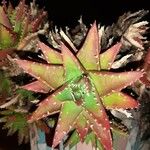
Source: leafsnapAloe brevifolia, commonly known as the short-leaved aloe, is a succulent plant native to Madagascar. This small plant typically reaches up to 6 inches in height and 8 inches in width. Its thick, fleshy leaves are bluish-green with small white spots and are arranged in rosettes that grow close to the ground. In late winter or early spring, the short-leaved aloe produces tubular flowers atop tall stalks that rise above the foliage. The flowers are usually orange or red in color, adding a splash of vibrancy to the plant. Caring for Aloe brevifolia is straightforward, as it requires minimal watering and is drought-tolerant. It thrives in well-draining soil and enjoys plenty of sunlight but can also tolerate partial shade. Aloe brevifolia also boasts several medicinal uses. The gel-like sap inside its leaves has anti-inflammatory properties, making it effective for treating burns, cuts, insect bites, and skin irritations. Overall, Aloe brevifolia is an attractive succulent that enhances both indoor and outdoor spaces while offering medicinal benefits when used properly.
🌳 The mitre aloe is more than just an attractive garden plant; it has additional qualities. Its relatives are well known for a soothing sap used in beauty routines, and similarly it contains a versatile gel. The surprises go beyond vanity — the species is being investigated as a possible biofuel source. Its succulent tissues could help power a sustainable future, making it a notable candidate in green energy. Additionally, its insect-repelling properties point to use as a natural pest deterrent.
🎭 Affection, and grief as well.
Care Guide
💧 Water Every 14 days
Blue aloe is a drought-tolerant succulent that thrives in arid conditions. It enjoys a balance between dry and humid environments. Watering should be done every three weeks. As an evergreen plant, blue aloe stores moisture in its leaves, which helps it survive in areas with little rainfall.
☀️ Light Partial sun
Mitre aloe thrives in places with moderate sunlight, yet it can tolerate light levels from very bright to very dim. This tolerance comes from the plant's native habitat, which has varied light conditions. Excessive sun can scorch the leaves, while too little light may slow its growth. At every stage of development, moderate light helps sustain healthy growth.
🌡️ Temperature 20–37.8°C
The native temperature-related growth environment for mitre aloe is a subtropical climate, with warm temperatures of 20 to 38 ℃ (68 to 100.4 ℉) year-round. It prefers a consistently warm setting but can endure occasional cooler spells during the fall and winter months.
💨 Humidity dry (<40%)
This plant prefers dry conditions, so don't mist it. However, watering it less often can also thrive in higher humidity.
🪴 Soil 7-8
🌱 Fertilizer
For Mitre aloe, light applications of fertilizer once or twice a year during the active growing season are adequate. Do not fertilize in winter or summer when the plant is dormant. Use less fertilizer for plants that have been repotted, and wait a couple of months after repotting before applying fertilizer. Fertilizing helps maintain healthy growth and promotes flowering.
🪴 Pot & Repot Every 2 years
When repotting a Mitre aloe, choose a container slightly larger than the current one that has good drainage. Use a gritty, well-draining mix made for succulents or cacti. Gently remove the plant from its old pot, brush off excess soil, and set it into the new pot at the same depth. Wait a few days before watering so any root injury can heal. Repot in spring or fall and place the plant in a brightly lit spot.
✂️ Pruning
Blue aloe typically does not require much pruning. You only need to remove spent flower stalks and dead leaves. Trim any orange or brown leaves to improve nutrient delivery to the plant. For smaller plants, you can use a knife for pruning, while larger plants may need pruning shears for effective maintenance.
🌿 Propagating
🐛 Diseases & pets
☠️ Toxicity
Characteristics
- Plant Type
- Succulent, Herb
- Life Cycle
- Perennial
- Genus
- Aloe
- Family
- Asphodelaceae
- Hardiness Zone
- 9-12
- Mature Height
- 76 cm
- Mature Spread
- 61 cm to 91 cm
- Leaf Color
- Green, Blue
- Leaf Type
- Evergreen
- Flower Color
- Red
- Flower Size
- 2.03 cm to 3.05 cm
- Bloom Time
- Spring
- Planting Time
- Spring, Summer, Autumn
- Harvest Time
- Early summer, Mid summer
- Native Area
- South Africa