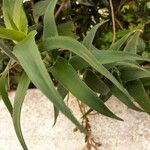
Aloe ciliaris
Climbing aloe · Common climbing aloe
Description
Source: leafsnapAloe ciliaris is a succulent plant in the Asphodelaceae family, native to South Africa. It typically grows in rocky areas and on hillsides. The plant features a stem that can reach up to 1 meter in height, topped with a rosette of green, narrow leaves that have small teeth along their edges. The plant produces tubular, orange-red flowers on long stalks that rise above the foliage. These flowers bloom during the winter months, from June to August. Due to its attractive foliage and vibrant flowers, Aloe ciliaris is commonly cultivated as an ornamental plant. It thrives in well-draining soil and requires moderate watering during its active growth period, which spans from spring to fall. However, it should be kept dry during its winter dormancy. The sap of Aloe ciliaris has been used medicinally by indigenous people for centuries. Known for its anti-inflammatory properties, it can help soothe skin irritations such as burns and insect bites. Overall, Aloe ciliaris is an easy-to-grow succulent that enhances any indoor or outdoor space with its beauty and also offers potential health benefits through its medicinal properties.
Care Guide
💧 Water Every 14 days
Getting watering right is the key to a healthy, fleshy climbing aloe. As with most aloe species, Aloiampelos ciliaris is fairly drought-tolerant because of its ability to store water in its fleshy leaves and stems. Interestingly, it can still grow well in areas that receive high rainfall, as long as it doesn't stand in waterlogged soils. Keeping them moist but not saturated encourages faster growth and lusher, plumper leaves. If you're climbing aloe doesn't get enough water or too much, the leaves can start to brown. The watering schedule will vary depending on rainfall, humidity levels, and time of the year. When there is plenty of rain or high humidity, additional watering can be infrequent. When the weather is warm and dry, water deeply and then let at least the top few inches of soil dry out completely before watering again. When you grow the plants indoors, they will need less frequent watering than those outdoors, especially if they don't get as much natural light.
☀️ Light Full sun
Common climbing-aloe performs best in places that receive sunlight all day, which is vital for its healthy development. In its natural habitat the plant is routinely exposed to sunlight throughout the day. Ample light supports optimal growth, while insufficient sunlight can cause poor plant health and reduced growth.
🌡️ Temperature 20–37.8°C
Common climbing-aloe comes from heat-loving regions and does best at temperatures of 68–100 °F (20–38 °C). If it’s not in a comparable climate, adjust care with seasonal changes, making adequate warmth the priority.
💨 Humidity dry (<40%)
This plant prefers dry conditions, so don't mist it. However, watering it less often can also thrive in higher humidity.
🪴 Soil 6-7
🌱 Fertilizer
For Common climbing-aloe, light applications of fertilizer one to two times a year during the growing season are adequate. Do not fertilize in winter or summer when the plant is dormant. Cut back on fertilizer for repotted specimens and wait a couple of months after repotting before applying any fertilizer. Feeding helps maintain healthy growth and promotes blooming.
🪴 Pot & Repot
✂️ Pruning
Because of how fast climbing aloe grows, you'll need to do a little pruning to keep it from getting out of control and scrappy looking. It can cover other plants, and its stems can break or brown when they get too long. Trim leaves to about a third of their original size when tidying them up. It's a good idea to do the bulk of the tidying in the spring as this allows stems to regrow during their active summer growing season.
🌿 Propagating
🐛 Diseases & pets
☠️ Toxicity
Characteristics
- Plant Type
- Succulent
- Life Cycle
- Perennial
- Genus
- Aloe
- Family
- Xanthorrhoeaceae
- Hardiness Zone
- 9-11
- Mature Height
- 2.44 m to 3.66 m
- Mature Spread
- 30 cm
- Leaf Color
- Green
- Leaf Type
- Evergreen
- Flower Color
- Red
- Flower Size
- 3.05 cm to 4.06 cm
- Bloom Time
- Winter, Early spring
- Planting Time
- Spring, Summer
- Harvest Time
- Spring, Early summer
- Native Area
- South Africa