Aloe harlana
Description
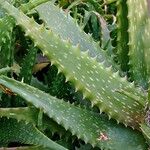
Source: leafsnapThe leaves of this plant are uniformly semi-glossy, dark olive-green with attractive light longitudinal streaks and dashes and brown teeth.
Care Guide
💧 Water Every 1-2 weeks
As with other succulents, which store moisture inside their fleshy leaves, Pink Blush Aloe will benefit from occasional watering only when the soil becomes dry to the touch. At that point, water deeply. An unglazed clay container will help regulate the moisture content. This mimics the rainfall that provides the plant's main source of water in its native habitats.
☀️ Light
🌡️ Temperature
The Pink Blush Aloe plant will not thrive in temperatures below 50F. Consistent temperatures between 65-75F are ideal. It doesn't like to be wet or to have moist soil, so apart from watering as needed, no additional indoor moisture is required. If you have your Pink Blush Aloe indoors, keep it away from your humidifier, kitchen or bathroom, and don't put it near other plant arrangements that have trays of water for added humidity. In the summertime, cold zone gardeners can bring this plant outside and give it a place of pride in the garden, but it should be brought in when temperatures go below 50F for more than 24 hours.
💨 Humidity
🪴 Soil
🌱 Fertilizer
🪴 Pot & Repot
✂️ Pruning
As your Pink Blush Aloe goes through the growing season, it may shed leaves or the leaves may shrivel and dry. Remove these by simply gently cutting them off. You should also remove any leaves that become damaged.
🌿 Propagating
🐛 Diseases & pets
☠️ Toxicity
In recent years aloe has been added to many nutritional products, but it's not recommended that you directly ingest this sap, and your pets shouldn't consume it either as it is toxic for them.
Characteristics
- Plant Type
- Succulent
- Genus
- Aloe
- Family
- Xanthorrhoeaceae
- Hardiness Zone
- 9-11
- Bloom Time
- July to september
- Native Area
- Namibia, South Africa