Aloe humilis
Hedgehog aloe · Dwarf Hedgehog Aloe · Spider-aloe · చిట్టి కలబంద
Description
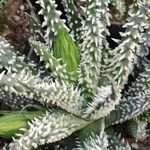
Source: leafsnapAloe humilis is a succulent plant that belongs to the Asphodelaceae family. It is native to South Africa and Namibia, where it thrives in rocky areas and dry savannas. The plant features a rosette of fleshy, lance-shaped leaves that are either green or bluish-green, with small white teeth along the edges. These leaves can grow up to 20 cm long and 5 cm wide. During the winter months, Aloe humilis produces tall spikes of tubular flowers that are either orange-red or yellow. These vibrant flowers attract pollinators such as birds and bees. Aloe humilis is commonly cultivated as an ornamental plant due to its attractive foliage and colorful flowers. It can be grown both indoors and outdoors, as long as it receives plenty of sunlight and well-draining soil. For centuries, indigenous people in Africa have used Aloe humilis for its medicinal properties, particularly for its anti-inflammatory benefits. The gel-like sap can be applied topically to treat wounds, burns, insect bites, and skin irritations. Overall, Aloe humilis is an easy-to-care-for succulent that offers stunning visual appeal, making it a popular choice among gardeners seeking low-maintenance plants for both indoor and outdoor settings.
Care Guide
💧 Water Every 7 days
Spider aloe is a drought-tolerant plant that thrives in arid regions with little moisture. It stores water in its thick, succulent leaves and only needs watering once every three weeks, making sure the soil dries out between waterings. While it is usually grown outdoors, spider aloe also does well in containers, which allows for better control of drainage.
How should I water my Spider aloe plant?
When watering the Spider aloe plant, it is best to use filtered water at room temperature. Tap water may contain harmful particles, so filtered water is preferred. The Spider aloe plant is accustomed to a warm environment, so using cold water can be a shock to its system. It is important to avoid overhead watering as it can cause problems with the foliage. Instead, gradually apply filtered room temperature water to the soil until it becomes completely soaked. This helps to moisten the roots and promote their spread and nutrient absorption.
What should I do if I give my Spider aloe too much water or not enough water?
Both overwatering and underwatering can harm the health of your Spider aloe, but overwatering is more common. When the Spider aloe receives too much water, its stems and leaves may wilt and turn yellow. Overwatering for a long time can also cause diseases like root rot, mold, and mildew, which can kill your plant. Underwatering is less common for the Spider aloe because it is drought-tolerant. However, underwatering can still happen, and when it does, the leaves may become brittle and brown. It's important to recognize the signs of overwatering early when caring for your Spider aloe. Some diseases caused by overwatering, like root rot, can't be fixed if you wait too long. If you notice early signs of overwatering, reduce your watering schedule immediately. Also, check the soil quality of your Spider aloe. If it drains poorly, replace it with a loose, well-draining potting mix. On the other hand, if you see signs of underwatering, simply water the plant more regularly until those signs go away.
How often should I water my Spider aloe plant?
To determine if your potted Spider aloe needs watering, simply stick your finger into the soil. If the top two to three inches of soil are dry, it's time to water. The same method can be used for Spider aloe grown in the ground outdoors. Watering about once a week is typically sufficient during the spring and early fall, but during extremely hot weather, watering two or more times a week may be necessary. However, it's worth noting that mature, well-established Spider aloes are quite resilient and can tolerate periods of drought.
How much water does my Spider aloe require?
To properly water your Spider aloe, be generous with the amount of water you give. Make sure the top two to three inches of soil are dry before watering, and then provide a thorough soaking to ensure the entire soil is moistened. It's important to add enough water that excess water drains through the pot's drainage holes. If you don't see any excess water draining, you may have underwatered the plant. However, be cautious not to let the water accumulate in the soil, as this can harm the plant. On the other hand, if water doesn't drain well through the pot, it may indicate poorly draining soil, which is harmful to the plant. Finally, if the plant is outside, it typically requires around 1 inch of rain per week.
How should I water my Spider aloe at different stages of growth?
The water needs of the Spider aloe can vary depending on its growth stages. In the first few years or after transplanting, it requires more water to support root development. As the plant matures, it needs less water. Additionally, during the bloom period, it may require extra water due to the energy used for flower development.
☀️ Light Full sun
Originating from dry regions, Spider aloe performs best in full sun, as its native habitat has intense sunlight and scarce shade. It can also tolerate partial sun, providing some flexibility in its growth.
What are the sunlight requirements for Spider aloe?
Spider aloe, scientifically known as Aloe humilis, is a perennial herbaceous plant that loves the sun. It thrives in full sun, requiring more than 6 hours of sunlight daily. However, it can also tolerate partial sun conditions, which means about 3-6 hours of sunlight. When positioning your Spider aloe, it's crucial to watch how sunlight moves through your garden or space. Choose locations that provide a good balance of light and shade, ensuring the plant's happiness and optimal growth.
How can artificial lighting benefit indoor Spider aloe plants?
For Spider aloe plants kept indoors, artificial lighting can be a critical factor for their growth, especially when natural sunlight is insufficient. During winter or in spots that don't get much sunlight, artificial lights like LED lights, which can be adjusted to supply specific wavelengths needed by plants, are beneficial. Full sun plants require 30-50W/sq ft, partial sun plants 20-30W/sq ft, and full shade plants 10-20W/sq ft of artificial light. The light source should be placed 12-36 inches above the plant to mimic natural sunlight conditions, with most plants needing 8-12 hours of light per day.
What are the symptoms of insufficient light in Spider aloe plants?
When Spider aloe plants don't receive enough light, several symptoms may appear. New leaves might grow smaller than previous ones, and the plant could show leggy or sparse growth due to longer spaces between leaves or stems. This condition makes the plant look weak and prone to breaking. Other signs include faster leaf drop, slower or halted new growth, lighter-colored new leaves indicating a lack of chlorophyll, chlorosis where leaves turn yellow, sunscald with pale or necrotic areas on the plant, leaf curling as a defense mechanism against too much sun, wilting from excessive water loss, and leaf scorching with brown, crispy edges or patches due to overexposure.
What solutions can improve light conditions for indoor and outdoor Spider aloe plants?
Improving light conditions for Spider aloe involves several strategies. Indoors, gradually move plants to sunnier spots until they receive at least 6 hours of direct sunlight through a south-facing window. Keep curtains open during the day. If the plant is large or immovable, consider using artificial light for at least 8 hours daily or invest in professional grow lights. Outdoors, adapt plants to more sunlight gradually to prevent sunburn. Identifying and reducing obstructions can help, such as pruning trees to allow more sunlight through. If dealing with smaller plants, consider transplanting during their dormant period for better sunlight exposure and drainage. Remember, parts of the plant damaged by insufficient sunlight might not recover, but new growth should be healthy with improved light conditions.
🌡️ Temperature 20–37.8°C
Spider aloe does best in warm conditions and requires elevated temperatures during the growing season to promote growth and metabolic activity. It prefers plenty of sunlight, suitable moisture levels, and good air circulation. However, it is vulnerable to damage from very low temperatures and from overwatering. It’s important to maintain balance and avoid both excessively high heat and overly dry conditions.
What is the botanical name of Spider Aloe?
The botanical name of Spider Aloe is Aloe humilis.
💨 Humidity normal (40-60%)
This plant will thrive in moderate humidity, which is probably the level in your home. However, misting it a few times a week can be very beneficial. Make sure the room has good ventilation.
🪴 Soil 6-7
🌱 Fertilizer
Spider aloe only needs light applications of fertilizer once or twice a year during the growing season. Do not fertilize in winter or in summer when the plant is dormant. Reduce feeding for repotted specimens and wait a couple of months after repotting before applying fertilizer. Fertilizing helps maintain healthy growth and encourages flowering.
Why should I put fertilizer on my Spider aloe?
The leaves of the Spider aloe are essential for its structure. Fertilization plays a crucial role in maintaining the appearance and function of these leaves. By properly fertilizing your Spider aloe, you can ensure that its leaves stay vibrant in color and have a healthy texture. Additionally, fertilization also benefits the plant below the soil. It stimulates the growth of new roots and helps maintain the existing root system. This means that fertilization not only keeps your plant healthy in the present but also improves its ability to absorb nutrients from the soil in the future.
When should I fertilize my Spider aloe plant?
When you grow your Spider aloe outdoors, it will start growing new leaves in early spring, indicating that it's time to fertilize. Generally, applying fertilizer once in the spring is sufficient. However, if you want to promote maximum growth, you can fertilize multiple times during the spring and early summer, roughly once every month to a month and a half.
When is a bad time to put fertilizer on my Spider aloe plant?
During the late fall and winter, your Spider aloe enters a dormant phase and stops producing new growth. It is advised not to fertilize your Spider aloe during this time. In the spring and summer, you can choose to fertilize, but as summer approaches, you should reduce the frequency of fertilization as the growth rate of your Spider aloe slows down. In general, it is not recommended to fertilize your Spider aloe during excessively hot weather or when the soil is exceptionally dry. Fertilizing in these conditions can cause stress and premature death of your Spider aloe.
What kind of fertilizer does my Spider aloe plant require?
Choosing the right fertilizer for a Spider aloe is actually quite simple. These plants thrive on a general-purpose garden fertilizer with equal amounts of nitrogen, phosphorus, and potassium, like a 10-10-10 ratio. Avoid fertilizers with high nitrogen levels if unsure. Granular fertilizers are most recommended for Spider aloe and should be slow-release, making them easy to apply to the soil. Additionally, using an organic soil amendment like compost can be beneficial for feeding your Spider aloe.
How do I make my Spider aloe plant grow better?
To properly fertilize your Spider aloe, wait until its first leaves emerge from the soil in early spring. Once you spot this, apply a granular slow-release fertilizer with a balanced formula to the soil around the base of the plant. If desired, you can repeat this process later in the season. Remember to apply the fertilizer to the soil, not directly to the plant, which may require gently moving some leaves aside. It is also advisable to water your Spider aloe before and after fertilizing.
🪴 Pot & Repot Every 2 years
When repotting Spider aloe, choose a pot a little larger than the current one that has good drainage. Plant in a gritty, well-draining succulent or cactus mix. Gently remove the plant from its old pot, brush off excess soil, and place it at the same depth in the new pot. Wait a few days before watering so any root damage can heal. Repot in spring or fall and keep it in a brightly lit spot.
✂️ Pruning
Spider aloe has short stems and fleshy, rosette-shaped leaves. To encourage growth and improve airflow, reducing the risk of pests, prune any dead leaves from early to late spring. Make sure to use sanitized, sharp tools to minimize the risk of disease, and be careful not to over-prune, as this can stress the plant.
🌿 Propagating
🐛 Diseases & pets
☠️ Toxicity
Hedgehog Aloe can be moderately harmful to humans and pets, causing tongue irritation and stomach distress. Keep these plants away from persistent children and pets.
Characteristics
- Plant Type
- Herb, Succulent
- Life Cycle
- Perennial
- Genus
- Aloe
- Family
- Asphodelaceae
- Hardiness Zone
- 9-11
- Mature Height
- 91 cm
- Mature Spread
- 91 cm
- Leaf Color
- White, Green, Blue
- Leaf Type
- Evergreen
- Flower Color
- Orange
- Flower Size
- 2.03 cm to 3.05 cm
- Bloom Time
- Winter, Early spring, Mid spring
- Planting Time
- Spring, Summer, Autumn
- Harvest Time
- Spring, Early summer, Mid summer
- Native Area
- South Africa