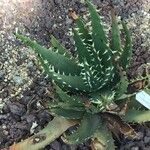
Aloe melanacantha
Black thorn aloe
Description
Source: leafsnapAloe melanacantha is a succulent plant species belonging to the Aloe genus. Native to Madagascar, it can grow up to 1 meter tall. The plant features thick, fleshy, green leaves adorned with white spots. These leaves are arranged in a rosette pattern, with older leaves forming a basal rosette and younger ones growing upwards. During the winter months, Aloe melanacantha produces tall spikes of tubular, orange-red flowers that attract pollinators such as birds, bees, and butterflies. This plant has several medicinal uses. It is often employed to treat skin conditions like burns, cuts, and wounds, as well as digestive problems like constipation. Additionally, it is valued for its anti-inflammatory properties. Aloe melanacantha requires well-draining soil and moderate watering during its growing season, which spans from spring through fall. While it prefers full sun exposure, it can also tolerate partial shade. Overall, this succulent species is an attractive addition to any garden or indoor space due to its unique appearance and medicinal properties. It is an excellent choice for those seeking both aesthetic appeal and practicality from their plants.
Care Guide
💧 Water Every 14 days
The Black-thorn aloe flourishes in dry, well-draining soil and needs filtered water since it is sensitive to mineral content. Water the plant thoroughly but infrequently, and check the soil moisture 2-3 inches below the surface. If the soil is too moist, allow the plant to dry out before replanting it in fresh soil. Avoid watering it again for a week.
☀️ Light Full sun
Native to dry regions, Black-thorn aloe prospers in full sun, its natural habitat marked by intense sunlight and scant shade. It can also tolerate partial sun, providing some flexibility in its growth.
What are the sunlight requirements for Black-thorn aloe (Aloe melanacantha)?
Black-thorn aloe (Aloe melanacantha) thrives in various sunlight conditions. For full sun exposure, it requires above 6 hours of sunlight daily, ideal for achieving optimal growth and health. If situated in partial sun, it should receive about 3-6 hours of sunlight. It's important to observe the sunlight's movement through your garden meticulously, to find the perfect balance of light and shade that guarantees the well-being of your plants.
🌡️ Temperature 20–41.1°C
Black-thorn aloe does best in warm conditions and needs relatively high temperatures during the growing season to support growth and metabolic activity. It prefers plenty of sunlight, proper moisture, and good air circulation. However, it can be harmed by very low temperatures and too much watering. It's also important to maintain a balance and avoid extremes of excessive heat and excessive dryness.
What is the name of the plant?
The plant is called Black-thorn aloe.
What is the botanical name of Black-thorn aloe?
The botanical name of Black-thorn aloe is Aloe melanacantha.
💨 Humidity
🪴 Soil 0-0
🌱 Fertilizer
Black-thorn aloe needs only light doses of fertilizer once or twice a year during the growing season. Avoid fertilizing in winter and in summer when it is dormant. Reduce fertilizer for repotted plants and wait a couple of months after repotting before fertilizing. Fertilizing supports healthy growth and encourages blooms.
🪴 Pot & Repot Every 2 years
✂️ Pruning
Black-thorn aloe features stiff leaves with black thorns. To keep the plant healthy, prune it in early spring by removing any dead leaves, which helps prevent fungal problems. Use sanitized tools to ensure clean cuts. Be careful not to over-prune, as it is important to maintain the plant's natural shape. Regular pruning improves airflow and sunlight exposure, which promotes the plant's overall health and vigor.
🌿 Propagating
🐛 Diseases & pets
☠️ Toxicity
Characteristics
- Plant Type
- Succulent
- Life Cycle
- Perennial
- Genus
- Aloe
- Family
- Asphodelaceae
- Hardiness Zone
- 11-13
- Mature Height
- 0 cm to 36 cm
- Mature Spread
- 40 cm to 76 cm
- Leaf Color
- Brown, Green
- Leaf Type
- Evergreen
- Flower Color
- Yellow, Orange
- Flower Size
- 2.03 cm to 3.05 cm
- Bloom Time
- Mid summer, Late summer, Early fall
- Planting Time
- Spring, Summer, Autumn
- Harvest Time
- Fall
- Native Area
- South Africa