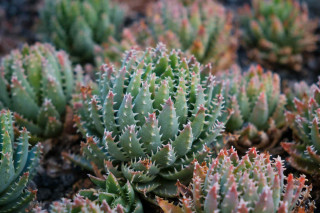
Aloe nobilis
Golden Toothed Aloe
Description
Source: leafsnapWith many clustering offsets, the low-growing, clumping aloe grows about one foot tall and wide. It has thick, succulent, short, green leaves that develop in rosettes along the plant's margins with broad, yellow, serrated edges. From late spring to mid-summer, the gold tooth aloe produces tall, beautiful orangey-red blooms on two-foot tall stalks that rise above the plant. It blooms for a long time. Bees, butterflies, and birds are drawn to the flowers. Use it in elevated planters and pots. In rock gardens or with boulders, combine this gorgeous aloe with other drought-resistant cacti and succulents.
Care Guide
💧 Water
His succulent plant doesn't need much water to thrive. During the summer, water liberally; during the winter, water sparingly. Excess water in the rosette can kill the plant, so water the soil instead. It's a drought-tolerant succulent. It can go without water for lengthy periods of time, and overwatering can induce decay.
☀️ Light
🌡️ Temperature
The best temperature range for aloe plant growth is between 55 to 85 degrees Fahrenheit, which allows for both indoor and outdoor growth. Aloe can survive in temperatures as low as 40 degrees Fahrenheit. While it's fine to leave your aloe plant outside during the summer, remember to bring it back inside before the first frost.
💨 Humidity
🪴 Soil
🌱 Fertilizer
Because Golden toothed aloe does not require especially fertile soil, annual fertilization should suffice. It's preferable to fertilize before the growing season starts. Liquid fertilizer can help to improve soil quality. The optimal times to apply liquid fertilizer are in the spring and summer. Use a normal houseplant fertilizer diluted to half strength when fertilizing.
🪴 Pot & Repot
✂️ Pruning
Any pinkish-brown leaf tips or complete leaves should be removed. Because these sections are dying, eliminating them aids in the aloe plant's continued health and greenness. For tiny and medium-sized plants, use a knife; for huge, thick leaves, use sheers. The exposed end of the leaf will eventually seal up on its own.