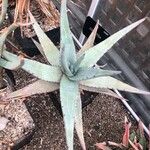
Aloe petricola
Nespruit rock aloe · Rock aloe
Description
Source: leafsnapAloe petricola is a succulent plant species belonging to the Aloe genus and the Asphodelaceae family. Native to South Africa, it thrives in rocky areas, cliffs, and hillsides. This plant features a rosette of fleshy, green leaves adorned with white spots. The triangular leaves have serrated edges and can grow up to 30 cm in length. During the summer months, Aloe petricola produces tall spikes of tubular flowers that are either orange-red or yellow. These vibrant flowers attract pollinators such as bees and butterflies. Renowned for its medicinal properties, the gel-like sap of Aloe petricola is known for its anti-inflammatory, antibacterial, and antifungal qualities. This makes it useful for treating various skin conditions, including burns, cuts, and insect bites. Aloe petricola requires well-draining soil and moderate watering during the summer. During the winter, when the plant goes dormant, it should be kept dry. While it prefers full sun exposure, it can also tolerate partial shade. Overall, Aloe petricola is an attractive succulent that adds beauty to any garden. Its medicinal benefits make it a popular choice among gardeners worldwide.
Care Guide
💧 Water Every 14 days
Aloe petricola, native to arid regions, is highly drought-tolerant due to its ability to retain moisture in its fleshy leaves. It needs to be watered only once every three weeks, allowing the soil to dry out between watering sessions. This plant thrives in sunny outdoor conditions and maintains its lush evergreen foliage all year round.
☀️ Light Full sun
Originating in dry regions, rock aloe performs best in full sun, as its native habitat has intense sunlight and little shade. It can also tolerate partial sun, providing some flexibility in its growth.
🌡️ Temperature 20–37.8°C
Rock aloe grows best in warm conditions and needs higher temperatures during the growing season to support growth and metabolism. It prefers plenty of sunlight, adequate moisture, and good air circulation. However, it can be damaged by overly low temperatures and by too much watering. Maintaining a balance is crucial; very high temperatures and excessively dry conditions should also be avoided.
💨 Humidity
🪴 Soil 6-7
🌱 Fertilizer
For rock aloe, small amounts of fertilizer once or twice a year during the growing season are enough. Avoid fertilizing in winter and in summer when the plant is dormant. Reduce the amount of fertilizer for recently repotted plants and wait a couple of months after repotting before feeding. Fertilizing promotes healthy growth and encourages flowering.
🪴 Pot & Repot
✂️ Pruning
Aloe petricola needs very little pruning. Generally, you only need to remove spent flower stalks and dead leaves. Trim any orange or brown leaves to redirect nutrients to healthier parts of the plant. Use a knife for smaller plants and pruning shears for larger ones to maintain the plant's overall health.
🌿 Propagating
🐛 Diseases & pets
☠️ Toxicity
Characteristics
- Plant Type
- Succulent
- Life Cycle
- Perennial
- Genus
- Aloe
- Family
- Asphodelaceae
- Hardiness Zone
- 9-11
- Mature Height
- 30 cm to 49 cm
- Mature Spread
- 40 cm to 61 cm
- Leaf Color
- Light Green, Gray
- Leaf Type
- Evergreen
- Flower Color
- Red, Orange
- Flower Size
- 2.03 cm to 3.05 cm
- Bloom Time
- Mid summer, Late summer, Early fall
- Planting Time
- Spring, Summer, Autumn
- Harvest Time
- Mid fall, Late fall, Early winter
- Native Area
- South Africa