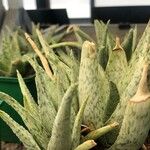
Aloe rauhii
White Aloe · Snowflake aloe · Blue Star Aloe · Doran Black · White Fox Aloe
Description
Source: leafsnapAloe rauhii is a species of succulent plant that belongs to the Aloe genus and the Asphodelaceae family. Native to Madagascar, it thrives in rocky areas at high elevations. This plant features a rosette of thick, fleshy, blue-green leaves adorned with white spots and small teeth along the edges. The leaves can reach up to 30 cm (12 inches) in length and 5 cm (2 inches) in width. During late winter or early spring, Aloe rauhii produces tall spikes of tubular, orange-red flowers that are highly attractive to hummingbirds and other pollinators. Caring for Aloe rauhii is simple as it requires minimal watering and thrives in well-draining soil with plenty of sunlight. It can be grown both indoors and outdoors, provided it receives sufficient light. Beyond its aesthetic appeal, Aloe rauhii possesses medicinal properties, including anti-inflammatory effects, wound healing capabilities, and antibacterial activity against certain strains of bacteria such as Staphylococcus aureus (MRSA). In summary, Aloe rauhii is an attractive succulent with unique features that make it a valuable addition to any garden or indoor collection. Its medicinal benefits, when used appropriately, add to its overall appeal.
Care Guide
💧 Water Every 14 days
Snowflake aloe is well-suited for arid conditions due to its high drought tolerance and preference for dry environments. It needs minimal watering, typically every three weeks. To prevent root rot, use well-draining soil. During the growing season, ensure that the soil moisture levels are appropriate for warmer temperatures to promote optimal growth.
☀️ Light Full sun
Originating in arid regions, Snowflake aloe performs best in full sun, as its native habitat includes intense sunlight and scant shade. It will also tolerate partial sun, providing some flexibility in its growth.
🌡️ Temperature 20–37.8°C
Snowflake aloe does best in warm surroundings and needs relatively high temperatures during the growing season to support its growth and metabolism. It prefers plenty of sunlight, proper moisture, and good air circulation. It can be damaged by very low temperatures and by overwatering. It is also important to maintain balance and to avoid extreme heat or excessively dry conditions.
💨 Humidity dry (<40%)
This plant prefers dry conditions, so don't mist it. However, watering it less often can also thrive in higher humidity.
🪴 Soil 6-7
🌱 Fertilizer Every 30 days
For Snowflake aloe, light applications of fertilizer once or twice a year during the growing season are adequate. Do not fertilize in winter or in summer when the plant is dormant. Cut back on fertilizer for plants that have been repotted and wait a couple of months after repotting before applying any fertilizer. Fertilizing promotes healthy growth and helps encourage blooms.
🪴 Pot & Repot Every 2 years
When repotting a Snowflake aloe, choose a pot slightly larger than the current one that has good drainage. Use a gritty, well-draining succulent or cactus mix. Gently remove the plant from its old pot, brush off excess soil, and plant it at the same depth. Wait several days before watering so any root damage can heal. Repot in spring or fall and place the plant in a brightly lit location.
✂️ Pruning
Snowflake aloe is known for its compact rosette shape and spotted leaves. To improve air circulation and maintain its aesthetic appeal, prune any dead or damaged leaves in early spring. Regular trimming helps prevent overcrowding and reduces the risk of pest problems. Always use sterilized tools, and aim to preserve the plant’s natural shape to keep it as a visually striking element in your garden.
🌿 Propagating
🐛 Diseases & pets
☠️ Toxicity
Its leaves should not be ingested by people, pets, or livestock.
Characteristics
- Plant Type
- Succulent
- Life Cycle
- Perennial
- Genus
- Aloe
- Family
- Asphodelaceae
- Hardiness Zone
- 9-11
- Mature Height
- 15 cm
- Mature Spread
- 20 cm
- Leaf Color
- Light Green, Dark Green
- Leaf Type
- Evergreen
- Flower Color
- Red
- Flower Size
- 2.03 cm to 3.05 cm
- Bloom Time
- Winter
- Planting Time
- Spring, Summer, Autumn
- Harvest Time
- Late winter, Early spring, Mid spring
- Native Area
- Madagascar