Aloe succotrina
Fynbos aloe · Jâḍâm · Bombay Aloe · Socotrine aloes · Turkey aloe
Description
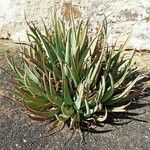
Source: leafsnapAloe succotrina, commonly known as the Cape Aloe, is a succulent plant native to South Africa and belongs to the Asphodelaceae family. This plant is popular as an ornamental due to its attractive appearance and medicinal properties. The plant features thick, fleshy leaves that are green and can reach up to 1 meter in length. These leaves are arranged in a rosette pattern at the base of the stem. During the winter months, Aloe succotrina produces tall spikes of bright orange-red flowers that attract pollinators such as birds and bees. Following the blooming period, the flowers give way to seed pods containing numerous small black seeds. Historically, the sap of Aloe succotrina has been used for its medicinal properties, including treating wounds, burns, skin irritations, and digestive problems. The sap contains compounds like aloin, which have anti-inflammatory effects on skin cells. Aloe succotrina thrives in well-draining soil with moderate watering during the summer months but is also drought-tolerant due to its ability to store water in its leaves. It prefers full sun exposure but can also grow well under partial shade. Overall, Aloe succotrina is an attractive ornamental plant with numerous health benefits, making it an ideal addition to any garden or home decor setting.
Care Guide
💧 Water Every 14 days
☀️ Light Full sun
Native to dry regions, the Fynbos aloe flourishes in full sun, since its native habitat features strong sunlight and minimal shade. It will also tolerate partial sun, giving it some flexibility in its growth.
🌡️ Temperature 20–37.8°C
Fynbos aloe grows best in warm conditions and needs higher temperatures during the growing season to support growth and metabolism. It prefers plenty of sunlight, proper moisture, and good air circulation. However, it is vulnerable to harm from very low temperatures and from overwatering. It is also important to maintain balance and avoid both excessively high heat and overly dry conditions.
💨 Humidity dry (<40%)
This plant prefers dry conditions, so don't mist it. However, watering it less often can also thrive in higher humidity.
🪴 Soil 0-0
🌱 Fertilizer
Fynbos aloe only needs light applications of fertilizer once or twice a year during the growing season. Do not fertilize in winter or summer when it is dormant. Use less fertilizer on repotted plants and wait a couple of months after repotting before applying fertilizer. Fertilizing promotes healthy growth and encourages blooms.
🪴 Pot & Repot
✂️ Pruning
🌿 Propagating
🐛 Diseases & pets
☠️ Toxicity
Characteristics
- Plant Type
- Succulent
- Life Cycle
- Perennial
- Genus
- Aloe
- Family
- Asphodelaceae
- Hardiness Zone
- 9-11
- Mature Height
- 61 cm to 91 cm
- Mature Spread
- 61 cm to 91 cm
- Leaf Color
- Green, Dark Green
- Leaf Type
- Evergreen
- Flower Color
- Red
- Flower Size
- 2.03 cm to 3.05 cm
- Bloom Time
- Winter
- Planting Time
- Summer, Autumn
- Harvest Time
- Spring
- Native Area
- South Africa