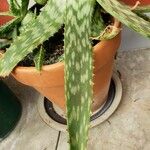
Aloe zebrina
Zebra-leaf aloe · Kanniedood aloe · Partridge breast aloe · Spotted aloe · Tiger aloe
Description
Source: leafsnapAloe zebrina, commonly known as the zebra aloe, is a succulent plant belonging to the family Asphodelaceae. Native to South Africa, it gets its common name from the distinctive white stripes on its green, lance-shaped leaves. This plant typically grows up to 1 meter tall and forms rosettes of fleshy leaves adorned with horizontal white stripes. In late winter or early spring, Aloe zebrina produces tall spikes of tubular, orange-red flowers that attract pollinators such as bees and birds. The plant thrives in well-draining soil with full sun exposure but can also tolerate partial shade. Traditionally, Aloe zebrina has been used in medicine for various purposes, including treating wounds, burns, skin irritations, and digestive problems, thanks to its anti-inflammatory properties. Additionally, it contains antioxidants that help protect against cellular damage caused by free radicals. Overall, Aloe zebrina is an attractive succulent with unique leaf markings, making it an excellent addition to any garden or indoor collection. Moreover, its potential health benefits in traditional medicine further enhance its appeal.
Care Guide
💧 Water Every 14 days
The Zebra Leaf Aloe is a drought-tolerant plant that thrives in arid environments by storing water in its succulent leaves. It should be watered every three weeks, allowing the soil to dry out completely between waterings. As an evergreen, the Zebra Leaf Aloe retains water even during dormancy, making it an excellent choice for indoor gardening.
☀️ Light Full sun
Native to arid regions, the Zebra leaf aloe does best in full sun, as its natural habitat features intense sunlight and very little shade. It also tolerates partial sun, giving it some flexibility in how it grows.
What are the sunlight requirements for Zebra Leaf Aloe (Aloe zebrina)?
Zebra Leaf Aloe (Aloe zebrina) thrives in conditions where it can receive full sun, meaning it needs more than 6 hours of direct sunlight daily. However, it can also grow well in partial sun, requiring about 3-6 hours of sunlight. It's important to observe the movement of sunlight through your garden to find the best spot that offers a good balance of light and shade. This ensures the plant remains happy and healthy.
🌡️ Temperature 20–37.8°C
Zebra leaf aloe grows best in warm conditions and needs higher temperatures during the growing season to encourage development and metabolic activity. It favors abundant light, proper moisture, and good air circulation. It can be damaged by very low temperatures and by overwatering. It’s also important to keep conditions balanced and avoid both excessive heat and overly dry situations.
💨 Humidity
🪴 Soil 6-7
🌱 Fertilizer
For Zebra leaf aloe, small doses of fertilizer once or twice a year during the growing season are adequate. Do not fertilize in winter or in summer when the plant is dormant. Cut back on fertilizer for repotted plants and wait a couple of months after repotting before applying feed. Fertilizing helps maintain healthy growth and encourages blooming.
🪴 Pot & Repot Every 2 years
When repotting Zebra leaf aloe, choose a container a bit bigger than the current one that has adequate drainage. Fill it with a gritty, well-draining succulent or cactus potting mix. Gently lift the plant from its old pot, brush away extra soil, and set it in the new pot at the same planting depth. Hold off watering for several days so any injured roots can recover. Repot during spring or fall and place the plant where it receives bright light.
✂️ Pruning
Zebra leaf aloe requires minimal pruning, which is best done in early spring. To maintain the plant's health and appearance, use sterilized tools to remove any dead or damaged leaves at their base. Regularly inspect the plant and remove any spent flower stalks to encourage growth. Pruning helps maintain the plant's shape and size, contributing to its overall vigor and attractiveness.
🌿 Propagating
🐛 Diseases & pets
☠️ Toxicity
Characteristics
- Plant Type
- Succulent
- Life Cycle
- Perennial
- Genus
- Aloe
- Family
- Asphodelaceae
- Hardiness Zone
- 9-11
- Mature Height
- 30 cm
- Mature Spread
- 30 cm
- Leaf Color
- Dark Green, Light Green
- Leaf Type
- Evergreen
- Flower Color
- Red, Orange
- Flower Size
- 2.03 cm to 3.05 cm
- Bloom Time
- Winter, Early spring, Mid spring
- Planting Time
- Spring, Summer, Autumn
- Harvest Time
- Spring, Early summer, Mid summer
- Native Area
- Malawi, Angola, Mozambique, South Africa, Zambia, Eswatini, Namibia, Congo (DRC), Botswana, Zimbabwe