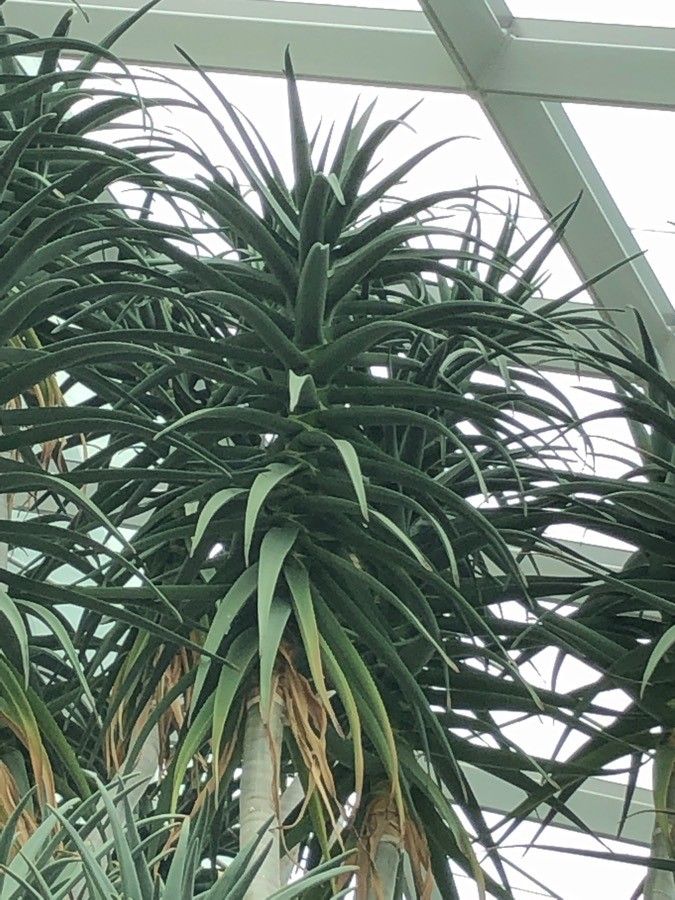
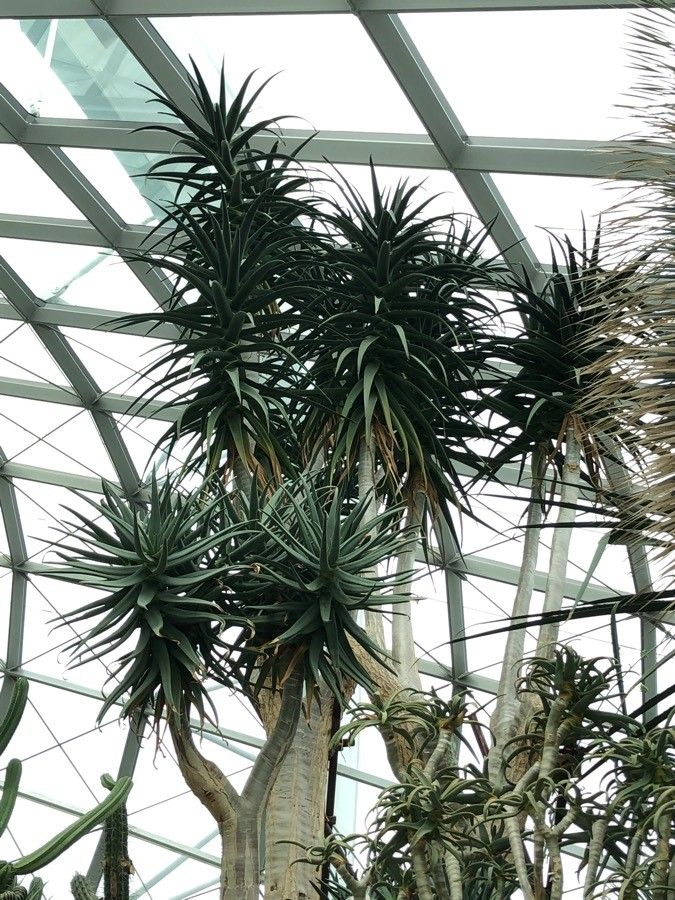
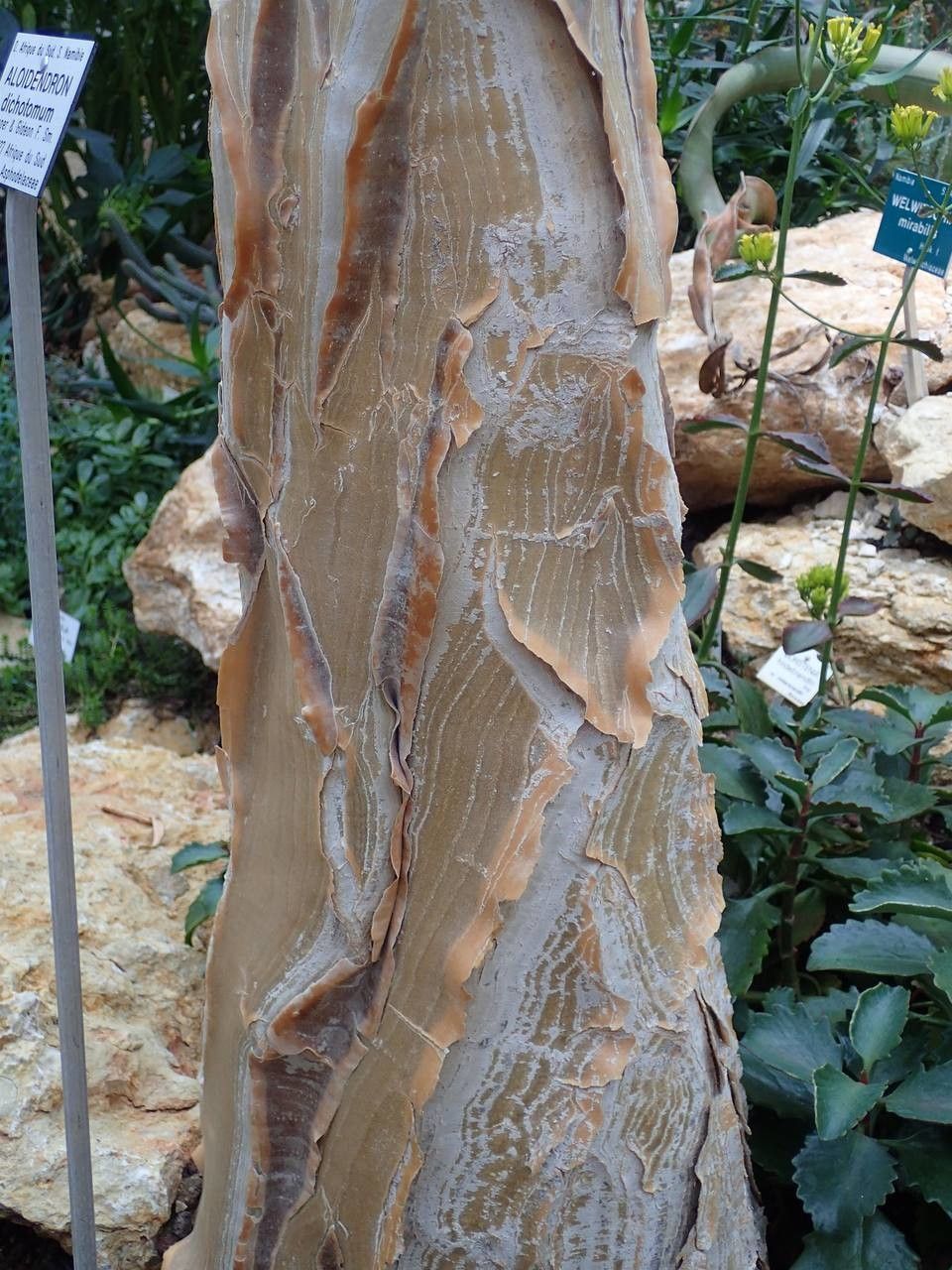
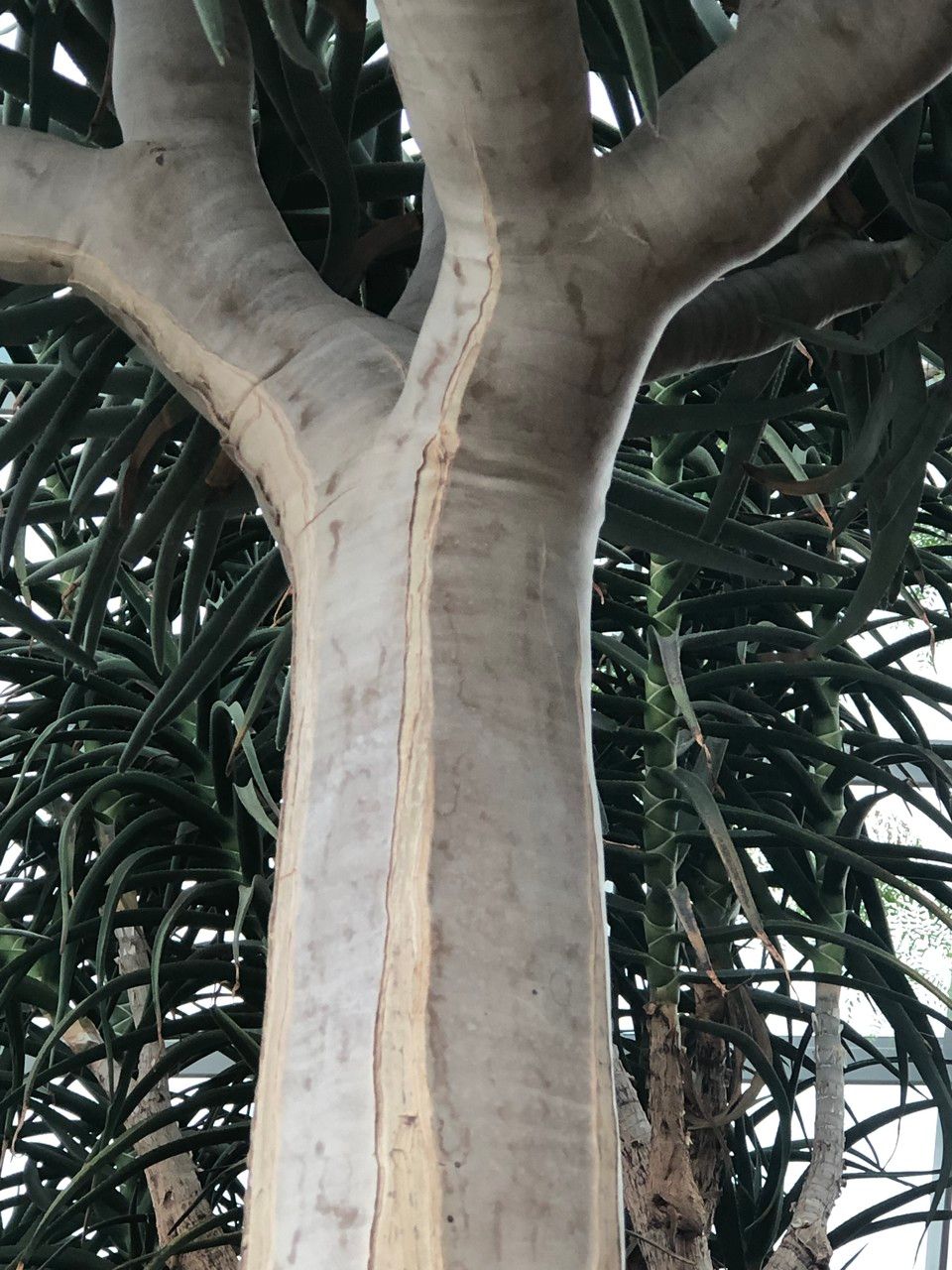
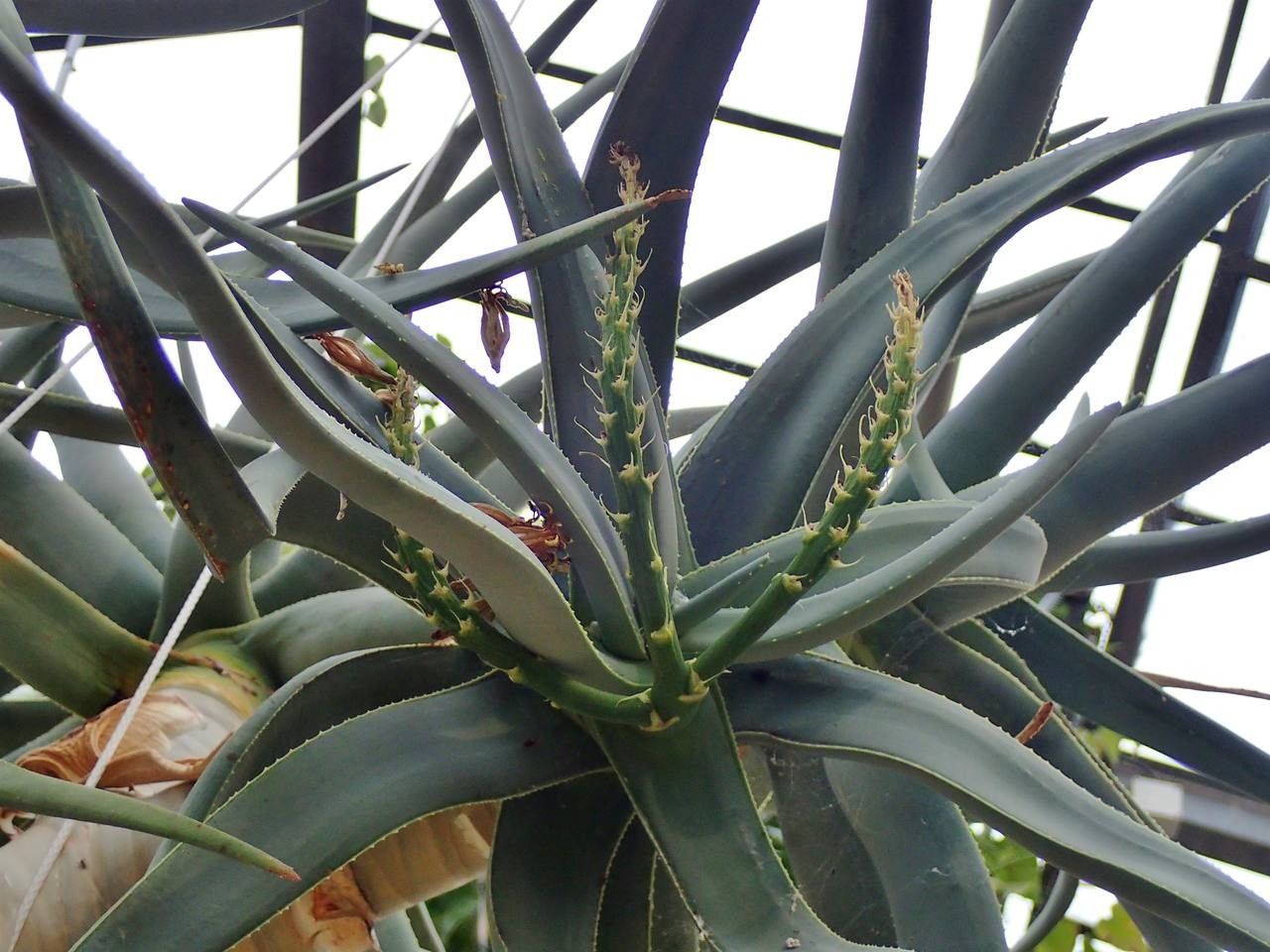
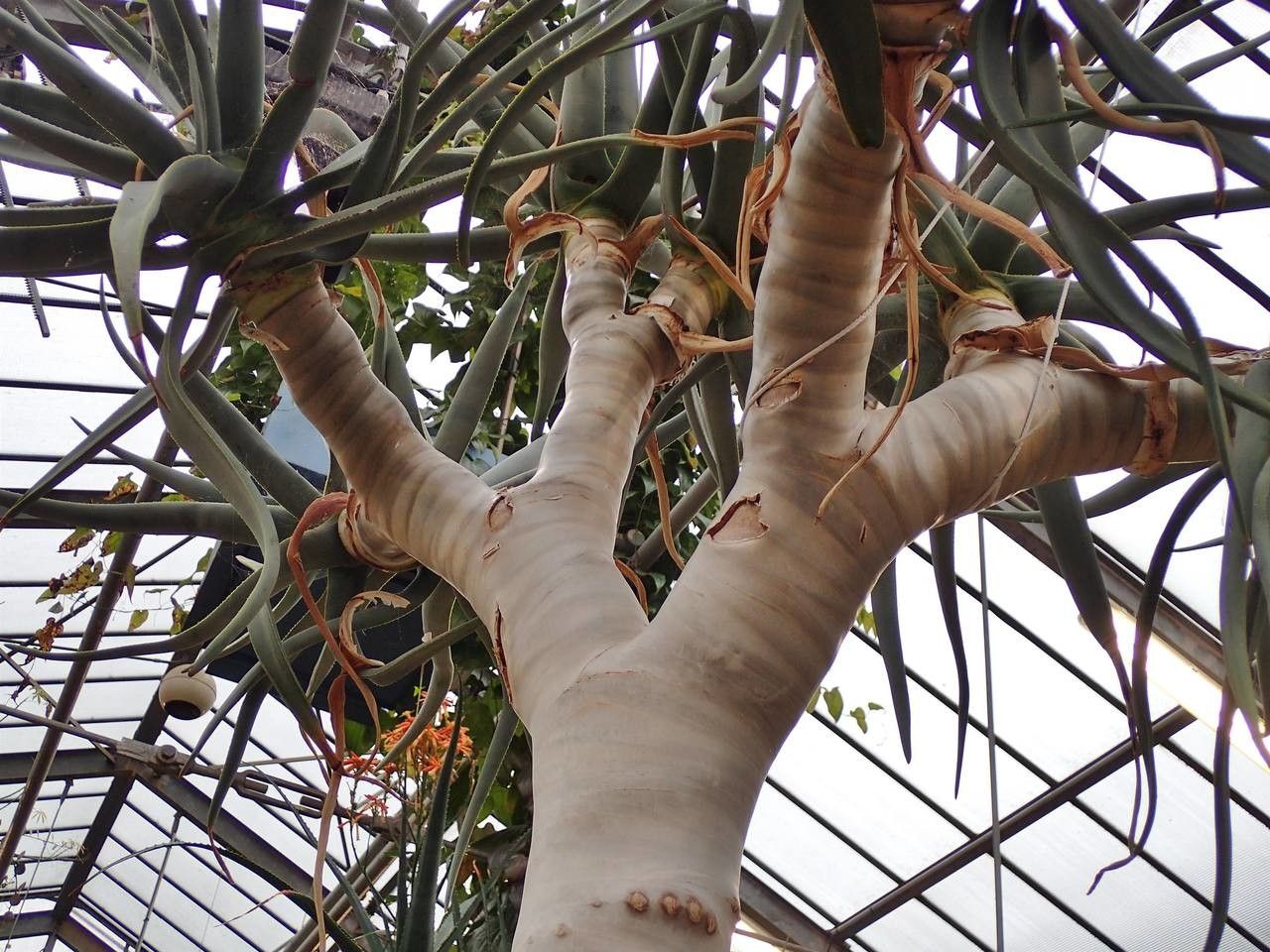
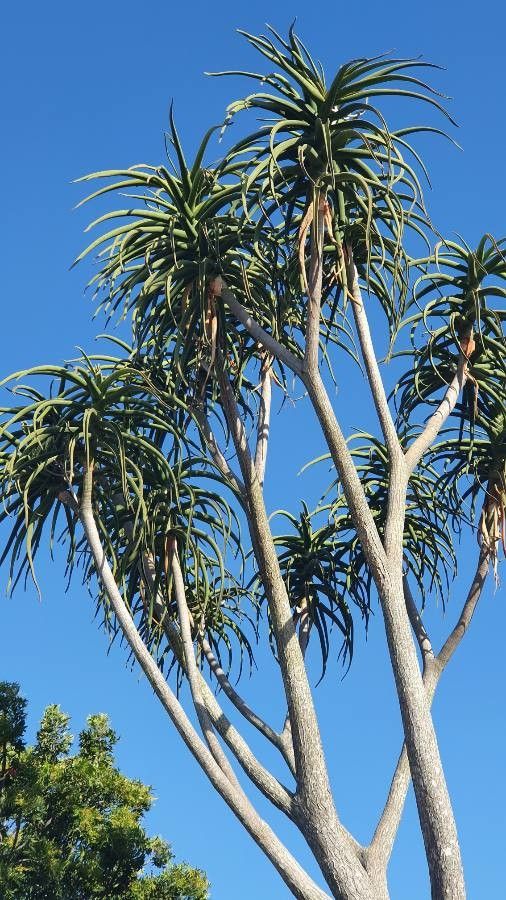
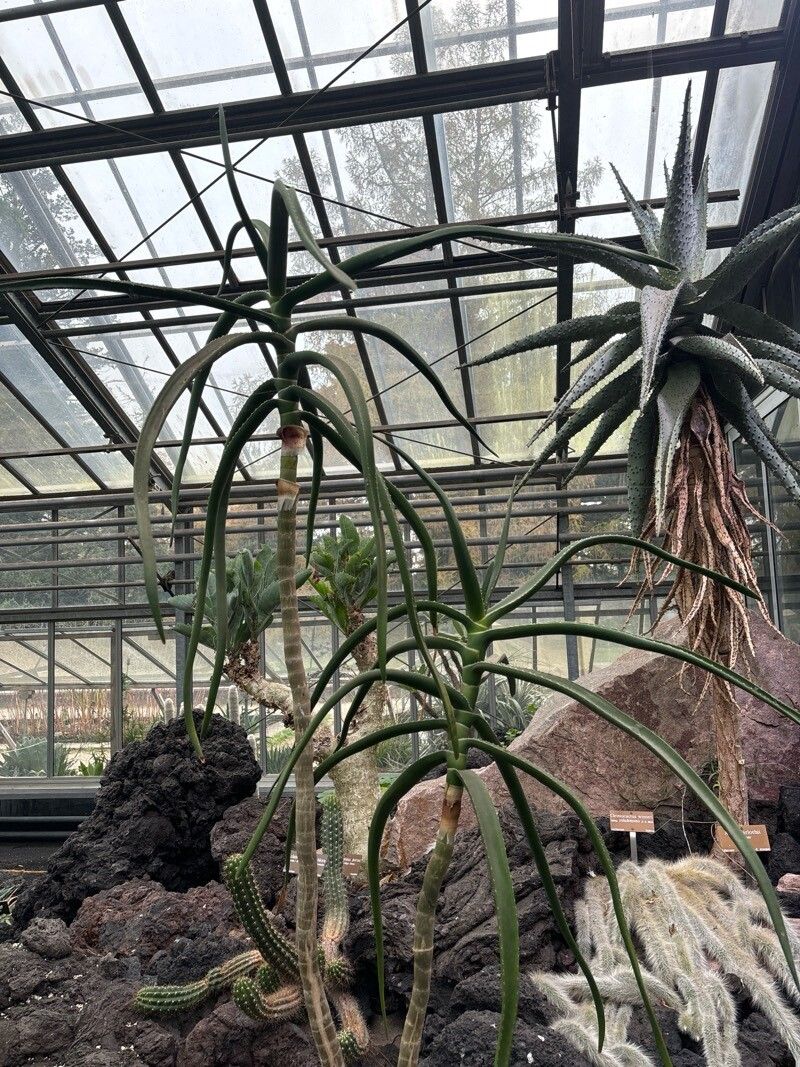
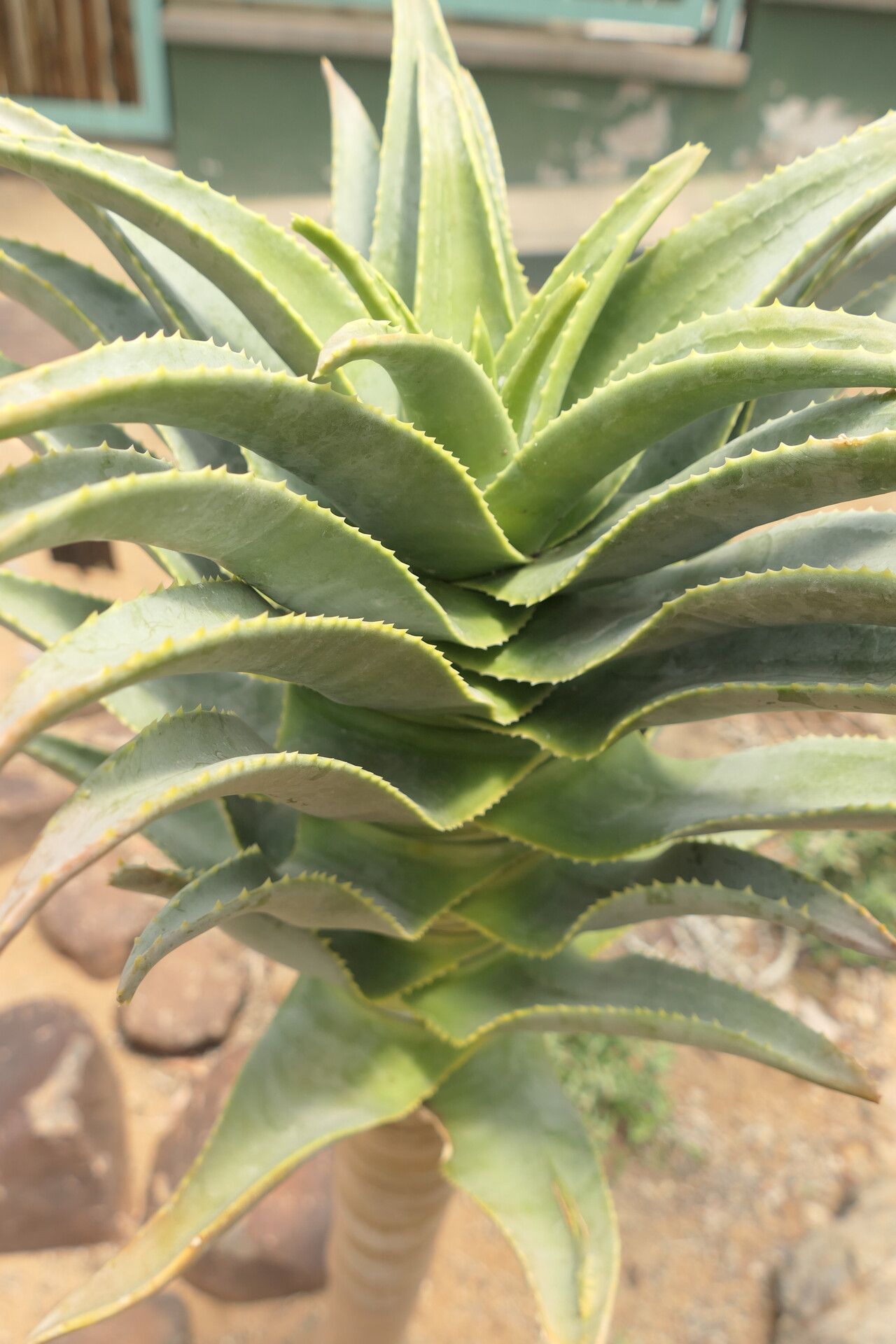
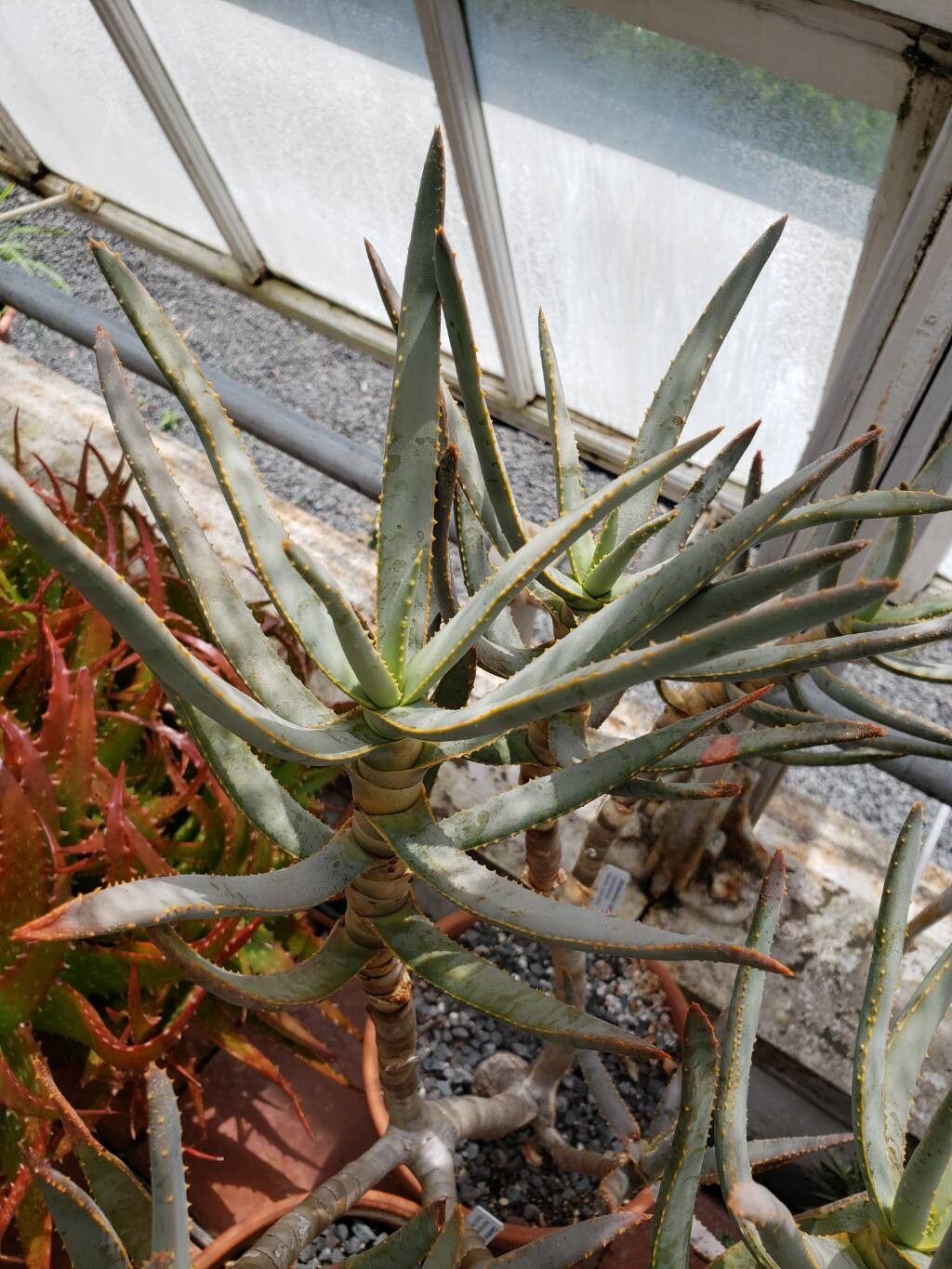
Aloidendron dichotomum, commonly known as the quiver tree, is a succulent plant native to the arid regions of southern Africa. Belonging to the Asphodelaceae family, it can grow up to 9 meters tall. The plant is distinctive for its thick trunk and branches that split into two, exhibiting a dichotomous growth pattern.
The leaves of Aloidendron dichotomum are succulent and capable of storing water for extended periods. They are covered in a white, powdery substance that helps reflect sunlight and reduces water loss through transpiration.
The quiver tree derives its name from the San people, who used its branches to make quivers for their arrows. It holds cultural significance in southern Africa, where it is believed to possess medicinal properties.
Aloidendron dichotomum plays a crucial role in arid ecosystems by providing food and shelter for various animals, including birds, insects, baboons, and porcupines. However, habitat loss due to human activities such as mining and agriculture has led to the species being listed as vulnerable by the International Union for Conservation of Nature (IUCN). Conservation efforts are underway to protect this iconic African plant species from further decline.
Quiver tree shows strong disease resistance and is unlikely to become sick under normal care. It is also not easily affected by most pests and diseases. Regarding care needs, the quiver tree is drought-tolerant and can withstand long stretches without watering. It needs little fertilizer and generally does not require pruning. This makes it suitable for people of all experience levels, especially those who prefer to spend less time on plant care. It is a good option for people who frequently are away for extended periods and might forget to water their plants regularly.
How to keep Aloidendron Dichotomum.
Light
Originally from dry regions, the Quiver tree prospers in full sun, its native habitat marked by strong sunlight and very little shade. It can also tolerate partial sun, giving it some flexibility in how it grows.
Water
The quiver tree, native to arid regions, is highly drought-tolerant and efficiently stores water. To prevent root rot, it should be watered weekly. The tree thrives in rocky terrains and possesses a robust root system that can extract moisture from poor soils, making it an ideal choice for xeriscaping.
Temperature
The quiver tree prospers in warm conditions and needs elevated temperatures during its growing season to support growth and metabolic processes. It favors abundant sunlight, suitable moisture, and good airflow. It can be damaged by very low temperatures or by excessive watering. It's important to maintain a balance and to avoid both extreme heat and overly dry conditions.
Fertilizer
For a Quiver tree, small amounts of fertilizer once or twice a year during the growing season are enough. Avoid fertilizing in winter and in summer when it is dormant. Cut back on fertilizer for plants that have been repotted and wait a couple of months after repotting before you fertilize. Fertilizing helps maintain healthy growth and encourages blooms.
Pruning
Quiver trees benefit from winter pruning, which promotes their growth and health. During pruning, remove any dead or damaged branches, but take care not to make deep cuts into the main branches. This process helps improve air circulation, prevents disease, and maintains the tree's structural integrity. Always use clean, sharp tools to minimize the risk of infection.
Botanical profile.
- Plant Type
- Tree, Succulent
- Life Cycle
- Perennial
- Genus
- Aloidendron
- Family
- Asphodelaceae
- Hardiness Zone
- 9-11
- Mature Height
- 4.88 m to 9.14 m
- Mature Spread
- 3.05 m to 4.88 m
- Leaf Color
- Light Green, Green Yellow
- Leaf Type
- Evergreen
- Flower Color
- Yellow
- Flower Size
- 3.05 cm to 4.06 cm
- Bloom Time
- Late summer, Early fall, Mid fall
- Planting Time
- Spring
- Harvest Time
- Late fall, Early winter, Mid winter
- Native Area
- South Africa, Namibia
Other names.
Reader questions.
What is the Quiver tree?
The Quiver tree, known botanically as Aloidendron dichotomum, is a distinctive plant species. While this entry does not provide detailed descriptions on its essentials, symptoms of any conditions, or additional information, the Quiver tree is notable for its unique botanical name and its place in the plant kingdom.