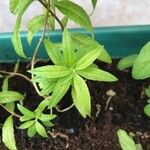
Aloysia citriodora
به لیمو · Lemon verbena · Sweet-scented verbena · Bee balm · Lemon beebush
Description
Source: leafsnapAloysia citrodora, lemon verbena, is a species of flowering plant in the verbena family Verbenaceae, native to South America. Other common names include lemon beebrush. It was brought to Europe by the Spanish and the Portuguese in the 17th century and cultivated for its oil.
Care Guide
💧 Water 1 to 2 times a week
Water your lemon verbena regularly but sparingly. The soil needs to stay consistently moist without waterlogging the roots. When 2 inches of the topsoil feels dry to the touch, then it's time to water your plant. Water weekly and reduce during the winter months.
☀️ Light
🌡️ Temperature
Lemon verbena plants are native to warm, sunny, frost-free climates. They are cold-hardy at temperatures down to 40°F (4°C). Any lower, and your plant will go into dormancy and promote leaf drop. These plants don't mind humidity, growing well in dry or humid environments.
💨 Humidity normal (40-60%)
This plant will thrive in moderate humidity, which is probably the level in your home. However, misting it a few times a week can be very beneficial. Make sure the room has good ventilation.
🪴 Soil
🌱 Fertilizer
Feed your lemon verbena every spring with an all-purpose fertilizer for lush, vigorous growth. Adding compost and manure tea during its growing season will increase your plant's productivity. Don't forget to water thoroughly after amending organic material.
🪴 Pot & Repot
✂️ Pruning
Lemon verbena can grow lanky up to 8 feet if you don't keep its growth in check. In the early spring, cut them back by 1/3-1/2 to encourage bushier, thicker growth while keeping it compact and manageable.
🌿 Propagating
🐛 Diseases & pets
☠️ Toxicity
Lemon verbena is mildly toxic to animals but not to humans. Consuming large amounts of the plant will result in excessive salivation, vomiting, depression, incoordination, dilated pupils, low body temperature. Severe cases of poisoning will also bring about seizure, coma, and death, though this is rare.
Characteristics
- Plant Type
- Tender perennial in frost-free zones
- Genus
- Aloysia
- Family
- Verbenaceae
- Hardiness Zone
- USDA growing zones 8 through 11
- Bloom Time
- Late summer
- Native Area
- South America, especially Chile and Peru