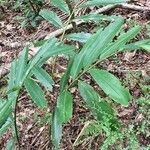
Alpinia caerulea
Blue Berry Ginger · Native Ginger
Description
Source: leafsnapAlpinia caerulea, commonly known as native ginger or in the case of the subspecies from the Atherton Tableland red back ginger, is an understorey perennial herb to 3 m, growing under rainforest, gallery forest and wet sclerophyll forest canopy in eastern Australia. Leaves are up to 40 cm long and 3–10 cm wide. The inflorescence is 10–30 cm long. The blue capsule is globose 1 cm across, with a brittle outer covering containing black seed and white pulp.
Care Guide
💧 Water
Native ginger thrives in high humidity, reflecting its tropical rainforest origins. This plant requires consistent moisture and does best with weekly watering, although it can endure short periods of drought. As an evergreen, it is important to keep it well-watered to ensure year-round leaf retention and overall health.
☀️ Light Partial sun
Native ginger is found in habitats like forest understories or rocky sites with natural shade. It prefers partial sunlight but can also tolerate full sun when necessary. This flexibility lets it do well under a range of light exposures.
What are the sunlight requirements for growing Native Ginger (Alpinia caerulea)?
Native Ginger (Alpinia caerulea) thrives in various sunlight conditions. For 'Full shade', it requires less than 3 hours of sunlight a day, making it ideal for those darker spots in your garden. If you're aiming for 'Partial sun', it prefers about 3-6 hours of sunlight. It's important to watch how sunlight moves through your garden throughout the day. This observation will help you choose locations that offer the perfect balance of light and shade, ensuring your Native Ginger plants are happy and healthy.
🌡️ Temperature 20–37.8°C
Native ginger prefers moderate temperatures similar to what people usually find comfortable. It does best in conditions that are neither excessively hot nor excessively cold. The primary concern with high temperatures is the possibility of sunburn, so providing some shade in summer is recommended to prevent too much heat. When temperatures fall, Native ginger goes into dormancy. If you want continuous growth, you need to keep temperatures higher through the winter. Frost can damage the plant and should be avoided.
What is the botanic name of Native Ginger?
The botanic name of Native Ginger is Alpinia caerulea. It is a species recognized for its unique characteristics and applications, although specific details about its uses, care, or history were not provided in the original data.
💨 Humidity
🪴 Soil 6-6
🌱 Fertilizer
To feed Native ginger, apply a natural or commercial fertilizer high in nitrogen for leaf development, phosphorus for roots and blossoms, and potassium to support photosynthesis and maximize fruit production. Plant in spring, amend the soil with compost or manure, and fertilize seedlings once they reach a height of 2-4 inches. A shortage of macronutrients results in slow growth, wilting, and reduced fruit quality.
🪴 Pot & Repot Every 12 months
✂️ Pruning
Native ginger features lush leaves and produces blue fruits. To encourage growth and maintain the plant's health, prune the plant from early to late spring. This process helps remove dead foliage and control the size of the plant. Additionally, thin out crowded areas to improve airflow. Regular pruning promotes vigor and prevents disease, so be sure to use clean, sharp tools while doing so.
🌿 Propagating
🐛 Diseases & pets
☠️ Toxicity
Characteristics
- Plant Type
- Herb
- Life Cycle
- Perennial
- Genus
- Alpinia
- Family
- Zingiberaceae
- Hardiness Zone
- 9-11
- Mature Height
- 2.13 m
- Mature Spread
- 40 cm
- Leaf Color
- Dark Green
- Leaf Type
- Semi-evergreen
- Flower Color
- White
- Flower Size
- 2.03 cm to 3.05 cm
- Bloom Time
- Late spring, Summer
- Planting Time
- Spring, Summer, Autumn
- Harvest Time
- Late summer, Fall