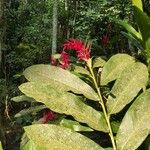
Alpinia purpurata
Red ginger · ఎర్రల్లం · Ornamental Ginger · কলাবতী · Graveyard Flower
Description
Source: leafsnapAlpinia purpurata, commonly referred to as red ginger, also called ostrich plume and pink cone ginger, are native Malaysian plants with showy flowers on long brightly colored red bracts. They look like the bloom, but the true flower is the small white flower on top. It has cultivars called Jungle King and Jungle Queen. Red Ginger grows in Hawaii, Trinidad, Grenada, St. Lucia, Panama, Dominica, St. Vincent, Martinique, Jamaica, Guadeloupe, Puerto Rico, Suriname (where its Dutch name is 'bokkepoot', billy-goat's foot), and many Central American nations, including Belize. It is also found in Samoa, where it is the national flower, and is locally called "teuila." Red ginger can also be grown in South Florida since, in general, the region does not fall below freezing temperatures. It prefers partial shade and moist humid conditions, although it can tolerate full sun in some climates. It tends to like to be well watered and not left to dry out. Red ginger can also be grown as a houseplant and its cut flowers can be used in arrangements.
💡 Red ginger is highly invasive in Hawaii, where it is known to overrun many forests. In this region, the red variety is referred to as "Jungle King," and the pink variety is known as "Jungle Queen."
🌳 Red ginger has a range of unexpected uses, including the extraction of valuable essential oils valued in traditional medicine and employed in fragrance production. Another remarkable quality of red ginger is its natural pigment, which is suitable for creating environmentally friendly, non-toxic paints and dyes. Its vivid red color could have a major impact on the fashion and textile industries. Additionally, red ginger acts as a bioindicator, revealing the presence of certain metals in the soil — an interesting and practical environmental application.
🎭 Affection, Wealth, Achievement
Care Guide
💧 Water Every 7 days
Originating from tropical rainforests, red ginger thrives in environments with high humidity and consistently moist soil. To support its lush growth, water it weekly. Red ginger is usually grown outdoors and flourishes during periods of high rainfall, which provide the optimal hydration needed for its health.
How should I water my Red ginger plant?
To properly water the Red ginger, it is recommended to use filtered water at room temperature. Tap water may have harmful particles, so filtered water is preferable. It is important for the water to be at room temperature or slightly warmer because the Red ginger is accustomed to a warm environment and cold water can be stressful for it. Additionally, avoid watering the plant from above as it can cause issues with the leaves. Instead, slowly pour the filtered room temperature water onto the soil until it is fully soaked. This method helps moisturize the roots and supports their growth and nutrient absorption.
What should I do if I give my Red ginger plant too much water or too little water?
Overwatering is a common problem for Red ginger plants and can cause wilting, yellowing, and even diseases like root rot, mold, and mildew. Underwatering is less common but can still occur, leading to brittle, brown leaves. It's important to notice signs of overwatering early on and reduce watering immediately. Assessing the soil's drainage quality is also crucial - if it drains poorly, replace it with a well-draining potting mix. If your Red ginger shows signs of needing more water, simply increase your watering schedule until the signs improve.
How often should I give water to my Red ginger?
If your Red ginger plant is in a pot, the most precise way to determine when to water it is by checking the soil's moisture level. Just stick your finger into the soil and see if the top two to three inches are dry. If they are, then it's time to water your plant. If you're growing your Red ginger outdoors in the ground, you can use the same method to check the soil. Once the top few inches of soil have dried out, it's a sign that your plant needs water. Typically, during the spring and early fall, you'll need to water this plant about once a week using this method. However, in extremely hot weather, you may need to water it twice or even more times per week. It's worth noting that mature and well-established Red ginger plants have a remarkable ability to withstand drought.
How much water should I give to my Red ginger plant?
To properly water your Red ginger, you need to be generous with the amount of water you provide. Wait until the top two to three inches of soil are dry, then give the plant a thorough watering. Make sure to soak the soil completely. The water you add should be enough to cause excess water to flow through the drainage holes at the bottom of the pot. If you don't see any excess water draining, it means you haven't watered enough. However, avoid letting the water accumulate in the soil, as this can be harmful to the plant. On the other hand, if water doesn't drain through the pot, it could indicate that the soil doesn't drain well, which is bad for the plant's health. If the plant is outside, 1 inch of rain per week is sufficient.
How do I water my Red ginger as it grows?
The water requirements of the Red ginger can vary based on its growth stages. Initially, when the plant is in its early years or newly transplanted, it will need more water than usual. During these stages, the Red ginger focuses on developing new roots to support future growth. These roots require more moisture for optimal performance. As the plant matures over a few seasons, it will require less water. Additionally, during the blooming period, the Red ginger may require more water due to the significant amount of moisture needed for flower development.
☀️ Light Partial sun
Red ginger does best with a moderate amount of sunlight but can adapt to both lower and higher light levels. Native to habitats with varying light, it remains healthy in significant shade as well as in brighter conditions. Still, too much sun can scorch the leaves, while insufficient light can limit the plant's growth.
What are the sunlight requirements for red ginger?
Red ginger requires partial sun, about 3-6 hours of sunlight daily, but it can also tolerate full sun or full shade conditions, which means more than 6 hours of sunlight. It is versatile and can adapt to both substantial shadows and stronger illumination conditions originating from diverse light environments. However, it's essential to watch how sunlight moves through your garden, choosing spots that offer the perfect balance for the plant's health. Excessive sun can scorch the leaves, while insufficient light may impede growth.
How does artificial lighting benefit indoor red ginger plants?
Indoor red ginger plants benefit significantly from artificial lighting, especially when natural sunlight is scarce, such as in winter or less sunny spaces. Artificial lights, like LED lights that can be customized to provide specific wavelengths, promote healthier, faster growth. Depending on their typical sun exposure needs, full sun plants require 30-50W/sq ft, partial sun plants 20-30W/sq ft, and full shade plants 10-20W/sq ft of artificial light. Setting the light source 12-36 inches above the plant for 8-12 hours per day mimics natural sunlight, aiding in optimal growth.
What are some common symptoms of improper lighting in red ginger plants?
Symptoms of improper lighting in red ginger include small, lighter-colored, or poorly developed new leaves, leggy or sparse growth, and faster leaf drop as the plant tries to conserve resources. Chlorosis, or yellowing of leaves, can indicate overexposure to light, while leaf curling, wilting, sunscald, and leaf scorching are signs of excessive sunlight exposure. These symptoms demonstrate the plant's struggle with adapting to its light environment, either due to insufficient sunlight or too much direct exposure.
What steps can be taken to address red ginger's light-related issues indoors and outdoors?
To optimize red ginger's growth in response to light-related issues, a gradual adaptation strategy is recommended. Indoors, move the plant to sunnier spots each week until it gets 3-6 hours of direct sunlight, or use artificial lighting for plants that are large or difficult to move, ensuring at least 8 hours of light daily with desk, ceiling, or professional grow lights. Outdoors, similarly, transition the plants to sunnier locations gradually to prevent sunburn. If sunlight is blocked by obstacles like trees, consider pruning to improve light access or transplant smaller plants during their dormant period to areas with better light and drainage, ensuring healthier new growth.
🌡️ Temperature 20–37.8°C
Red ginger's native habitat indicates it needs a warm, humid climate. It prefers temperatures between 68 ℉ (20 ℃) and 100.4 ℉ (38 ℃), consistent with its tropical nature. In winter, the plant should be protected from cold winds and frost, and temperatures kept at a minimum of 60.8 ℉ (16 ℃) to prevent harm.
What is the ideal growth environment for red ginger?
Red ginger thrives in a warm and humid climate, which suits its tropical nature. The ideal temperature range for red ginger is between 68°F (20°C) and 100.4°F (38°C). To protect the plant from cold winds and frost during winter, it is recommended to maintain a minimum temperature of 60.8°F (16°C) to prevent damage. Red ginger is extremely heat-loving, and exposure to cold temperatures can cause harm to the plant. In the autumn, if grown outdoors, it is advisable to bring red ginger indoors and place it near a bright window, albeit at a certain distance from heaters. Keeping the temperature above 20°C during winter is beneficial for its growth, and temperatures approaching 5°C are detrimental.
How does low temperature affect red ginger and what are the solutions?
Red ginger prefers warm temperatures and is negatively affected by low temperatures, thriving best when the temperature is above 20°C. During winter, it is crucial to keep it above 5°C. Exposure to temperatures below 1°C may cause the leaves to lighten in color. After frost damage, the leaves gradually turn brown or black, with symptoms such as wilting and drooping occurring. To address frost damage, trim off the frost-damaged parts and move the plant indoors to a warm environment for cold protection. Placing the plant near a south-facing window ensures ample sunlight, but it should also be kept away from heaters or air conditioning vents to avoid excessively dry air.
How does high temperature affect red ginger and what are the solutions?
During the summer, red ginger should be kept below 38°C to avoid stress from high temperatures. When the temperature exceeds 43°C, the leaves may lighten in color, making the plant more susceptible to sunburn. The solutions to prevent damage from high temperatures include trimming away the sunburned and dried-up parts of the plant. Moving the plant to a location that offers shade from the midday and afternoon sun helps prevent further sunburn. Additionally, watering the plant in the morning and evening can be beneficial to keep the soil moist, providing a cooler environment for red ginger.
💨 Humidity
🪴 Soil 5-7
🌱 Fertilizer
Red ginger needs the most fertilizer during its active growth period, which takes place mainly in spring, summer, and early fall. Fertilizing supplies essential nutrients the soil may lack, supporting healthy root and stem growth and producing attractive foliage, a defining characteristic of this plant.
Why should I put fertilizer on my Red ginger plant?
All plants, including the Red ginger, need soil nutrients for their growth. However, there is no guarantee that the soil in your garden will have all the required nutrients. To make sure your plants have the necessary nutrients, you can use fertilization and soil amendments. For Red ginger specifically, fertilizer is essential for the healthy development of its roots and stems during the growing season. Additionally, fertilization helps the plant produce a stunning set of leaves, which is crucial because the foliage is what makes Red ginger visually appealing.
When should I fertilize my Red ginger?
A Red ginger plant requires the most fertilizer when it is actively growing, which usually happens throughout spring, summer, and early fall. After winter, you should feed the Red ginger roughly every two to four weeks until fall. During fall, you can gradually decrease the amount of fertilizer until you stop feeding the plant completely in preparation for winter, as its growth will slow down significantly.
When is it not a good time to put fertilizer on my Red ginger?
For most of the year, including spring, summer, and most of the fall, it's important to regularly feed your Red ginger. However, there are a couple of exceptions. If you notice that you've given your Red ginger too much fertilizer or made a mistake while fertilizing it, causing fertilizer burn or another issue, you'll need to fix that before resuming regular feedings. The only time of year you shouldn't fertilize Red ginger is during winter. If you're growing it indoors in a cold area, it will go into a dormant phase. Feeding it during this time is not only unnecessary and unhelpful for growth, but it's also likely to cause fertilizer burn.
What kind of plant food does my Red ginger need?
To ensure the proper growth of a Red ginger, it is important to use a fertilizer with a specific blend of nutrients. The ideal ratio of nitrogen (N), phosphorus (P), and potassium (K), known as N-P-K, is 3-1-2. However, in some cases, a general-purpose fertilizer with an even nutrient blend can also work well. Regardless of the type of fertilizer used, it is important that the ratio numbers representing the volume of each nutrient do not exceed 10. You can choose between a granular or liquid-based fertilizer for your Red ginger. If you opt for a liquid-based fertilizer, it is recommended to dilute its strength by half. While granular fertilizer doesn't have many downsides, using liquid fertilizer is often the most practical choice, especially if you water your Red ginger while feeding it.
How can I provide nutrients to my Red ginger plant?
When fertilizing your Red ginger, it's important to follow the instructions provided with the fertilizer. For this type of plant, it's best to apply the fertilizer while watering the soil to avoid damaging the roots. If you use a slow-release granular fertilizer, simply sprinkle it on the soil and water immediately after. For liquid-based fertilizers, mix them with water, apply to the soil, and then water a bit more. Remember to dilute your fertilizer by at least half, especially during spring and fall when the plant is growing or slowing down.
🪴 Pot & Repot 2-3 years
When repotting Red ginger, select a pot 1-2 inches (2.5–5.1 cm) larger that has ample drainage. Use a well-draining potting mix. Repot in spring or fall, making sure the root ball sits slightly below the rim of the flower pot. Water thoroughly after repotting and place in a warm spot with indirect sunlight.
✂️ Pruning
Red ginger is a tropical ornamental plant known for its vibrant red flowers and lush foliage. To keep it healthy and attractive, prune red ginger from early to late spring. This process involves removing spent flowers and damaged stems, which encourages bushier growth, improves air circulation, enhances flowering, and prevents legginess.
🌿 Propagating
🐛 Diseases & pets
☠️ Toxicity
This plant is not thought to be toxic to humans or animals.
Characteristics
- Plant Type
- Herb
- Life Cycle
- Perennial
- Genus
- Alpinia
- Family
- Zingiberaceae
- Hardiness Zone
- 10-11
- Mature Height
- 0.76 m to 3.05 m
- Mature Spread
- 0.91 m to 3.05 m
- Leaf Color
- Green
- Leaf Type
- Evergreen
- Flower Color
- Red
- Flower Size
- 3.56 cm to 7.62 cm
- Bloom Time
- All year round
- Planting Time
- Spring
- Harvest Time
- All year round
- Native Area
- Vanuatu, Indonesia, Solomon Islands, Papua New Guinea