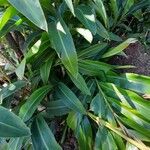
Alpinia zerumbet
Shell-ginger · Shellplant · Light galangal · Pink porcelain-lily · Shellflower
Description
Source: leafsnapAlpinia zerumbet, commonly known as shell ginger or pink porcelain lily, is a tropical perennial plant native to East Asia. It belongs to the ginger family and is closely related to turmeric and cardamom. This plant can grow up to 8 feet tall and features long, lance-shaped leaves that are green on top and burgundy underneath. In the summer, it produces cone-shaped flowers with pink or white petals. Often cultivated as an ornamental plant in gardens because of its attractive foliage and flowers, Alpinia zerumbet thrives in warm, humid climates with well-draining soil. However, it can also be grown indoors as a houseplant in cooler regions. For centuries, traditional Chinese medicine has utilized Alpinia zerumbet for its anti-inflammatory properties. The leaves are also used to make an herbal tea known for its calming effects on the body. In summary, Alpinia zerumbet is a beautiful tropical plant that enhances the color and texture of any garden or indoor space. Additionally, it offers potential health benefits thanks to its medicinal properties.
🌳 Apart from its usual uses, shell ginger serves a distinct role in bioremediation because it can take up heavy metals from polluted soils, providing an environmentally friendly approach to contamination. Also, its large, tough leaves are traditionally woven into items like hats and bags in some cultures, illustrating its flexibility for making practical goods.
🎭 Affection, Wealth, Achievement
Care Guide
💧 Water Every 7 days
Shell ginger, originating from tropical rainforests, thrives in environments with high humidity and consistent moisture. To keep its foliage lush, water it weekly and ensure the soil remains evenly moist. This evergreen plant prefers conditions that mimic its naturally humid habitat, making it suitable for both indoor and outdoor settings.
How should I best water my Shell ginger plant?
To ensure the health of your Shell ginger plant, it is recommended to use filtered water at room temperature for watering. Tap water may contain harmful particles, so filtered water is preferable. The plant originates from a warm environment, so it is important to avoid using cold water that may shock it. It's also advised to avoid overhead watering, as this may cause issues with the foliage. Instead, simply apply the filtered room temperature water directly to the soil until it is completely soaked. This helps to moisten the roots and encourages them to spread and absorb necessary nutrients.
What should I do if I give my Shell ginger plant too much or too little water?
Both overwatering and underwatering can harm the health of your Shell ginger, but overwatering is more common. When the plant receives too much water, its stems and leaves may wilt and turn yellow. Extended overwatering can also lead to diseases like root rot, mold, and mildew, which can be fatal. On the other hand, underwatering is less likely since Shell ginger can withstand drought. However, if it happens, the leaves may become brittle and brown. To care for your Shell ginger, it's important to recognize signs of overwatering early. Some diseases caused by overwatering, such as root rot, may be irreversible if ignored for too long. If you notice early signs of overwatering, reduce your watering immediately and check the soil drainage. Replace poorly draining soil with a loose, well-draining potting mix. Conversely, if you observe signs of underwatering, simply water the plant more regularly until the signs disappear.
How frequently should I water my Shell ginger plant?
If your Shell ginger is in a pot, the easiest way to check if it needs water is to stick your finger in the soil. If the top two to three inches of soil are dry, it's time to water it. If you have your Shell ginger planted outdoors, you can use the same method to test the soil. When the top few inches of soil are dry, it's time to water. In the spring and early fall, you'll usually need to water once a week using this method. In extremely hot weather, you might have to water twice a week or more. However, mature and well-established Shell ginger plants can tolerate drought well.
How often should I water my Shell ginger?
To properly water your Shell ginger, don't hold back on the water. Wait until the top couple of inches of soil are dry, then give it a thorough watering. Make sure to soak the entire soil. You should add enough water so that it drains out of the pot's drainage holes. If you don't see any excess water draining, you may not have watered enough. However, be careful not to let the water build up inside the soil, as that can harm the plant. On the other hand, if water isn't draining properly, it could mean the soil doesn't have good drainage, which is bad for the plant's health. If you're growing the plant outside, one inch of rain per week should be enough.
How do I water my Shell ginger differently as it grows?
The water needs of the Shell ginger can vary depending on its growth stages. In the first few years of its life or after transplanting, it requires more water than usual. This is because it focuses on growing new roots to support future growth, and these roots need more moisture. As the plant becomes more mature, it will require less water. Another growth stage that may require increased watering is during the bloom period. Flower development uses up a significant amount of moisture, so it's important to provide more water during this time.
☀️ Light Partial sun
Shell ginger prefers an environment with moderate sunlight. It can withstand both very sunny spots and areas shaded by a dense canopy that reduce light, but an imbalance—either excessive or insufficient sun—can impede its growth.
What kind of sun does Shell ginger require?
In order for shell ginger to thrive indoors, it is best to provide it with full, indirect sunlight. This means exposing the plant to bright sunlight that is not directly hitting it from a window or grow light. To protect it from direct sunlight, you can place a sheer curtain between the shell ginger and the window, or position it behind a window with a dark screen.
How can I keep new Shell ginger safe from sunlight damage?
If you're bringing home a Shell ginger for the first time, it's a good idea to gradually expose it to sunlight instead of immediately placing it in bright, indirect light. Take about two weeks to slowly move the plant into the sunlight to prevent leaf damage from sudden intense light. By easing it into the light, your Shell ginger will have a better chance of adapting well to your home environment.
How do I know if Shell ginger is getting too much light?
Shell ginger is a plant that can easily get sunburned if exposed to too much sunlight. In its natural habitat, these plants only receive gentle, filtered light that shines through the trees. Although they do need more light than that to grow indoors, too much can be problematic. If your Shell ginger gets excessive sunlight, you will notice that the leaves start to look faded or washed out, the tips of the leaves may turn yellow or brown and become dry and brittle, and the plant may even grow too fast to stand upright on its own.
What should I do if my Shell ginger plant gets slightly damaged from light?
Plants experience less severe sunburn compared to people. If the leaves are too damaged or over half of the leaf is affected, you can remove them. You can also trim the leaves to save them from sunburn damage as long as there isn't too much discoloration. To prevent further light damage, relocate your Shell ginger away from its light source.
Does Shell ginger require varying amounts of light at different stages of growth?
Shell ginger, unlike some other plants, requires time to acclimate to bright light. Propagated cuttings should only be exposed to moderate indirect light, and during the growing season, new leaves should also be protected. The tender new leaves are particularly susceptible to sunburn compared to the rest of the plant.
🌡️ Temperature 20–37.8°C
The shell ginger prefers a warm, humid environment, with native growing conditions that require temperatures of 20 to 38 ℃ (68 to 100 ℉). In summer, keep the temperature between 25 and 32 ℃ (77 and 90 ℉); in winter, adjust it to 18 to 25 ℃ (64 to 77 ℉) to ensure optimal growth.
What are the temperature requirements for Shell ginger?
Shell ginger thrives in a warm and humid environment, with ideal temperature conditions ranging from 20 to 38°C (68 to 100°F). During the summer months, maintaining a temperature between 25 to 32°C (77 to 90°F) is recommended. In contrast, winter temperatures should be adjusted to 18 to 25°C (64 to 77°F) to support optimal growth. The plant is very heat-loving, and exposure to cold temperatures can be harmful. It is suggested to move Shell ginger plants indoors in autumn, keeping them near a bright window but away from direct heat sources to ensure temperatures remain above 20°C. Temperatures nearing 0°C can be detrimental to the plant.
How does low temperature affect Shell ginger and what measures should be taken?
Shell ginger is sensitive to low temperatures and flourishes when conditions are above 20°C. During winter, it's crucial to ensure the temperature stays above 0°C as exposure to temperatures below -5°C can cause the leaves to lighten in color. Following frost damage, leaves may turn brown or black, and the plant may exhibit symptoms like wilting and drooping. To remedy this, trim off frost-damaged parts and move the plant indoors to a warm area for cold protection. Positioning the plant near a south-facing window ensures adequate sunlight without placing it near heaters or air conditioning vents to avoid excessively dry air.
What should be done if Shell ginger experiences high temperatures?
During the summer, it's essential to keep Shell ginger's exposure to temperatures below 38°C to prevent heat stress. If temperatures rise above 43°C, the leaves may lighten in color, indicating susceptibility to sunburn. In such cases, trim the sunburned and dried parts away and relocate the plant to an area with shade, especially from the midday and afternoon sun. Watering the plant in the morning and evening helps maintain soil moisture, further protecting the plant from the high heat.
💨 Humidity high (>60%)
This plant needs special care because it loves high humidity levels of 60-80% or more. The best way to achieve this is by placing a humidifier near the plant. Daily misting is also essential! Make sure the room has good ventilation.
🪴 Soil 6-7
🌱 Fertilizer
Shell ginger needs the greatest amount of fertilizer during its active growth period, which takes place mainly in spring, summer, and early fall. Feeding supplies essential nutrients that the soil may lack, supporting strong root and stem growth and the attractive foliage that is a distinguishing feature of this plant.
Why should I add fertilizer to my Shell ginger?
Plants, including the Shell ginger, need soil nutrients to grow, but it's not always guaranteed that the soil will have all the necessary nutrients. To address this, fertilization and soil amendments are used to provide basic and specific nutrients that plants require. For the Shell ginger, fertilizer is particularly important in promoting healthy root and stem development during the growing season. Additionally, fertilization enhances the appearance of its foliage, which is the main source of its decorative appeal.
When should I put fertilizer on my Shell ginger plant?
During the active growing seasons of spring, summer, and early fall, a Shell ginger requires the highest amount of fertilizer. This period spans most of these months. After winter concludes, you should feed your Shell ginger once every two to four weeks. Keep up with this feeding schedule until the arrival of fall. Once fall comes, you can gradually decrease the amount of fertilizer you give to the plant, leading to the complete discontinuation of feedings in preparation for winter when the Shell ginger's growth is minimal.
When is it best to not add fertilizer to my Shell ginger plant?
To keep your Shell ginger healthy, it's important to regularly feed it throughout most of the year, including spring, summer, and most of the fall. However, there are a couple of exceptions to this. If you notice that you've given your Shell ginger too much fertilizer or if you've fertilized it incorrectly, leading to fertilizer burn or other issues, you'll need to address those problems before resuming the regular feeding schedule. During winter, it's best to avoid fertilizing your Shell ginger altogether. If you have an indoor plant that experiences cold winters, it will go into a dormant phase during this time. Feeding it during dormancy is not only unnecessary but can also lead to fertilizer burn.
What kind of fertilizer does my Shell ginger plant need?
To provide the necessary nutrients for a Shell ginger plant, a specific fertilizer blend is recommended. This blend should have a ratio of 3 parts nitrogen (N), 1 part phosphorus (P), and 2 parts potassium (K), known as an N-P-K ratio of 3-1-2. However, in some cases, a general-purpose fertilizer with an even blend can also work effectively. Regardless of the fertilizer type chosen, it is important to ensure that the volume ratio of each nutrient is 10 or lower. When it comes to choosing between granular or liquid-based fertilizers, both options are suitable. However, if you decide to use a liquid-based fertilizer, diluting its strength by half is often recommended. Granular fertilizer, on the other hand, does not have any significant disadvantages, but using liquid fertilizer might be more convenient, especially if you plan to water your Shell ginger plant while feeding it.
How can I give nutrients to my Shell ginger plant?
When purchasing fertilizer for your Shell ginger, it's important to follow the provided application instructions. In most cases, it is recommended to fertilize just before or while watering the soil to prevent root damage. If using a slow-release granular fertilizer, sprinkle it onto the soil and water immediately. For liquid-based fertilizer, dilute it with water and apply it to the soil before providing additional water. It is especially important to dilute the fertilizer by at least half during spring and fall when the plant's growth is increasing or slowing down.
🪴 Pot & Repot 2-3 years
When repotting Shell ginger, select a pot 1-2 inches (2.5–5.1 cm) larger with good drainage. Use a well-draining potting mix. Repot in spring or fall, making sure the root ball sits slightly below the rim of the flower pot. Water thoroughly after repotting and place it in a warm spot with indirect sunlight.
✂️ Pruning
Shell ginger showcases variegated leaves and vibrant flowers. To maintain its health and appearance, prune annually in early spring to remove dead stems. Thinning in late spring helps improve air circulation. Regular pruning not only encourages healthy growth but also prevents the plant from becoming overgrown. Always sterilize your tools before pruning to prevent the spread of disease.
🌿 Propagating
🐛 Diseases & pets
☠️ Toxicity
Characteristics
- Plant Type
- Herb
- Life Cycle
- Perennial
- Genus
- Alpinia
- Family
- Zingiberaceae
- Hardiness Zone
- 9-11
- Mature Height
- 2.13 m to 3.05 m
- Mature Spread
- 0.61 m to 1.22 m
- Leaf Color
- Green
- Leaf Type
- Evergreen
- Flower Color
- White, Pink
- Flower Size
- 6.35 cm to 10.16 cm
- Bloom Time
- Late spring, Early summer, Mid summer
- Planting Time
- Spring
- Harvest Time
- Mid summer, Late summer, Early fall
- Native Area
- India, Malaysia, Cambodia, Vietnam, Myanmar, Japan, Bangladesh, Laos, Thailand, China