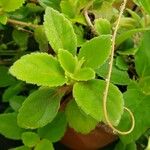
Alsobia dianthiflora
Description
Source: leafsnapThe durable, attractive, and low-maintenance white lace flower (Orlaya Grandiflora) has a profusion of small, pure white blooms that are borne in umbels atop fascinating, rich, gray-green foliage. On average, each plant produces between 8 and 10 clusters of blooms. The plant receives its common name from the pattern that the expanding flowering umbels produce, which is frequently said to resemble a lace pattern. From early July until the first frost, the white lace blossom blooms for a long time.
Care Guide
💧 Water 1-2 times a week
The Chocolate Soldier plant flourishes in the tropical forest understory, where it prefers consistently moist soil and dappled light. It needs to be watered weekly and helps to increase indoor humidity, making it ideal for creating a microclimate. As an evergreen plant, the Chocolate Soldier offers year-round greenery and assists in regulating indoor air moisture.
☀️ Light Partial sun
Chocolate soldier naturally occurs in places like forest understories and rocky areas, where it grows in natural shade. It prefers partial sun but can tolerate both full sun and full shade, reflecting its adaptable and hardy character.
🌡️ Temperature 20–37.8°C
Chocolate soldier comes from tropical areas, where the climate is generally warm and humid. Consequently, it is well-suited to high heat and moisture. It dislikes sudden shifts in temperature and thrives in a steady thermal environment, so indoor temperature swings should be avoided. It typically cannot withstand cold and needs warmer conditions to develop; if the temperature falls too low, growth may stop or the plant may die.
💨 Humidity
🪴 Soil 5-6
🌱 Fertilizer
Proper fertilization is essential for Chocolate soldier's health and appearance. Fertilize Chocolate soldier during summer, applying fertilizer once a month throughout the season. Nutrients fuel growth and maintain the plant's structures. Fertilization improves Chocolate soldier's flower display, ensuring the best blooms.
🪴 Pot & Repot 2-3 years
When repotting Chocolate soldier, choose a pot 1-2 inches (2.5–5.1 cm) larger with ample drainage. Use a well-draining potting mix. Repot in spring or fall, ensuring the root ball is placed slightly lower than the rim of the flower pot. Water thoroughly after repotting and keep it in a warm spot with indirect sunlight.
✂️ Pruning
The Chocolate Soldier plant features trailing stems, fuzzy succulent leaves, and tubular flowers. To encourage bushier growth and more blooms, prune the plant from early to late spring to remove any leggy or damaged stems. Use clean, sharp tools to promote the plant's health by enhancing air circulation and light penetration.
🌿 Propagating
🐛 Diseases & pets
☠️ Toxicity
Lace vine contains oxalates, which, when consumed in large quantities, can lead to renal illness or low calcium or magnesium levels in dogs, sheep, and other animals. Lace vine is one of the numerous plants in the knotweed family that contain oxalates. According to Pet Poison Helpline, the clematis plant, a common vine, contains an irritant glycoside that, when consumed, can result in drooling, vomiting, and diarrhea.
Characteristics
- Plant Type
- Herb, Vine
- Life Cycle
- Perennial
- Genus
- Alsobia
- Family
- Gesneriaceae
- Hardiness Zone
- 10-12
- Mature Height
- 20 cm to 30 cm
- Mature Spread
- 30 cm to 46 cm
- Leaf Color
- Dark Green
- Leaf Type
- Semi-evergreen
- Flower Color
- White
- Flower Size
- 2.03 cm to 3.05 cm
- Bloom Time
- All year round
- Planting Time
- Spring, Summer, Autumn
- Harvest Time
- All year round
- Native Area
- Colombia, Mexico, Costa Rica