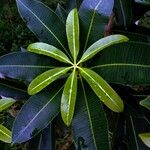
Alstonia scholaris
Ditabark · Palmira alstonia · White cheesewood · Pali-mari · Milkwood-pine
Description
Source: leafsnapAlstonia scholaris, commonly known as the Indian devil tree or dita bark, is a tropical evergreen tree native to the Indian subcontinent and Southeast Asia. This tree can grow up to 40 meters tall and features a straight trunk with smooth, gray bark. Its leaves are glossy green, leathery, and elliptical with pointed tips. The small, white or cream-colored flowers of the tree emit a sweet fragrance that attracts bees. Known for its medicinal properties, Alstonia scholaris contains alkaloids in its bark, which have been used in traditional medicine to treat various ailments such as fever, diarrhea, dysentery, and malaria. It is also utilized in Ayurvedic medicine for treating skin diseases. The wood of Alstonia scholaris is lightweight yet strong, making it an excellent material for furniture and construction items such as doors and window frames. Beyond its practical applications, Alstonia scholaris holds cultural significance in many parts of Southeast Asia. In some communities, it is considered sacred and believed to possess spiritual powers capable of warding off evil spirits. In summary, the Alstonia scholaris tree is highly valued not only for its cultural and medicinal importance but also for its strong wood, which is useful in various industrial applications.
🌳 Blackboard tree has attracted attention for its potential as a natural air purifier. Because of its large leaf canopy and ability to absorb pollutants, it is incorporated into urban greening projects designed to reduce environmental pollution. The blackboard tree's versatile uses beyond timber and traditional medicine make it a candidate for tackling rising air pollution in congested cities, presenting it as an eco-friendly asset.
Care Guide
💧 Water Every 7 days
The blackboard tree prospers in tropical climates with regular rainfall and high humidity. It prefers consistent moisture and can tolerate moderate drought once established. To ensure its optimal health, water the tree every two weeks and provide additional irrigation during dry spells, especially during peak growing seasons.
How should I water my Blackboard tree the right way?
Your Blackboard tree doesn't have specific requirements for how you water it. You can use any common watering tool like watering cans, hoses, or cups to moisten the soil. It's important to water the plant directly on the soil and make sure all areas are equally moistened, so the roots get enough water. Using filtered water is recommended as tap water may have harmful particles. It's also best to use water that is at or slightly above room temperature as very cold or hot water can shock the Blackboard tree. However, the tree usually responds well to any type of water.
What should I do if I give my Blackboard tree too much or too little water?
Outdoor plants, especially newly planted ones or seedlings, are often at risk of not receiving enough water. It is important to make sure they are adequately watered for a few months after planting, as once their roots are established, they can rely on rain most of the time. When Blackboard trees are planted in pots, overwatering tends to be a common issue. If you accidentally overwater your Blackboard tree, there are steps you can take to remedy the situation. Firstly, stop watering the plant immediately to minimize the effects of overwatering. Then, remove the tree from its pot to check its roots. If no root rot is found, you can return the tree to its container. However, if root rot is present, trim any affected roots and apply a fungicide to prevent further damage. Finally, repot the tree in well-draining soil. In the case of underwatering, simply increase the frequency of watering. This issue is typically easy to fix, as the plant's leaves will droop, dry out, and fall off when underwatered. Once sufficient watering is provided, the leaves will quickly regain their fullness. It is important to adjust your watering frequency as soon as you notice underwatering occurring.
How frequently should I give water to my Blackboard tree?
If your area doesn't receive much rainfall, you'll need to water your outdoor plants regularly. In the spring and fall, watering every 2 weeks should be sufficient. In the summer, you'll need to water more frequently, while in the winter, you can reduce watering since plants grow slower and require less water. If you have a young or newly planted Blackboard tree, be sure to water it more frequently to help it establish and eventually become more adaptable to drought. When it comes to potted plants, you have two options for determining how often to water your Blackboard tree. One way is to follow a set watering schedule, such as once a week or once every two weeks. However, keep in mind that this approach may not always work because it doesn't account for the unique conditions of your growing environment. Alternatively, you can adjust your watering frequency based on the moisture level of the soil. It's generally best to wait until the top two to four inches of soil have completely dried out before giving your plant more water. This approach allows you to adapt the watering frequency to the changing seasons, especially during the summer when your Blackboard tree will require more water.
How much water does my Blackboard tree require?
Watering your Blackboard tree may not require a large amount of water. If only a few inches of soil have dried since the last watering, giving your tree about five to ten ounces of water each time can support healthy growth. You can also determine the water volume based on the soil moisture. Take note of how many inches of soil have dried out between waterings. To ensure your tree receives enough moisture, water all the dry soil layers since the last watering. If more than half of the soil is dry, you may need to provide more water. In such cases, continue watering until excess water drains from the pot's holes. If your Blackboard tree is planted in a rainy outdoor area, it may not require extra watering. When the tree is young or establishing, make sure it receives 1-2 inches of rain per week. As it grows and becomes established, it can rely solely on rainwater. Only water it fully during hot weather with no rainfall for 2-3 weeks to prevent stress.
How can I know if I'm giving enough water to my Blackboard tree?
The Blackboard tree is often overwatered, which causes specific signs you need to watch out for. Typically, when a Blackboard tree is overwatered, its leaves turn yellow and it might lose some leaves. In addition, overwatering can lead to the plant's structure shrinking and potential root rot. On the other hand, an underwatered Blackboard tree will also start to droop and have brown or brittle leaves. Regardless of whether you notice signs of overwatering or underwatering, you should be ready to take action and revive the health of your Blackboard tree.
☀️ Light Partial sun
Blackboard tree needs a location with abundant sunlight to develop vigorously. Native to a region with intense sun and heat, it does very well under those conditions. Excessive shade inhibits its growth, while ample sunshine increases its vigor; however, too much exposure can result in sunscald.
What are the sunlight requirements for Blackboard tree (Alstonia scholaris)?
The Blackboard tree (Alstonia scholaris) thrives best in environments that offer full sun, defined as receiving above 6 hours of sunlight per day. It is crucial to observe the movement of sunlight through your garden to find the optimal balance of light and shade for your plants. The natural habitat of the Blackboard tree is one of substantial solar exposure, which is essential for its vigorous growth. While it can endure some shade, too little sunlight hampers its growth, and too much sun can lead to sunscald, highlighting the importance of careful exposure management.
How can artificial lighting support the growth of indoor Blackboard trees?
For indoor Blackboard trees, especially during winter or in spaces with insufficient natural sunlight, artificial lighting can be a beneficial supplement. Choosing the right kind of artificial light, such as LED lights that provide specific wavelengths needed by your plant, is crucial. The amount of artificial light needed varies depending on the plant's natural requirements: full sun plants need 30-50W/sq ft, partial sun plants require 20-30W/sq ft, and full shade plants should get 10-20W/sq ft. To mimic natural sunlight, place the light source 12-36 inches above the plant and ensure it's on for 8-12 hours per day.
What are the signs of insufficient light in Blackboard trees and how can it be remedied?
Insufficient light in Blackboard trees can lead to a range of symptoms including small, lighter-colored new leaves, leggy or sparse growth, faster leaf drop, slower or halted growth, and various forms of leaf damage such as chlorosis, sunscald, curling, wilting, and scorching. Remedies involve moving plants gradually to sunnier locations until they receive at least 6 hours of direct sunlight daily. For indoor plants, consider using artificial light if relocation is not feasible, keeping lamps on for at least 8 hours daily. Outdoor plants should also be moved gradually to prevent sunburn. It's important to address obstructions blocking sunlight by pruning or relocating the plants to ensure they receive adequate sunlight.
🌡️ Temperature 20–35°C
The Blackboard tree is indigenous to areas where temperatures typically range from 68 to 95°F (20 to 35°C). It prefers warmer climates with steady temperatures. If located in colder regions, consider providing warm shelter or indoor care during the harsh winter months.
What is the ideal temperature range for a Blackboard tree?
The Blackboard tree, or Alstonia scholaris, thrives in environments where the temperature typically ranges from 68 to 95°F (20 to 35°C). It prefers warmer climates and stable temperatures. For colder regions, providing warm shelter or indoor care during harsh winter months is advisable. The tree has some cold tolerance and does not require additional cold protection measures if the temperature remains above 0°C.
How can I protect my Blackboard tree in cold weather?
If the temperature is expected to drop below 0°C, temporary cold protection measures are necessary for your Blackboard tree. You should wrap the plant with plastic film, fabric, or other suitable materials to provide insulation. Once the temperature rises again, remove these protective measures promptly. For cases where the temperature falls below -5°C and the leaves start to droop or in severe cases wilt and fall off, trim off the frost-damaged parts. Before experiencing low temperatures again, wrap the plant with non-woven fabric or cloth and construct a wind barrier to protect it.
What should I do if my Blackboard tree is exposed to high temperatures?
During summer, it's important to keep the Blackboard tree below 35°C to avoid stress from high temperatures. If the temperature exceeds 38°C, the leaves may begin to show signs of distress such as lighter color, dry and withered leaf tips, curling, and increased susceptibility to sunburn. To mitigate these issues, trim away the sunburned and dried-up parts of the plant. Move the plant to a shadier location or use a shade cloth to protect it from the midday and afternoon sun. Additionally, water the plant in the morning and evening to keep the soil moist and help the plant cope with the heat.
💨 Humidity
🪴 Soil 6-7
🌱 Fertilizer
The timing of fertilizing a Blackboard tree is important. Apply fertilizer in early spring and continue monthly until early summer. Fertilizer encourages attractive blooms and supplies energy during both dormant and active growth phases.
Why should I add fertilizer to my Blackboard tree?
Fertilizing your Blackboard tree has multiple benefits. Firstly, it will enhance the production of beautiful blooms. The ideal time to fertilize is in early spring to ensure excellent flowers during that season. Additionally, fertilizer provides the tree with ample energy, which it can store in the ground during dormant growth phases. By giving your Blackboard tree extra nutrients in the fall or late spring, it can accumulate more energy to utilize when active growth resumes.
When should I fertilize my Blackboard tree?
Proper timing is essential for fertilizing the Blackboard tree. If fertilizer is applied too early, when the tree is still dormant, it won't be effective and will simply be washed away by rain, leading to waste and pollution. To ensure optimal results, the first application of fertilizer should be made in early spring. Afterward, continue fertilizing once a month until early summer.
When is it not a good time to fertilize my Blackboard tree?
To ensure optimal growth, it is important to avoid over-fertilizing the Blackboard tree with high levels of nitrogen. While nitrogen promotes leaf development, excessive amounts can hinder bloom production. Instead, opt for a fertilizer that contains lower levels of nitrogen compared to other nutrients. Additionally, it is advisable to refrain from fertilizing the tree after early autumn, as this can result in excessive growth just before winter. Moreover, avoid fertilizing the Blackboard tree during hot and dry periods, as dry soil does not effectively deliver fertilizer, and stimulating growth during this time may require more water than is available. It is best to apply fertilizer earlier in the season when temperatures are cooler. Lastly, be aware that the Blackboard tree can absorb fertilizer from nearby plants or lawns, so be cautious of unintentionally giving the tree a double-dose of fertilizer.
What kind of fertilizer does my Blackboard tree require?
To optimize the growth of a Blackboard tree, it is beneficial to use a fertilizer containing a balanced mix of main plant nutrients, with slightly more phosphorus. Alternatively, some gardeners prefer to enhance the tree's soil by adding organic materials like compost, worm castings, and manure. Experienced gardeners may also choose to supplement with water-soluble fertilizers high in phosphorus when flower buds appear, resulting in improved flower development, larger blooms, and longer flowering periods. Fertilizers come in various forms, but liquid or powdered ones tend to be most effective for Blackboard trees. Regardless of the chosen form, it is important to dilute the fertilizer and apply it while watering the tree for optimal results.
How can I give my Blackboard tree some plant food?
To properly fertilize your Blackboard tree, it is crucial to follow the directions for the specific type of fertilizer and conduct some research. Avoid over-fertilization by determining the correct amount to use, which can be done based on the age or trunk diameter of the tree. As a general rule, use an estimate of one-tenth of a pound of fertilizer per year or per inch of trunk, with a maximum of one pound. For granular and organic fertilizers like blood meal, apply them by sprinkling around the base of the tree all the way to the drip line, making sure not to let the fertilizer touch the trunk. Over time, the granules will break down and filter into the soil, where the roots will absorb them. After fertilizing, spread a one-inch layer of compost around the tree's base and thoroughly water it. This will help enhance the effectiveness of the fertilizer.
🪴 Pot & Repot 2-3 years
When repotting a Blackboard tree, select a pot 1-2 inches (2.5–5.1 cm) larger that offers good drainage. Use a well-draining potting mix. Repot in spring or fall, making sure the root ball sits slightly below the rim of the pot. Water thoroughly after repotting and place the plant in a warm spot with indirect sunlight.
✂️ Pruning
The blackboard tree is a tall, evergreen plant with whorled leaves. To maintain its health and improve air circulation, it is best to prune it from early to late winter. Make sure to remove any dead branches during this time. Regular maintenance through pruning promotes healthy growth and enhances the tree's structure, resulting in a more attractive appearance.
🌿 Propagating
🐛 Diseases & pets
☠️ Toxicity
Characteristics
- Plant Type
- Tree
- Life Cycle
- Perennial
- Genus
- Alstonia
- Family
- Apocynaceae
- Hardiness Zone
- 9
- Mature Height
- 20.12 m
- Mature Spread
- 3.35 m
- Leaf Color
- Green
- Leaf Type
- Evergreen, Semi-evergreen
- Flower Color
- White, Cream
- Flower Size
- 0.51 cm to 1.02 cm
- Bloom Time
- Early spring, Mid spring, Late summer, Fall, Winter
- Planting Time
- Spring, Autumn
- Harvest Time
- Late spring, Early summer, Mid summer
- Native Area
- Nepal, Sri Lanka, India, Malaysia, Philippines, Bangladesh, Laos, Brunei, China, Indonesia, Cambodia, Vietnam, Myanmar, Bhutan, Thailand