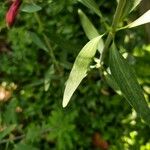
Alstroemeria psittacina
Peruvian-lily · Parrot-lily · Lily of the Incas · Christmas bell · Parrot flower
Description
Source: leafsnapAlstroemeria psittacina, commonly known as the Parrot Lily or Parrot Flower, is a perennial herbaceous plant that belongs to the Alstroemeriaceae family. Native to South America, it thrives in countries such as Brazil, Peru, and Ecuador. This plant can grow up to 1 meter in height and features lance-shaped leaves that are predominantly green with a slight tinge of red or purple. Its flowers are particularly distinctive, boasting bright red petals with yellow-green tips that resemble parrot beaks. The Parrot Lily blooms from late spring through summer, attracting pollinators like bees and butterflies with its nectar-rich flowers. It prefers well-drained soil with moderate moisture levels but is also capable of tolerating drought conditions. In addition to its striking appearance that makes it a popular choice for ornamental purposes, Alstroemeria psittacina has medicinal properties. Traditional medicine practitioners use it to treat various ailments such as fever, inflammation, and pain. Overall, the Parrot Lily adds a unique touch of color and beauty to any garden or landscape design, while also providing potential health benefits. This makes it an excellent addition to any horticultural project.
💡 The Peruvian lily is a rare and beautiful flower, showcasing a range of colors including pink, white, green, gold, and purple-brown. Its elegant and unique patterns adorn several of its petals, making it both rich in color and captivating in appearance.
Care Guide
💧 Water Every 7 days
The Parrot Lily thrives in areas with moderate rainfall and benefits from consistent weekly watering to maintain optimal health. Although it can withstand short periods of drought, it still needs watering even in winter. Unlike many plants that become dormant during the colder months, the Parrot Lily remains active as an evergreen.
☀️ Light Partial sun
Parrot lily originates from habitats like forest understories or rocky sites where it grows in natural shade. It prefers partial sun but can tolerate full sun or full shade, showing its adaptability and hardiness.
What are the sunlight requirements for Parrot Lily?
Parrot Lily (Alstroemeria psittacina) thrives in conditions dependent on the amount of sunlight it receives. For full sun exposure, it requires above 6 hours of sunlight daily. However, it can also grow well under partial sun, needing about 3-6 hours of sunlight. It's important to observe the way sunlight moves through your garden, allowing you to find the ideal spots that offer a harmonious balance of light and shadow. This ensures the plants remain happy and healthy.
🌡️ Temperature 15–35°C
Parrot lily is fairly adaptable to heat, able to withstand high temperatures and wide temperature swings. In hot weather, you should pay attention to watering and provide some shade to prevent sunburn. Conversely, Parrot lily is not very tolerant of cold; although it can endure a certain amount of low temperature, overly cold conditions can cause frost damage.
What is the botanical name of Parrot lily?
The botanical name of Parrot lily is Alstroemeria psittacina.
💨 Humidity
🪴 Soil 6-7
🌱 Fertilizer
The ideal time to fertilize a Parrot lily is in early spring, when it is coming out of dormancy and beginning active growth. Fertilization supplies essential nutrients for healthy development. Although Parrot lily has relatively low fertilization needs, applying fertilizer annually can enhance its survival and promote better, longer-lasting flowers.
🪴 Pot & Repot 2-3 years
Parrot lilies do well in medium-sized containers that allow their roots to expand. To keep them healthy, repot them every 2-3 years during the spring. Be sure to use well-draining pots to prevent root damage. After repotting, place the plant in a spot with bright, indirect light and keep the soil moist to help it recover and produce beautiful blooms.
✂️ Pruning
For optimal growth, parrot lilies benefit from early spring pruning, which helps remove any dead or damaged stems. Regular trimming not only prevents overcrowding but also improves air circulation and promotes healthy growth. To keep your parrot lilies vibrant and visually appealing, always use clean tools to prevent infections.
🌿 Propagating
🐛 Diseases & pets
☠️ Toxicity
Characteristics
- Plant Type
- Herb
- Life Cycle
- Perennial
- Genus
- Alstroemeria
- Family
- Alstroemeriaceae
- Hardiness Zone
- 7-10
- Mature Height
- 91 cm
- Mature Spread
- 46 cm
- Leaf Color
- White, Green, Variegated
- Leaf Type
- Deciduous
- Flower Color
- Red, Green
- Flower Size
- 4.06 cm to 6.35 cm
- Bloom Time
- Late spring, Summer, Early fall
- Planting Time
- Spring, Summer, Autumn
- Harvest Time
- Late summer, Fall
- Native Area
- Brazil, Paraguay, Argentina