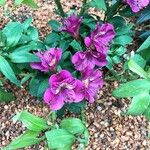
Alstroemeria spp.
Peruvian Lily
Description
Source: leafsnapThe Alstroemeria spp., or Peruvian lily, is a hybrid perennial widely praised for its summer blooms. Though it is not truly a lily, this tuberous perennial closely resembles one. It produces funnel-shaped flowers in various colors, including pink, red, purple, orange, yellow, and white, dotted with brown freckles. These blooms are fast-growing and often the last to fade in mixed flower arrangements, reaching up to 2 weeks. The flowers extend upward from clusters of lance-shaped leaves. Peruvian lilies are best planted in the spring as a sunny garden border.
Care Guide
💧 Water 1 to 2 times a week
Water your Peruvian lilies regularly, especially during hot summers. Ensure that they have about an inch of water every week or when the surface of the soil feels dry to the touch.
☀️ Light
🌡️ Temperature
Peruvian lilies grow best in cool, sunny climates ranging between 65-80°F (18-27°C), Any higher than that and your plants will likely stop producing flowers. They can withstand varying humidity levels, provided they are planted with enough space and air circulation.
💨 Humidity
🪴 Soil
🌱 Fertilizer
Feed your Peruvian lilies with a balanced fertilizer specifically formulated for flowering. Fertilizing in the early spring will keep your flowers productive during the growing season. Manure and compost tea will provide an additional boost of nutrients.
🪴 Pot & Repot
✂️ Pruning
After the blooming period, cut back your lilies to prevent the energy from redirecting into seed production. You can pull up the stems that are less productive to stimulate younger lilies to flourish.
🌿 Propagating
🐛 Diseases & pets
☠️ Toxicity
Peruvian lilies contain tulipalin A, a toxic substance that can cause vomiting, diarrhea, and dermatitis. However, they are classified as only mildly toxic to people and pets.
Characteristics
- Plant Type
- Perennial
- Genus
- Alstroemeria
- Family
- Alstroemeriaceae
- Hardiness Zone
- 7-10
- Bloom Time
- Summer
- Native Area
- South America