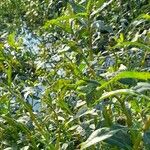
Alternanthera philoxeroides
Alligator-weed · Pig weed
Description
Source: leafsnapAlternanthera philoxeroides, commonly known as alligator weed, is a perennial aquatic plant that belongs to the Amaranthaceae family. Although it is native to South America, its invasive nature has allowed it to spread to many parts of the world. The plant has a prostrate growth habit and can grow up to 1 meter in length. Its leaves are ovate and arranged in opposite pairs along the stem, featuring a glossy green upper surface and reddish-purple undersides. Alligator weed thrives in wetland habitats such as marshes, swamps, ponds, lakeshores, and riverbanks, where it forms dense mats that can choke out native vegetation. It reproduces both vegetatively through stem fragments or rhizomes, as well as sexually through seeds. Despite its invasive nature, which poses significant ecological threats by reducing biodiversity in aquatic ecosystems and altering water flow patterns, alligator weed has been used for medicinal purposes by indigenous people for centuries due to its anti-inflammatory properties. Efforts are being made globally by various organizations, including government agencies and non-governmental organizations (NGOs), to control this invasive species. These efforts include mechanical removal and biological control methods using natural enemies, such as insects that feed on the plant without harming surrounding vegetation.
🌳 Alligatorweed is not merely an invasive plant; it also has several lesser-known uses. Beyond the common perception of it as a threat, its characteristics make it useful for phytoremediation to remove heavy metals from wastewater. It has been investigated for producing bioenergy because of its high biomass yield. Additionally, some herbivorous animals eat alligatorweed, obtaining proteins and other nutrients from it. However, these secondary uses need careful management because of its invasive nature and ecological impact.
Care Guide
💧 Water Every 7 days
Alligatorweed originally comes from freshwater habitats and thrives in moist environments. For optimal growth, it needs weekly watering. This plant is well-suited to areas with fluctuating water levels, such as riparian zones, where water availability changes with the seasons.
How should I water my Alligatorweed plants?
To ensure the health of the Alligatorweed, it is important to water it properly. Use filtered water at room temperature or slightly warmer, as tap water may contain harmful particles. Cold water can be a shock to the plant, so avoid using it. Instead of overhead watering, water the plant by applying filtered room temperature water directly to the soil until it is fully soaked. This method is beneficial as it moistens the roots and helps them spread and gather nutrients.
What should I do if I give my Alligatorweed too much water or too little water?
Overwatering is a more common issue for Alligatorweed than underwatering. When Alligatorweed is overwatered, its stems and leaves may wilt and turn yellow. Overwatering for an extended period can lead to diseases like root rot, mold, and mildew, which can be fatal to the plant. On the other hand, Alligatorweed has good drought tolerance, so underwatering is less common. If underwatering does occur, the leaves may become brittle and brown. It is important to recognize the signs of overwatering early to prevent irreversible damage. If you notice these signs, reduce your watering schedule immediately and consider improving the soil drainage. If your Alligatorweed shows signs of needing more water, simply water it more regularly until the signs improve.
How often should I give water to my Alligatorweed?
If you have a potted Alligatorweed plant, the best way to determine if it needs water is to feel the soil with your finger. If the top two to three inches of soil are dry, it's time to water it. If you have the Alligatorweed planted outdoors in the ground, you can use the same method to test the soil. When the top few inches of soil have dried out, it's time to water it. In the spring and early fall, you'll likely need to water this plant approximately once a week using this method. However, during extremely hot weather, you may have to water it two or more times per week. It's important to note that mature, well-established Alligatorweed plants can handle drought conditions well.
How much water does my Alligatorweed need? How much water does my Alligatorweed plant require?
When watering your Alligatorweed, it's important to give it a generous amount of water without being hesitant. Make sure the top few inches of soil are dry before watering, and then provide enough water to fully saturate the soil. You should add enough water so that it drains through the bottom of the pot. If you don't see any excess water draining, it means you haven't watered enough. However, be careful not to let the water accumulate in the soil, as this can harm the plant. On the other hand, if the water doesn't drain through the pot, it could be a sign of poorly draining soil, which is not good for the plant's health. If the Alligatorweed is outside, it generally needs about 1 inch of rain per week.
How do I water my Alligatorweed as it grows?
The water needs of the Alligatorweed can vary based on its growth stages. When it is young or recently transplanted, it requires more water than usual. During these stages, the plant focuses on developing new roots, which need extra moisture for optimal growth. As the Alligatorweed matures, its water requirements decrease. Additionally, the plant may require more water during its bloom period, as flower development utilizes a significant amount of moisture.
☀️ Light Full sun
Alligatorweed does best in abundant sunlight but can also adapt to moderate light. Native to areas with ample sun exposure, it needs sufficient light to support its growth. Too little light impedes development, while too much can cause wilting and drying out.
What are the sunlight requirements for Alligatorweed?
Alligatorweed thrives best in full sun, requiring above 6 hours of sunlight daily, but it can also adjust to partial sun, about 3-6 hours of sunlight. It's essential to monitor the sunlight in your garden carefully to ensure that the plants receive a proper balance of light and shade for optimal growth. The plant originates from habitats with abundant sunlight, and sufficient light is crucial for its development. Insufficient lighting can hinder the plant's growth, while too much sunlight can lead to wilting and drying.
How to provide artificial lighting for indoor Alligatorweed plants?
For indoor Alligatorweed plants, adequate lighting is essential for optimal growth, especially when natural sunlight is insufficient. Artificial lights, such as LED lights, can be used to replicate the necessary wavelengths of light needed by the plants. Full sun plants require 30-50W/sq ft of artificial light, partial sun plants 20-30W/sq ft, and full shade plants 10-20W/sq ft. The artificial light source should be placed 12-36 inches above the plant, mimicking natural sunlight as closely as possible, with most plants needing 8-12 hours of light per day.
What are the signs of inadequate lighting for Alligatorweed?
Signs of inadequate lighting in Alligatorweed include the development of smaller leaves compared to previous ones, leggy or sparse growth with longer spaces between leaves or stems, faster leaf drop as the plant tries to conserve resources, slower or halted growth as the plant enters survival mode, and lighter-colored or pale new leaves that indicate a loss of chlorophyll and essential nutrients. Excessive sunlight, on the other hand, can cause chlorosis, sunscald, leaf curling, wilting, and leaf scorching, highlighting the importance of finding the right balance of light for the plant.
How can you improve the lighting for Alligatorweed?
To optimize growth, gradually move Alligatorweed to a sunnier spot, ensuring it receives at least 6 hours of direct sunlight daily. A south-facing window is ideal for indoor plants, and keeping curtains open during daylight maximizes sunlight exposure. For larger or immovable plants, consider using artificial light sources like desk or ceiling lamps for at least 8 hours daily, or invest in professional plant grow lights. Outdoors, gradually adapt plants to sunnier locations to prevent sunburn. Reduce sunlight obstructions by pruning or transplant smaller plants to sunnier spots. Remember, parts of the plant affected by insufficient light may not recover, but new growth should be healthy once light conditions improve.
🌡️ Temperature 5–35°C
Alligatorweed is native to temperate regions where average temperatures range from 41 to 95 °F (5 to 35 °C). It prefers steady warmth and should be kept from temperature fluctuations for optimal growth. Seasonal adjustments may be necessary to maintain its preferred temperature range.
What is the native climate of Alligatorweed?
Alligatorweed, scientifically known as Alternanthera philoxeroides, is native to temperate regions. These regions typically experience average temperatures ranging from 41 to 95 °F (5 to 35 °C). The plant prefers consistent warmth and thrives best when temperature fluctuations are minimized. To ensure optimal growth, seasonal adjustments may be needed to keep the plant within its preferred temperature range.
Does Alligatorweed require frost protection in the winter?
Alligatorweed possesses strong cold resistance, meaning special frost protection measures are not usually needed during winter. However, in regions where winter temperatures are expected to fall below -25°C, cold protection should be provided. This can include covering the plant with soil or straw. Additionally, before the first freeze in autumn, it's advisable to water the plant abundantly to keep the soil moist. This helps the soil enter a frozen state while preventing drought and water scarcity for the plant during the colder months.
How does Alligatorweed react to temperatures below -25°C?
Although Alligatorweed is cold-tolerant and grows best when the temperature is above 5°C, it should ideally be kept above -20°C during the winter. In the event that temperatures dip below -25°C, the plant may not show any noticeable changes during the winter. However, there could be a decrease in sprouting or even a lack of sprouting in spring. In such cases, it's recommended to remove any parts of the plant that have failed to sprout come spring.
What should be done if Alligatorweed experiences temperatures above 35°C?
During summer, it is important to ensure that Alligatorweed is kept in conditions below 35°C to prevent heat stress. If the temperature climbs above 41°C, the plant may display signs of distress such as leaves becoming lighter in color, prone to curling, susceptibility to sunburn, and in severe cases, wilting and drying out. To mitigate these issues, trim away the sunburned and dried-up parts of the plant. Moving the plant to a shaded area during the midday and afternoon sun or using a shade cloth can also help. Additionally, watering the plant in the morning and evening will help keep the soil moist, aiding in temperature management.
💨 Humidity
🪴 Soil 5-7
🌱 Fertilizer
Usually one fertilizer application in spring is enough for Alligatorweed, though repeated feedings can maximize growth. Apply every month to a month and a half. Fertilizing improves leaf appearance and function, encouraging even color and a healthy texture. It also promotes root development and nutrient uptake for long-term plant health.
🪴 Pot & Repot
✂️ Pruning
🌿 Propagating
🐛 Diseases & pets
☠️ Toxicity
Characteristics
- Plant Type
- Herb
- Life Cycle
- Perennial
- Genus
- Alternanthera
- Family
- Amaranthaceae
- Hardiness Zone
- 5-10
- Mature Height
- 30 cm to 91 cm
- Mature Spread
- 3.96 m
- Leaf Color
- Green, Blue
- Leaf Type
- Semi-evergreen
- Flower Color
- White
- Flower Size
- 0.76 cm to 1.52 cm
- Bloom Time
- Late spring, Early summer, Mid summer
- Planting Time
- Spring, Summer, Autumn
- Harvest Time
- Summer
- Native Area
- Uruguay, Colombia, Paraguay, Argentina, Mexico, Bolivia, Venezuela, Peru, Guyana, Brazil, Suriname