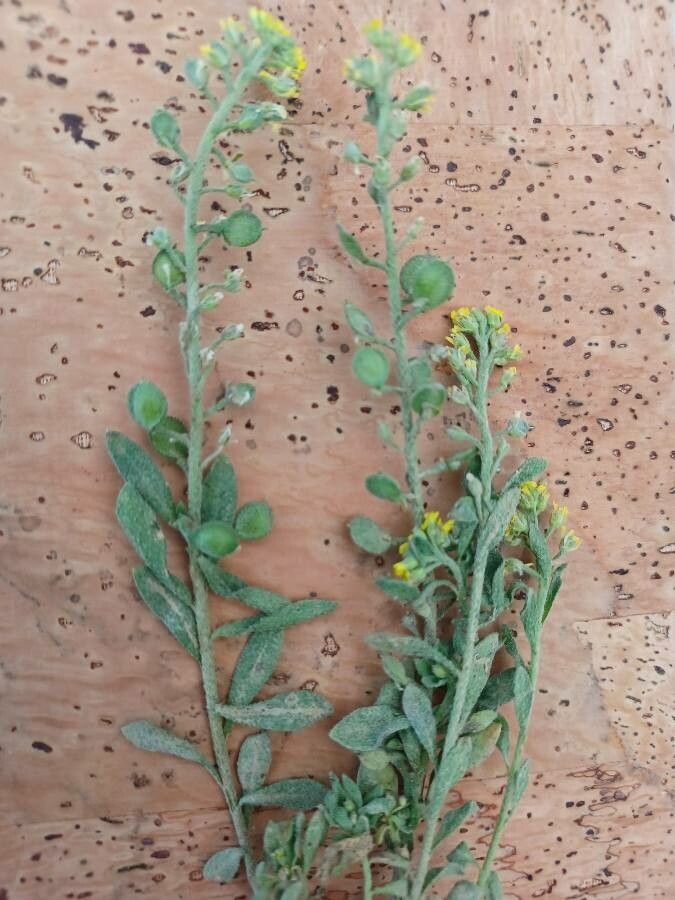
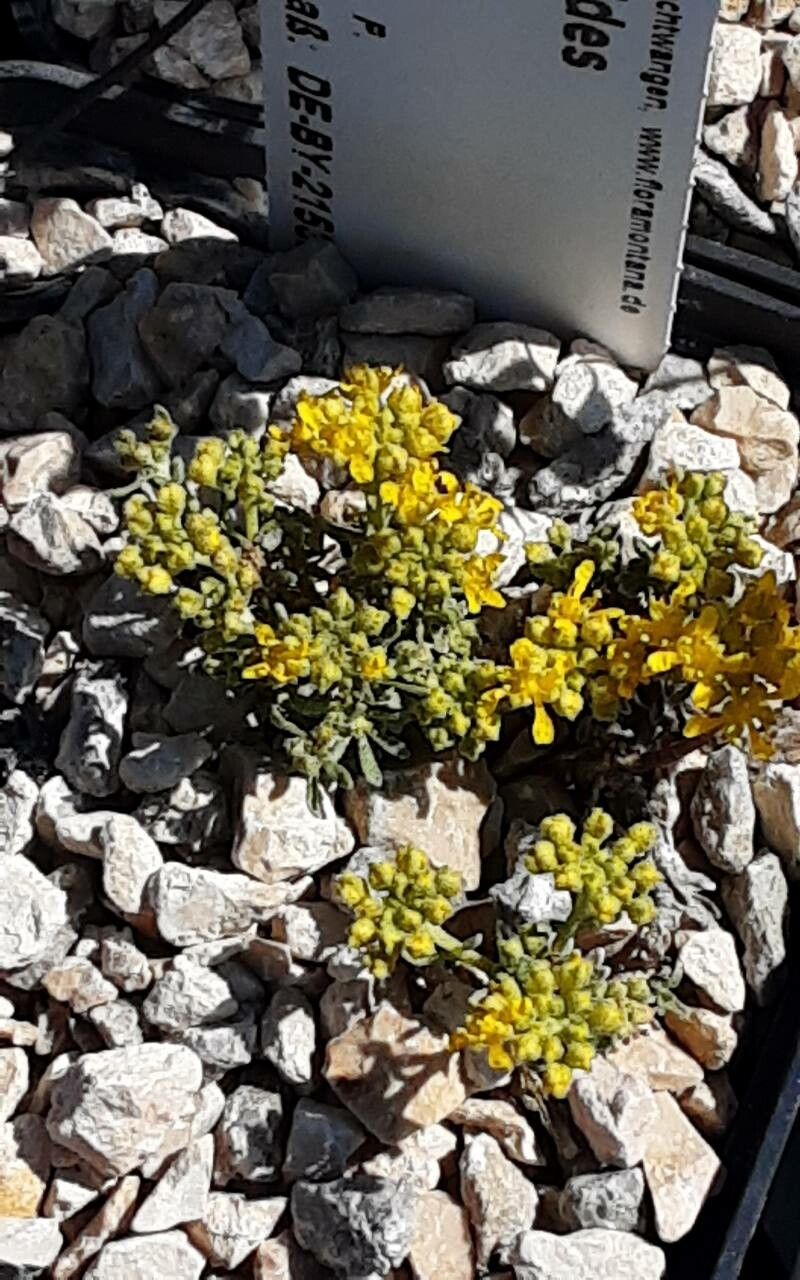
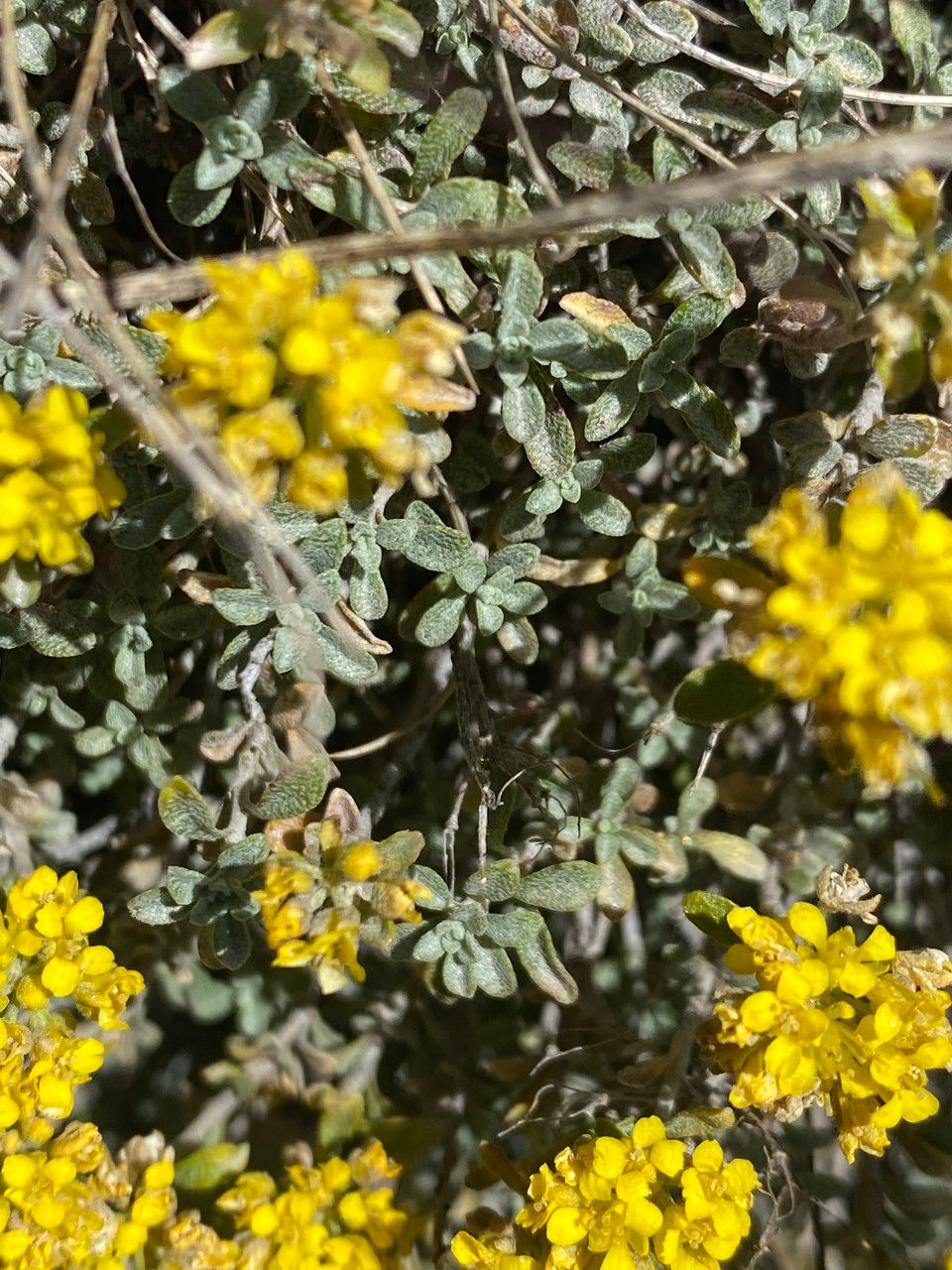
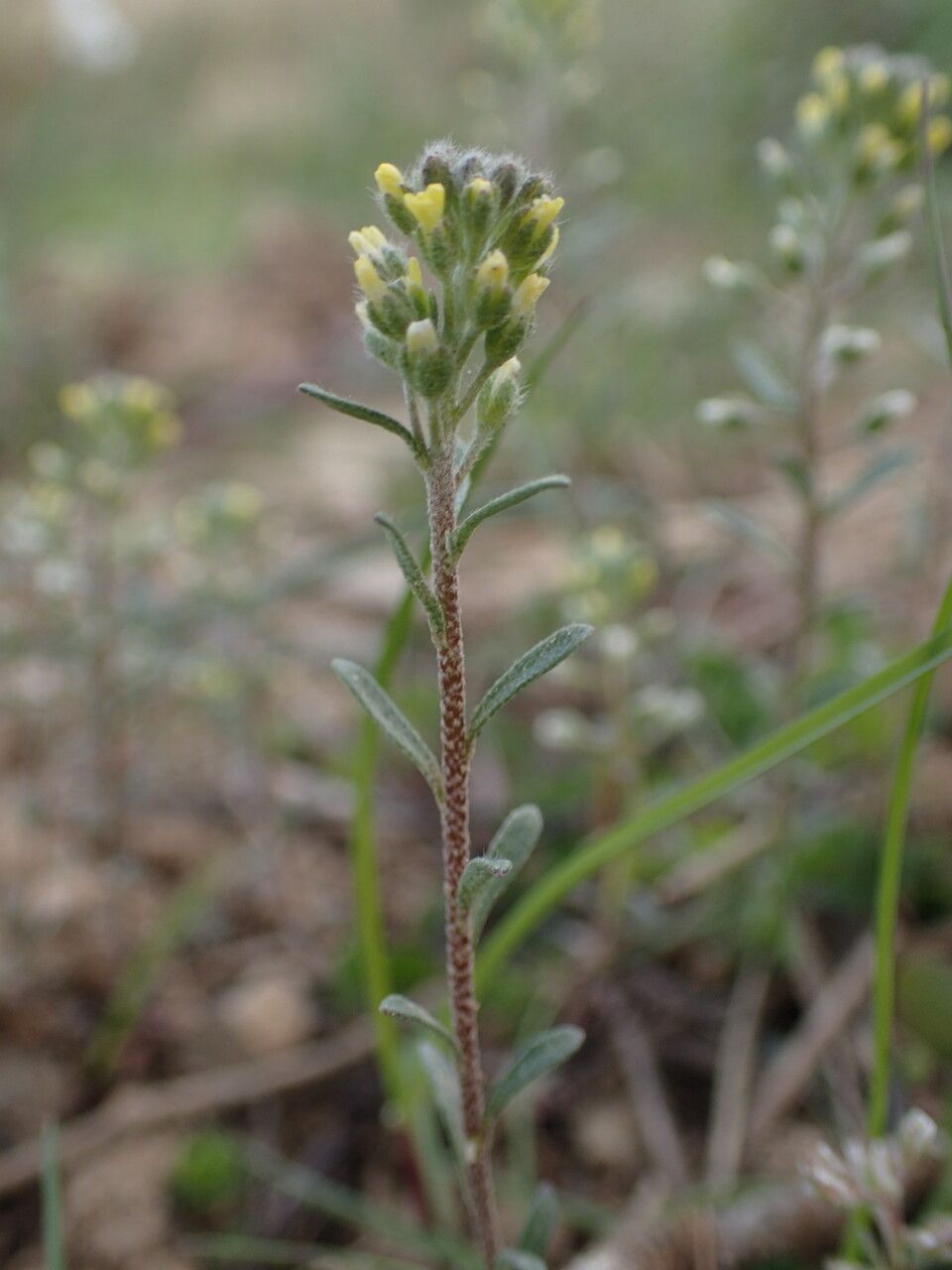
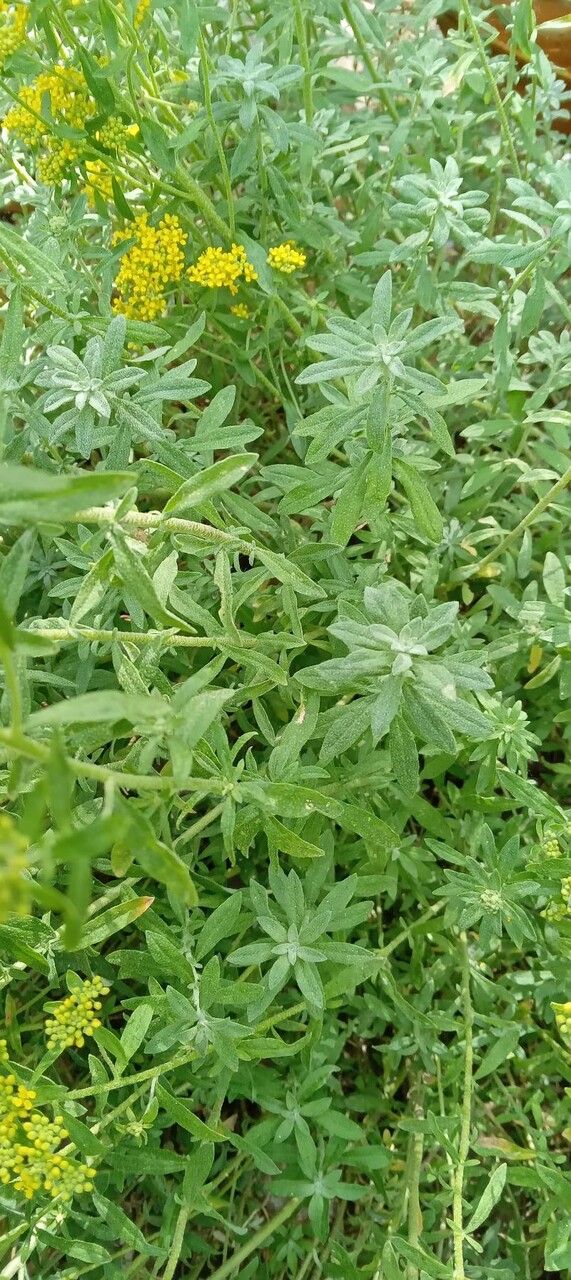
Alyssum desertorum, commonly known as desert alyssum, is a small flowering plant in the Brassicaceae family. Native to the deserts of North Africa and the Middle East, it has been introduced and naturalized in various parts of the world.
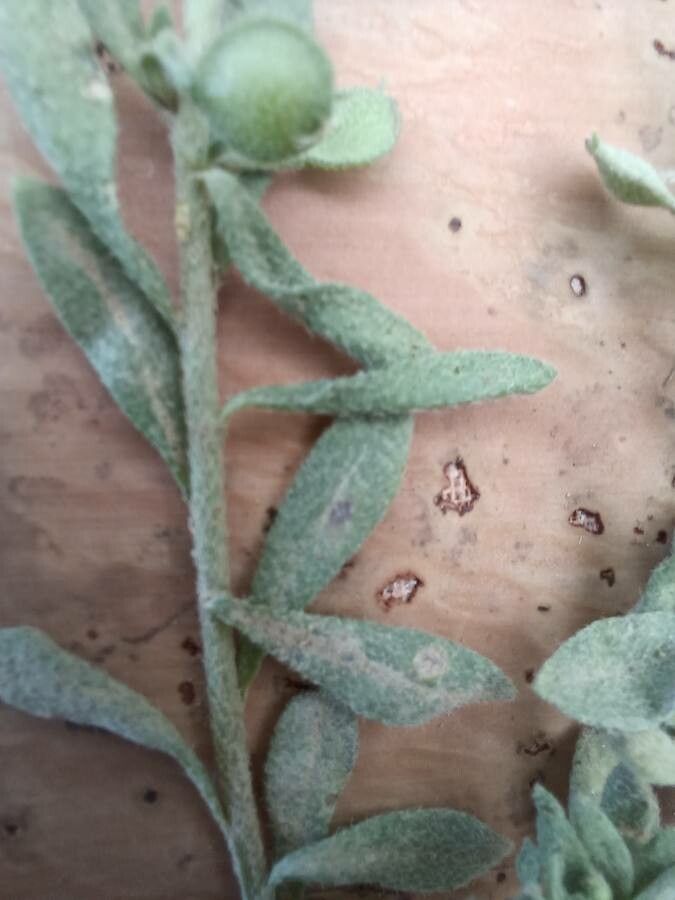
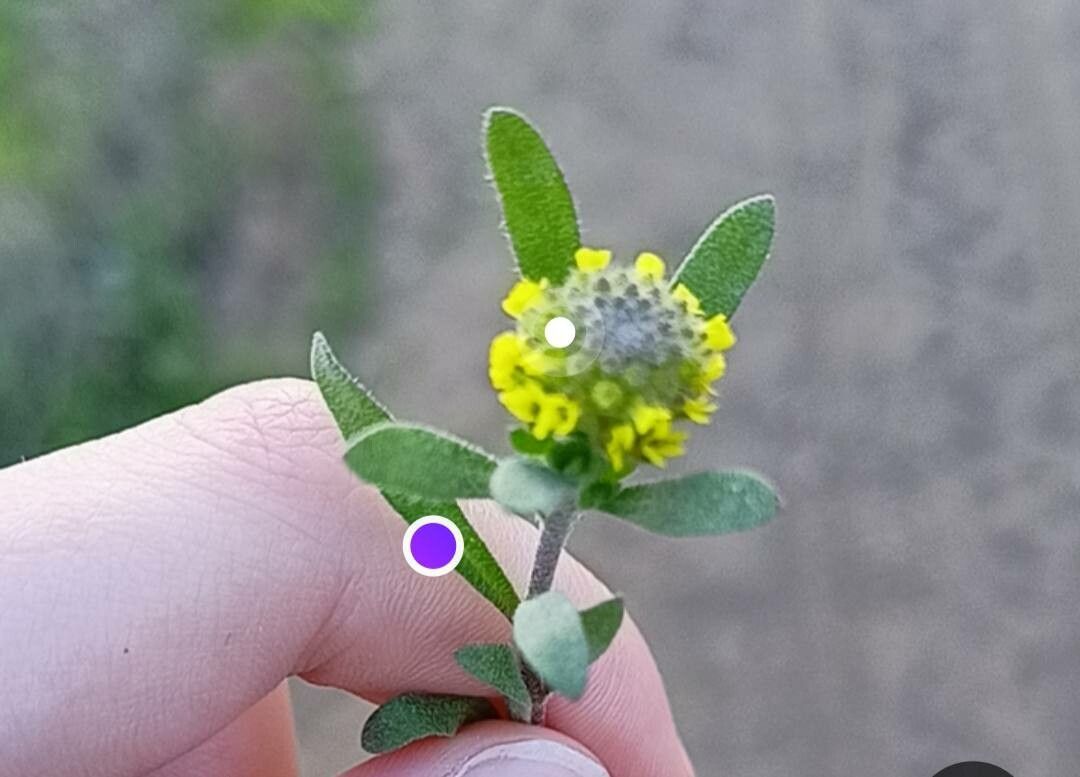
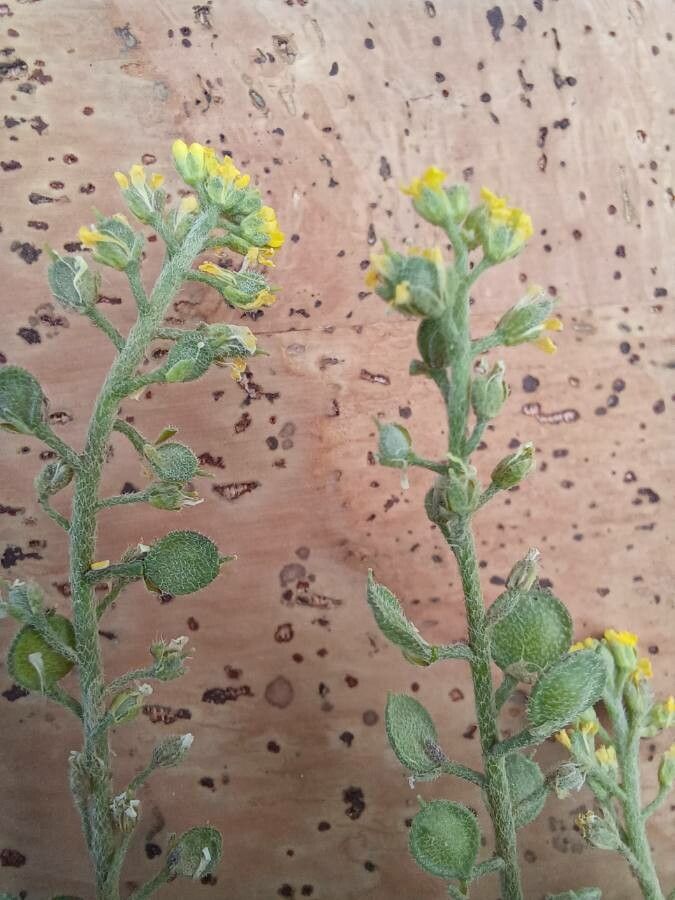
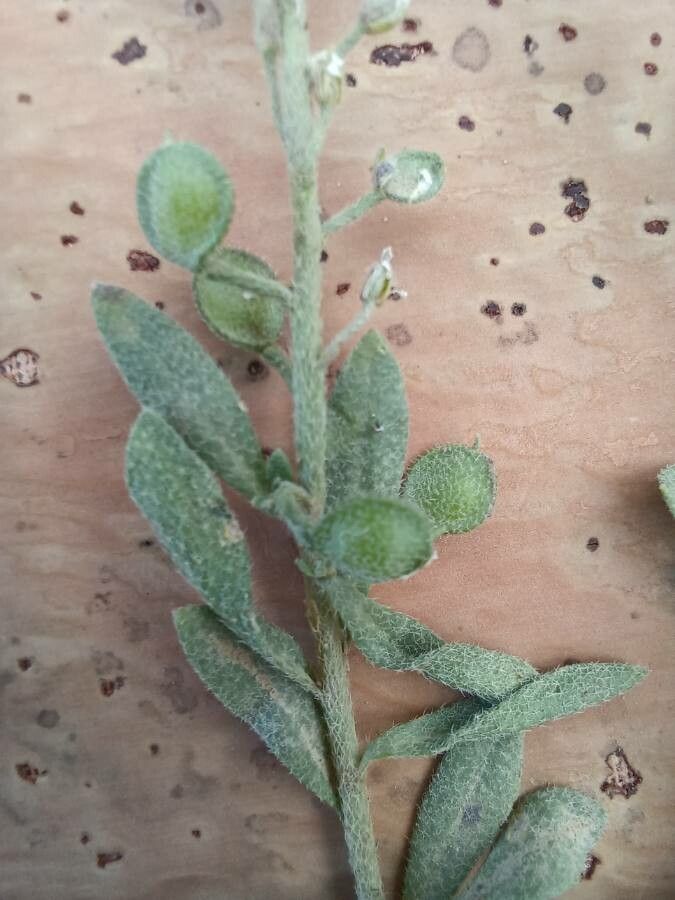
This plant features a compact growth habit with small, gray-green leaves covered in fine hairs. From spring through summer, it produces clusters of tiny white or yellow flowers on short stems. These sweetly fragrant flowers attract bees and other pollinators.
Desert alyssum is well adapted to hot, dry conditions and can tolerate poor soil quality as long as it is well-drained. While it prefers full sun exposure, it can also grow in partial shade.
The plant serves several purposes, including ornamental uses such as ground cover or border planting, thanks to its attractive appearance and sweet fragrance. Additionally, it has medicinal properties and has been used to treat respiratory issues like asthma and bronchitis.
Overall, Alyssum desertorum is an attractive, low-maintenance flowering plant that thrives in hot, dry conditions, making it an excellent choice for gardeners seeking easy-to-grow plants with ornamental value.
Desert madwort is fairly resistant to disease and typically does not suffer from illnesses. Nonetheless, it can be vulnerable to pests and diseases present in its environment, although such problems are generally mild. Regarding care, this plant requires moderate maintenance. It should be pruned regularly to preserve a tidy appearance and support healthy growth. Fertilizing can also help encourage flowering. Desert madwort is suitable for anyone with outdoor space, like a garden or patio, and does not demand extensive gardening experience. It may need more attention when grown indoors.
How to keep Alyssum Desertorum.
Light
Desert madwort comes from sunny, open habitats and does best in full sun. It can withstand partial shade but favors direct sunlight for ideal growth. This plant, which may be annual or biennial, is noted for its sun-loving character.
Water
Desert madwort is well-suited for arid environments due to its high tolerance for drought. It requires very little water, ideally needing just a weekly watering to mimic the conditions of its native habitat. Its adaptations for rapid drainage make desert madwort an excellent choice for container gardening, particularly in situations where overwatering might be an issue.
Temperature
Desert madwort is adapted to warm desert conditions and performs best at temperatures of 68 to 95 °F (20 to 35 ℃). Advising seasonal temperature alterations for this plant is generally unnecessary.
Fertilizer
Desert madwort does well with regular, weak applications of fertilizer to encourage healthy leaf growth. You should feed Desert madwort roughly once a month during the summer. Nitrogen is important for foliage, and providing nitrogen-rich sources helps Desert madwort thrive.
Pruning
Desert madwort is a low-growing, mat-forming plant that produces small yellow flowers. To encourage dense growth and abundant blooms, prune it from early to late spring. Use sharp tools to avoid damage, and regularly maintain the plant to control its size and improve its appearance.
Botanical profile.
- Plant Type
- Herb
- Life Cycle
- Annual
- Genus
- Alyssum
- Family
- Brassicaceae
- Hardiness Zone
- 6
- Mature Height
- 20 cm
- Mature Spread
- 10 cm to 30 cm
- Leaf Color
- Green, Blue
- Leaf Type
- Semi-evergreen
- Flower Color
- White
- Flower Size
- 0.25 cm
- Bloom Time
- Spring
- Planting Time
- Spring, Autumn
- Harvest Time
- Late spring, Early summer, Mid summer
- Native Area
- Egypt, Turkey, India, Austria, Slovakia, Pakistan, Croatia, Belarus, Uzbekistan, Russia, Iraq, Romania, Belgium, Moldova, Tajikistan, Bulgaria, Armenia, Poland, Greece, North Macedonia, Ukraine, Lebanon, Serbia, China, Afghanistan, Syria, Kazakhstan, Denmark, Mongolia, Iran, Albania, Azerbaijan, Hungary, Turkmenistan
Other names.
Reader questions.
What are the sunlight requirements for Desert Madwort?
Desert Madwort (Alyssum desertorum) thrives in environments that offer full sun, requiring above 6 hours of sunlight daily for optimal growth. It can also tolerate partial sun, which is about 3-6 hours of sunlight. It's important to observe the movement of sunlight through your garden and select locations that provide a balance of light and shade, ensuring the plants' well-being.
What climate does Desert Madwort thrive in?
Desert Madwort, botanically known as Alyssum desertorum, is well-suited to warm desert climates, thriving best in temperatures ranging from 68 to 95 °F (20 to 35 °C). Its natural inclination towards such conditions means that seasonal temperature adjustments are typically not necessary for its cultivation.
How does Desert Madwort react to artificial lighting?
In conditions where natural sunlight is insufficient, especially during winter or in spaces with less exposure to the sun, artificial lighting becomes essential for the growth of indoor plants like the Desert Madwort. LED lights are recommended for indoor plant lighting as they can be tailored to deliver specific light wavelengths needed by the plants. Full sun plants require 30-50W/sq ft of artificial light, partial sun plants need 20-30W/sq ft, and full shade plants need 10-20W/sq ft. It's crucial to position the light source 12-36 inches above the plant and ensure it receives 8-12 hours of light daily to mimic natural daylight conditions.
Does Desert Madwort require frost protection during winter?
Despite its high tolerance for cold, Desert Madwort does not require additional frost protection measures during the winter season. However, to prepare it for the colder months, it is recommended to water the plant generously before the first freeze in autumn. This practice ensures the soil stays moist and freezes in that state, helping to prevent drought and water scarcity for the plant throughout winter and into early spring.
What are the common symptoms of inadequate light in Desert Madwort?
When Desert Madwort is grown under insufficient light conditions, it may exhibit symptoms such as smaller new leaves, leggy or sparse growth, increased leaf drop, stalled growth, and signs of chlorosis where leaves lose their green color. Other symptoms include sunscald—damage from intense sunlight exposure, leaf curling as a defense against excessive sunlight, wilting from water loss, and leaf scorching characterized by brown, dry edges on leaves. These symptoms indicate a need for better light management.
How does Desert Madwort react to low winter temperatures?
Desert Madwort is extremely resistant to cold and can tolerate winter temperatures down to -25°C. Even though there may not be visible changes to the plant during the winter, experiencing temperatures below this threshold can result in reduced or even absent sprouting in the spring. To manage this, any parts of the plant that have failed to sprout by spring should be removed.
What are the solutions for insufficient sunlight exposure for Desert Madwort?
To combat insufficient sunlight exposure for Desert Madwort, gradually increase sunlight by moving plants to sunnier spots each week, aiming for at least 6 hours of direct sunlight daily. For indoor plants, consider using artificial light sources for at least 8 hours a day, such as desk or ceiling lamps, or professional plant grow lights. Outdoors, avoid sudden light intensity changes to prevent sunburn. If trees or other structures block sunlight, prune them or consider transplanting smaller plants during dormancy to a location with ample sunlight and good drainage. It's essential to remember that parts of the plant already affected might not recover, but new growth should be healthy with improved light conditions.
What should I do if Desert Madwort experiences high temperatures?
Desert Madwort struggles in high temperatures, especially when thermometers register above 35°C, leading to a halt in growth and increased susceptibility to rot. To mitigate this, affected parts should be trimmed away. Additionally, moving the plant to a shaded area during the peak sun of the midday and afternoon, or creating shade with a cloth, can help. Ensuring the soil remains moist through watering in the morning and evening is also beneficial.