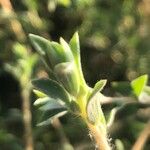
Amaranthus albus
تاج خروس سفید وحشی · Prostrate pigweed · Stiff tumbleweed · Tumble pigweed · Tumbleweed
Description
Source: leafsnapAmaranthus albus, commonly known as white pigweed, is a herbaceous annual plant belonging to the Amaranthaceae family. Native to North America, it thrives in diverse habitats such as fields, roadsides, and disturbed areas. The plant can grow up to 1 meter in height, featuring a branching stem and green, oval-shaped leaves with pointed tips. The flowers of Amaranthus albus are small and greenish-white, forming dense clusters either at the top of the stem or in the leaf axils. The plant produces small seeds that are black or brownish-black. Amaranthus albus has a variety of uses, including culinary, medicinal, and ornamental purposes. The leaves can be cooked like spinach or used raw in salads, while the seeds can be ground into flour or popped like popcorn. In traditional medicine, Amaranthus albus has been employed to treat ailments such as diarrhea, dysentery, and fever, owing to its anti-inflammatory properties. Overall, this versatile herbaceous annual is a valuable addition to any garden, appreciated for its ornamental appeal as well as its utility in food and medicine, making it an important part of our ecosystem.
🌳 Unknown to most people, livid amaranth has been employed as an effective bioindicator of certain heavy metals in the environment. Because it can concentrate metals such as cadmium and lead in its tissues, it serves as a natural sentinel for assessing soil and environmental health. This characteristic is especially useful for pinpointing areas that may be contaminated and thus helps guide remediation efforts.
🎭 Subtle affection, immortality
Care Guide
💧 Water Every 7 days
Tumbleweeds originate from arid environments and show remarkable drought tolerance, needing to be watered only about once a week. They are typically found in open spaces and have a unique survival strategy: they break off from their roots and roll with the wind to disperse their seeds. This ingenious method relies on dry conditions to be effective.
How should I water my Tumbleweed plant to keep it healthy?
To water Tumbleweed, you have several options like a garden hose with a spray nozzle or a watering can. Tumbleweed is not too picky and can survive with rainwater, tap water, or filtered water. It's best to avoid watering from overhead as it can harm the leaves and flowers and may cause disease. A drip irrigation system works well for Tumbleweed as it provides even and direct irrigation to the soil. For container-grown Tumbleweed, you can use a cup, watering can, or tap to water directly into the soil.
What should I do if I give my Tumbleweed too much or too little water?
If you notice that your Tumbleweed lacks moisture, the remedy is simple: water it more regularly. However, overwatering is a more serious problem that can lead to diseases and the decline of your plant. To prevent this, choose a suitable location with sunlight and good drainage to help dry the soil and avoid waterlogged conditions. If you overwater your Tumbleweed in a pot, consider changing to a new pot with better drainage and using loose soil.
How often do I need to water my Tumbleweed plant?
To ensure healthy growth, Tumbleweed requires regular watering throughout the growing season. Start by watering once a week in spring, but as the weather gets warmer, increase it to two or three times weekly. Be careful not to exceed this rate as it can harm the plant. Additionally, keep the soil moist but not overly wet, regardless of the watering frequency. If your Tumbleweed is in a pot, you'll need to water it more frequently than a plant in the ground. Usually, watering a container-grown Tumbleweed a few times per week is suitable, compared to just once per week for in-ground plants.
How much water does my Tumbleweed plant require?
Determining the appropriate amount of water for your Tumbleweed can be approached in different ways. Some gardeners rely on the "feel" method, where they water until the top six inches of soil feels moist. Alternatively, you can use a specific measurement, like two gallons per week, adjusting based on temperature and soil dryness. However, this can result in overwatering if your Tumbleweed requires less water. When growing in a container, a different method is needed. Ensure all layers of soil are moist by checking with your finger or allowing excess water to gently drain from the pot.
How do I know if I'm watering my Tumbleweed enough?
Avoiding overwatering your Tumbleweed can be somewhat challenging due to a few factors. On one hand, these plants have deep roots, so it is necessary to moisten the soil weekly. However, on the other hand, Tumbleweed is prone to root rot, which can lead to browning of the plant. Underwatering is less of a concern as Tumbleweed can survive without supplemental watering for a while. However, if the plant goes too long without water, it will likely wilt and exhibit dry leaves.
☀️ Light Partial sun
Livid amaranth does best with moderate sunlight but can also adjust to a broad spectrum of lighting, from full sun to deep shade. Excessive sun can stress it, while too little light may cause it to grow lanky. Originating in environments with varied light levels, it shows a notable adaptability to different light conditions.
What are the sunlight requirements for Tumbleweed?
Tumbleweed requires full sun, which means it thrives in environments that receive above 6 hours of sunlight daily. However, it can also grow in partial sun conditions, receiving about 3-6 hours of sunlight. Monitoring the movement of sunlight through your garden is crucial to find the perfect balance of light and shade, ensuring the optimum growth of your Tumbleweed.
How does Tumbleweed respond to different lighting conditions?
Tumbleweed is adaptable to a range of lighting conditions due to its native habitat being predominantly sun-soaked. While it prefers a full span of daylight for optimal growth, Tumbleweed can manage with limited sunlight. Too much exposure can lead to dryness, and not enough light might impede its growth. When natural light is insufficient, artificial lighting can support its growth, especially indoors. LED lights are recommended for their ability to provide specific light wavelengths needed by plants.
What are some common symptoms of improper lighting for Tumbleweed?
When Tumbleweed is cultivated in inadequate lighting conditions, it might exhibit symptoms such as smaller new leaves, leggy or sparse growth, faster leaf drop, and a halt in new growth. Other signs include leaves turning lighter or developing chlorosis, a condition where leaves lose their green color. Too much sunlight can lead to sunscald, leaf curling, wilting, or leaf scorching, indicating the plant is under stress due to excessive sun exposure.
What solutions are there for lighting issues with Tumbleweed?
To address lighting issues with Tumbleweed, indoor plants can be moved gradually to sunnier spots to receive at least 6 hours of direct sunlight daily, or use artificial lighting like desk lamps or professional grow lights for at least 8 hours a day. Outdoors, plants should be moved gradually to sunnier locations to prevent sunburn. Reducing obstructions such as pruning trees or transplanting to sunnier areas can improve sunlight access. It's important to understand that parts of the plant already affected by light deficiencies may not recover, but increasing light exposure will ensure new growth is healthy.
🌡️ Temperature 5–35°C
Livid amaranth is native to temperate regions and performs best in temperatures from 68 to 95°F (20 to 35 ℃). If the surroundings become noticeably warmer or cooler, gradually change the temperature over several days to allow the plant to acclimate.
What is the ideal temperature range for growing Tumbleweed?
Tumbleweed thrives in areas where the temperature ranges from 68 to 95°F (20 to 35°C). It is suited for hardiness zones that correspond to these temperatures. For optimum growth, it's essential to adjust the environment to cater to Tumbleweed's preference for warmer conditions. Despite its strong resistance to cold, Tumbleweed can manage without special frost protection measures in winter. However, in temperatures dropping below -35°C, it's important to protect the plant using soil or straw coverings. Ensuring the soil is moist before the first freeze in autumn aids in preventing drought and water scarcity during the colder months and early spring.
How does Tumbleweed respond to low temperatures?
Tumbleweed has a remarkable tolerance for cold weather, performing best when temperatures remain above 20°C. During winter, it's vital to keep the temperature above 0°C to prevent damage. If the mercury falls below -35°C, Tumbleweed may not show immediate negative effects, but there could be a noticeable decline in sprouting or a complete absence of sprouting come spring. Should this occur, removing the parts of the plant that failed to sprout in spring is advisable.
What should be done if Tumbleweed experiences high temperatures?
In the summer, Tumbleweed's ideal temperature should not exceed 35°C. Should temperatures rise above 38°C, the plant may display signs of stress, such as lighter colored leaves, leaf curling, susceptibility to sunburn, and in extreme cases, wilting and drying out. To combat these symptoms, it's recommended to trim away sunburned and dry parts of the plant. Relocating the plant to a shaded area or using a shade cloth can offer protection from the harsh midday and afternoon sun. Additionally, watering the plant in the morning and evening helps keep the soil adequately moist.
What is the botanical name of Tumbleweed?
The botanical name of Tumbleweed is Amaranthus albus. This plant is indigenous to regions offering a specific temperature range and exhibits strong resilience to varying temperature conditions. Understanding and catering to its environmental preferences can ensure its healthy growth and development.
💨 Humidity
🪴 Soil 6-7
🌱 Fertilizer
Livid amaranth responds well to regular, light fertilizer applications to encourage healthy leaf development. Fertilize Livid amaranth about once a month during the summer. Nitrogen is important for foliage, and supplying nitrogen-rich sources helps Livid amaranth thrive.
🪴 Pot & Repot
✂️ Pruning
🌿 Propagating
🐛 Diseases & pets
☠️ Toxicity
Characteristics
- Plant Type
- Herb
- Life Cycle
- Annual
- Genus
- Amaranthus
- Family
- Amaranthaceae
- Hardiness Zone
- 4-9
- Mature Height
- 10 cm to 30 cm
- Mature Spread
- 30 cm to 37 cm
- Leaf Color
- Green
- Leaf Type
- Deciduous
- Flower Color
- Green
- Flower Size
- 2.54 cm
- Bloom Time
- Early summer, Mid summer
- Planting Time
- Spring
- Harvest Time
- Mid summer
- Native Area
- Egypt, Turkey, India, Angola, Montenegro, Pakistan, Nigeria, Slovenia, Morocco, Croatia, Yemen, Kenya, Uganda, Tanzania, Zimbabwe, Russia, Uruguay, Benin, Cuba, Paraguay, Argentina, Mozambique, Venezuela, Brazil, Portugal, France, Saudi Arabia, Congo, Chile, Tunisia, Peru, South Africa, Zambia, Sudan, Mauritania, Cyprus, Bulgaria, Greece, Guinea, Serbia, Lebanon, Colombia, Bahamas, Syria, Italy, Spain, Bolivia, Guyana, Côte d'Ivoire, Iran, Albania, Ecuador, Algeria, Azerbaijan, Congo (DRC), Gabon