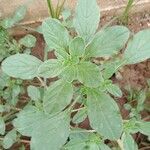
Amaranthus blitoides
Mat Amaranth · Matweed · Matweed Amaranth · Prostate Pigweed · Prostrate Amaranth
Description
Source: leafsnapAmaranthus blitoides, commonly known as prostrate pigweed or mat amaranth, is a low-growing annual plant that belongs to the Amaranthaceae family. Native to North America, it thrives in various habitats such as fields, roadsides, and disturbed areas. This plant exhibits a prostrate growth habit, with stems that can extend up to 60 cm in length. Its leaves are small, oval-shaped, and have a glossy green appearance. The flowers are tiny and inconspicuous, forming dense clusters at the tips of the stems. Amaranthus blitoides is considered an invasive species in some regions due to its ability to quickly colonize disturbed habitats and outcompete native vegetation. Despite this, it also offers some beneficial uses, such as serving as food or forage for livestock. Overall, Amaranthus blitoides is an intriguing plant with both positive and negative impacts on its environment, depending on where it grows.
🌳 Mat amaranth's strong nutritional makeup is a frequently overlooked treasure. It provides abundant protein, essential amino acids, and minerals such as calcium, magnesium, and iron. Because of this, mat amaranth is a promising option for fortifying food products and tackling malnutrition. Interestingly, mat amaranth also makes an excellent forage crop for animals, supporting sustainable agricultural practices.
🎭 Eternal life, faithfulness, undying friendship
Care Guide
💧 Water Every 7 days
Mat amaranth thrives in conditions similar to its natural habitat, preferring moist soil and moderate humidity. To ensure healthy growth and resilience, especially when cultivated outdoors during its active growing season, it is important to water it carefully each week. This helps maintain the necessary moisture levels without causing waterlogging.
How should I water my Mat amaranth plant in the best way possible?
To water Mat amaranth, you have several options - using a hose with a spray nozzle, a watering can, or any other common watering tool. Luckily, Mat amaranth isn't too fussy about how it gets its water. It can thrive with rainwater, tap water, or even filtered water. However, it's best to avoid watering this plant from above as it may harm the leaves and flowers and increase the risk of disease. Instead, setting up a drip irrigation system is often the most effective watering method. This system evenly and directly delivers water to the soil for Mat amaranth. If you have a container-grown Mat amaranth, you can follow a similar watering approach with different tools. Use a cup, watering can, or tap to water the plant by directly applying water to the soil.
What should I do if I give my Mat amaranth too much water or not enough water?
When your Mat amaranth lacks moisture, the solution is simple: water it more regularly. Overwatering, on the other hand, can be a serious problem that leads to diseases and plant death. To prevent this, choose a growing location with plenty of sunlight to dry the soil and good drainage to avoid waterlogged soil. If you overwater your potted Mat amaranth, consider transferring it to a new pot with better drainage. Use loose soil and a pot that drains efficiently when repotting.
How frequently should I water my Mat amaranth plant?
To keep your Mat amaranth healthy, water it regularly during the growing season. In the spring, water the plant once a week. As the weather gets hotter, you may need to increase watering to two or three times per week. However, be careful not to overwater, as this can harm the plant. It's important to keep the soil moist but not wet. If your Mat amaranth is in a pot, it will need more frequent watering compared to one planted in the ground. Generally, watering a potted Mat amaranth a few times per week should be sufficient, whereas an in-ground plant can be watered once per week.
How much water does my amaranth plant need?
Determining how much water to give your Mat amaranth can be done in a few different ways. Some gardeners prefer to assess moisture levels in the soil by feeling it, and they recommend watering until the top six inches feel moist. Others opt for a specific measurement and suggest giving about two gallons of water per week, based on factors such as temperature and soil dryness. However, sticking to rigid guidelines like this could lead to overwatering if your plant requires less. When growing Mat amaranth in a container, the approach will be slightly different. The goal is to moisten all layers of dry soil, which can be determined by testing with your finger or observing a small bit of excess water draining out of the pot's holes.
How can I know if I'm watering my Mat amaranth plant enough?
Avoiding overwatering your Mat amaranth can be somewhat challenging. These plants have deep roots, so you need to moisten the soil weekly. However, they are also highly vulnerable to root rot and can develop browning if overwatered. Underwatering is less common, as Mat amaranth can survive without additional watering for a while, but if neglected for too long, they may wilt and exhibit dry leaves.
☀️ Light Full sun
Mat amaranth grows best with abundant sunlight but can tolerate a more moderate amount of sun. It naturally occurs in areas that receive long hours of daily sunlight, which contributes to its vigorous growth. Too little light may inhibit its development, while too much can cause its leaves to scorch.
What are the sunlight requirements for Mat Amaranth?
Mat amaranth requires a significant amount of sunlight to thrive, with full sun exposure being above 6 hours of sunlight per day and partial sun exposure being about 3-6 hours of sunlight per day. It's crucial to monitor the movement of sunlight through your garden to identify spots that offer the right balance of light and shade, ensuring your plants remain healthy and happy.
How does sunlight affect the growth of Mat Amaranth?
Sunlight plays a critical role in the growth of Mat amaranth. Originating from areas with extensive daily sunlight, Mat amaranth performs best under abundant sun but can also tolerate moderate sun exposure. However, too little sunlight may inhibit growth, while excessive sunlight could potentially scorch its leaves. Indoor plants may require supplementary artificial lighting, especially in less sunny spaces or during winter, to ensure optimal growth. LED lights are recommended for their ability to provide specific wavelengths needed by plants, with varying wattage requirements based on the plant's natural sunlight needs.
What are the symptoms of insufficient or excessive sunlight exposure in Mat Amaranth?
Mat amaranth can exhibit various symptoms in response to insufficient or excessive sunlight. Insufficient light may lead to smaller leaves, leggy or sparse growth, faster leaf drop, slower or halted growth, and lighter-colored or irregularly patterned new leaves. On the other hand, excessive sunlight exposure can cause chlorosis (yellowing of leaves), sunscald, leaf curling, wilting, and leaf scorching. These symptoms indicate the plant's struggle to adapt to its lighting conditions, either striving to conserve resources or protect itself from damage.
What solutions can be applied to resolve light-related issues in Mat Amaranth?
To address light-related issues in Mat amaranth, consider moving indoor plants progressively to sunnier spots, ensuring they receive at least 6 hours of direct sunlight daily. Utilize artificial light sources if necessary, keeping them on for about 8-12 hours daily. For outdoor plants, gradually acclimate them to optimal sunlight conditions to prevent sunburn. Reducing obstructions like overhanging branches can improve sunlight access. Transplanting smaller plants during their dormant period to sunnier locations can also encourage healthier growth. Remember, parts of the plant that have already been affected by adverse conditions may not recover, but new growth should be healthy with proper light exposure.
🌡️ Temperature 10–35°C
Mat amaranth is found in environments with moderately warm temperatures, usually 68 to 95 °F (20 to 35 ℃). Because it favors a mild climate, careful adjustments are needed during colder seasons. A controlled indoor environment is recommended.
What are the ideal temperature conditions for growing Mat amaranth?
Mat amaranth thrives in environments with moderate warmth, typically between 68 to 95 °F (20 to 35 °C). It prefers mild climates and might require adjustments during colder seasons. To maintain an optimal growing environment, especially in areas not meeting these temperature requirements, cultivating Mat amaranth indoors with regulated temperature can be beneficial. Although the plant demonstrates strong cold resistance, and special frost protection measures are not usually necessary, in regions where winter temperatures may fall below -25°C, providing cold protection by covering the plant with soil or straw is advisable. Additionally, watering the plant abundantly before the first freeze of autumn is recommended to keep the soil moist, helping the plant avoid drought and water scarcity during the colder months.
How does Mat amaranth respond to low and high temperature extremes, and what are the solutions?
Mat amaranth is cold-tolerant, performing best at temperatures above 20°C and should ideally be kept above 0°C during winter. If temperatures drop below -25°C, the plant might not show immediate signs of distress; however, a notable decrease in sprouting or a complete lack of sprouting may occur when spring arrives. In such cases, removing any non-sprouting parts in the spring is recommended. Conversely, during summer, it is advised to keep the plant below 35°C to prevent heat stress. Exposure to temperatures above 41°C can cause the leaves to lighten in color, become prone to curling, susceptible to sunburn, and, in extreme cases, lead to drying and wilting of the entire plant. To mitigate these issues, affected areas should be trimmed away. If necessary, relocate the plant to a shaded area during the peak sun hours of the day or use a shade cloth. Also, ensure the plant is watered in the morning and evening to maintain soil moisture.
💨 Humidity
🪴 Soil 6-7
🌱 Fertilizer
Mat amaranth does well with regular, light applications of fertilizer to encourage healthy leaf development. You should apply fertilizer to Mat amaranth about once a month during the summer. Nitrogen is important for foliage, and adding nitrogen-rich sources helps Mat amaranth thrive.
🪴 Pot & Repot
✂️ Pruning
🌿 Propagating
🐛 Diseases & pets
☠️ Toxicity
Characteristics
- Plant Type
- Herb
- Life Cycle
- Annual
- Genus
- Amaranthus
- Family
- Amaranthaceae
- Hardiness Zone
- 6-10
- Mature Height
- 61 cm to 91 cm
- Mature Spread
- 30 cm
- Leaf Color
- Green, White
- Leaf Type
- Deciduous
- Flower Color
- Green
- Flower Size
- 0.10 cm
- Bloom Time
- Early summer, Mid summer
- Planting Time
- Spring
- Harvest Time
- Mid summer, Late summer
- Native Area
- Mexico