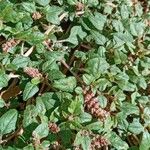
Amaranthus deflexus
Spreading amaranth · Argentine amaranth · Perennial pigweed · Tow amaranth · Deflexed amaranth
Description
Source: leafsnapAmaranthus deflexus, commonly known as the large-seeded amaranth, is an annual herbaceous plant in the Amaranthaceae family. Native to North America, it thrives in various habitats, including fields, roadsides, and disturbed areas. This plant can grow up to 1 meter tall and features a branching stem with green leaves that are either ovate or lanceolate in shape. The flowers of Amaranthus deflexus are small and inconspicuous, displaying a greenish-white or pinkish hue. The seeds are relatively large (up to 2 mm in diameter) and have a shiny black appearance. Amaranthus deflexus has been utilized for multiple purposes, including food, medicine, and as a dyeing agent for textiles. In some cultures, its leaves are consumed as a vegetable, while its seeds are used to make flour or are popped like popcorn. In traditional medicine practices around the world, including Ayurveda and Chinese Medicine, Amaranthus deflexus has been employed to treat various ailments, such as diarrhea and dysentery, due to its anti-inflammatory properties. Overall, Amaranthus deflexus is a fascinating annual herb with a wide range of uses, from being a food source to providing medicinal benefits, making it an important species from an ecological perspective as well.
Care Guide
💧 Water Every 7 days
Large-fruit amaranth grows best in moderate humidity and needs to be watered weekly to thrive. The soil should be kept consistently moist but not waterlogged. This hardy species can endure short dry spells, making it well-suited for outdoor cultivation, especially during the growing season.
How should I water my Large-fruit amaranth?
Watering Large-fruit amaranth is a flexible process that can be done using a variety of common watering tools like a garden hose with a spray nozzle or a watering can. This plant is not too particular about the type of water it receives, as it can thrive with rainwater, tap water, or filtered water. It is generally advised not to water this plant from above to avoid damaging the leaves, flowers, and potential disease. A drip irrigation system is often recommended for optimal watering, as it delivers water evenly and directly to the soil. When watering a Large-fruit amaranth grown in a container, you can use a cup, watering can, or tap to apply water directly to the soil.
What should I do if I give my Large-fruit amaranth too much or too little water?
The solution for underwatering Large-fruit amaranth is straightforward. Simply water the plant more regularly when you observe it lacking moisture. On the other hand, the issue of overwatering is much more concerning, as it can lead to diseases and the decline of the plant. To avoid this, it is crucial to select a suitable growing location with ample sunlight to dry the soil and good drainage to prevent excess water from pooling and causing waterlogged soil. In the case of an overwatered Large-fruit amaranth in a pot, consider transferring it to a new pot. The previous container may not have had proper drainage or enough drainage holes. When repotting the overwatered plant, use loose soil and ensure that the new pot drains efficiently.
How frequently should I water my Large-fruit amaranth plant?
Large-fruit amaranth requires regular watering during the growing season. In spring, water it once a week. As the season progresses and temperatures rise, increase watering to two or three times a week. However, be careful not to overwater, as this can harm the plant. It's important to keep the soil moist but not saturated. When growing in a pot, the watering needs are different. Potted plants dry out faster, so they generally need to be watered more frequently. Plan to water a potted Large-fruit amaranth a few times a week, compared to just once a week for a plant in the ground.
How much water does my Large-fruit amaranth plant need?
There are a few ways to decide how much water your Large-fruit amaranth needs. Some gardeners prefer to judge by feeling the soil. They recommend watering until the top six inches of soil are moist. Another option is measuring the water amount. Generally, two gallons per week is suitable, depending on the heat and soil moisture. However, following this rule strictly can cause overwatering if the plant needs less. For container-grown Large-fruit amaranth, a different method is required. You should water enough to moisten all the dry soil layers. To check, stick your finger in the soil or water until you see some excess water draining from the pot.
How do I know if I am watering my Large-fruit amaranth enough?
Avoiding overwatering your Large-fruit amaranth can be a bit challenging. These plants have deep roots that need to be moistened weekly, but they are also prone to root rot and browning when overwatered. Underwatering is less of a concern since these plants can survive without extra watering for some time, but if you let them go too long without water, they may wilt and have dry leaves.
☀️ Light Full sun
For vigorous growth, large-fruit amaranth prefers sunny sites with direct, unfiltered sunlight. Its native habitat features plentiful sunlight. Although this hardy plant can tolerate partly shaded conditions, insufficient light will impede its growth and result in poorer fruiting. Conversely, excessively intense light can be harmful.
What are the sunlight requirements for large-fruit amaranth?
Large-fruit amaranth flourishes best in conditions that provide abundant sunlight, typically in habitats where the sun's luminosity is unfiltered, indicating its preference for full sun exposure of more than 6 hours daily. However, it can also tolerate partial sun, requiring about 3-6 hours of sunlight. Proper sunlight is crucial for healthy growth and fruiting, although it's noteworthy that extremely high levels of light might cause damage to the plant.
How can artificial lighting support large-fruit amaranth growth indoors?
Indoor large-fruit amaranth plants can benefit from artificial lighting, especially in scenarios where natural sunlight is limited. Artificial lights, like LED options, help mimic the natural environment by providing the necessary wavelengths for optimal plant growth. The recommended illumination levels are 30-50W/sq ft for full sun plants, 20-30W/sq ft for partial sun plants, and 10-20W/sq ft for full shade plants. Positioning the light source 12-36 inches from the plant and ensuring it receives 8-12 hours of light daily contributes significantly to healthier growth.
What are the signs of insufficient light in large-fruit amaranth?
When large-fruit amaranth receives inadequate light, it may demonstrate symptoms such as smaller new leaves, leggy or sparse growth, accelerated leaf drop, reduced or halted new growth, and paler new leaves. These signs point towards the plant struggling to perform photosynthesis effectively due to insufficient sunlight. Proper attention to these symptoms can help diagnose light deficiency early, enabling corrective measures to be taken.
How does excessive sunlight affect large-fruit amaranth?
Excessive exposure to sunlight can lead to various problems for large-fruit amaranth, including chlorosis, sunscald, leaf curling, wilting, and leaf scorching. These issues result from too much sunlight causing damage to the plant tissues, impairing photosynthesis and overall health. Recognizing these symptoms is crucial for mitigating damage and ensuring the plant's well-being.
What are the recommended solutions for light-related issues in large-fruit amaranth?
Addressing light-related issues in large-fruit amaranth involves strategic placement and care. Indoors, gradually moving the plant to a sunnier location each week until it reaches at least 6 hours of direct sunlight daily or using artificial lighting can promote health and growth. Outdoors, the gradual relocation to optimal sunlight spots and pruning obstructions can enhance light availability. For plants in the ground, reducing shade by pruning and transplanting to sunnier locations during the plant's dormant period are effective strategies. Implementing these solutions encourages robust growth and minimizes light deficiency or excess issues.
🌡️ Temperature 15–37.8°C
Large-fruit amaranth can adjust to a wide range of temperature regimes, though its distribution may still be constrained by different combinations of moisture and heat. It does best in warm summer climates with sufficient rainfall or watering. Long periods of cloudy, rainy weather or prolonged high temperatures can raise the risk of Large-fruit amaranth dying. In winter, adequate protection from cold can increase the plant's survival rate.
💨 Humidity
🪴 Soil 6-7
🌱 Fertilizer
Large-fruit amaranth responds well to regular, dilute fertilizer applications to encourage healthy leaf development. You should feed Large-fruit amaranth about once a month during the summer. Nitrogen is vital for foliage, and adding nitrogen-rich fertilizers helps Large-fruit amaranth prosper.
🪴 Pot & Repot
✂️ Pruning
Large-fruit amaranth benefits greatly from pruning throughout the spring, whether early or late in the season. By removing dead stems and excess growth, you can improve the plant's shape and overall health. Regular light pruning also promotes better air circulation, which helps prevent disease. Additionally, timing your pruning optimally encourages vigorous regrowth and flowering, enhancing the plant's vitality and visual appeal.
🌿 Propagating
🐛 Diseases & pets
☠️ Toxicity
Characteristics
- Plant Type
- Herb
- Life Cycle
- Annual
- Genus
- Amaranthus
- Family
- Amaranthaceae
- Hardiness Zone
- 7-11
- Mature Height
- 49 cm
- Mature Spread
- 30 cm to 49 cm
- Leaf Color
- Green, Dark Green
- Leaf Type
- Semi-evergreen
- Flower Color
- Yellow, Green
- Flower Size
- 1.02 cm to 5.08 cm
- Bloom Time
- Summer, Fall
- Planting Time
- Spring, Summer, Autumn
- Harvest Time
- Late summer, Fall, Early winter
- Native Area
- Uruguay, Chile, Argentina, Bolivia, Peru