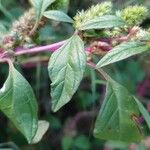
Amaranthus hybridus
Hybrid amaranth · Green amaranth · Slim amaranth · Smooth pigweed · Wild cabbage
Description
Source: leafsnapAmaranthus hybridus, commonly called green amaranth, slim amaranth, smooth amaranth, smooth pigweed, or red amaranth, is a species of annual flowering plant. It is a weedy species found now over much of North America and introduced into Europe and Eurasia.
🌳 Red amaranth serves many purposes; the ancient Aztecs used it as a cereal grain, and today nutrition experts praise its high protein content. Besides its ornamental appeal, the red varieties are used to obtain a vivid dye. In Nepal, its leaves are essential for brewing a local alcoholic drink. It is also a valuable high-protein livestock fodder, particularly useful in areas with limited resources.
🎭 Eternal life, Loyalty, Perpetual Friendship
Care Guide
💧 Water
Green amaranth, which originates from tropical climates, thrives in consistently moist environments. To ensure its lush growth, it requires weekly watering. Using rainwater is particularly beneficial for this herbaceous plant, as it helps maintain a balance between soil moisture and natural precipitation.
☀️ Light Full sun
Red amaranth performs well when exposed to strong sunlight, making it tolerant of high light levels and encouraging vigorous growth. Throughout its various growth stages, intense sunlight supports its healthy development. Traditionally cultivated in sunny environments, both excessive and insufficient light can negatively impact its health and growth.
What are the sunlight requirements for Green Amaranth?
Green Amaranth requires specific conditions of sunlight to thrive. It needs to be exposed to full sun, which is more than 6 hours of sunlight daily, or partial sun, about 3-6 hours of sunlight each day. It's crucial for the plant's health and growth to position it in spaces within your garden that receive an adequate balance of light and shade, considering the sun's movement throughout the day.
What are the essentials for growing Green Amaranth?
Growing Green Amaranth successfully demands prolonged exposure to sunlight each day, as it is vital for its healthy growth and to reach its full potential. Originating from sun-abundant habitats, Green Amaranth copes well in similar conditions. However, both excessive and insufficient light can result in stunted or slow growth. Artificial lighting can be used to supplement natural light, especially indoors or during less sunny seasons. LED lights are often recommended for their ability to mimic the wavelengths needed by plants. The amount of artificial light required varies based on the plant's natural sunlight needs, and it should be placed at a distance and for a duration that mimics natural sunlight as closely as possible.
What symptoms indicate insufficient light for indoor Green Amaranth?
When Green Amaranth is grown indoors and receives inadequate light, several symptoms may appear. These include smaller new leaves, leggy or sparse growth, accelerated leaf drop, slower or halted growth, leaves with lighter color or irregular color patterns, and symptoms of chlorosis where leaves lose their green color. Excessive light can cause symptoms like sunscald, leaf curling, wilting, and leaf scorching. Recognizing these symptoms early can help address light issues before the plant's health significantly declines.
How can you manage light exposure for Green Amaranth to encourage healthy growth?
To manage light exposure for healthy growth of Green Amaranth, gradually increasing its sunlight exposure is key. For indoor plants, moving them to a sunnier spot each week or using artificial light, such as a desk lamp or professional grow lights for at least 8 hours a day, can help. Outdoors, plants should be moved gradually to sunnier locations to prevent sunburn, without sudden changes in light intensity. Reducing light obstructions, like pruning surrounding foliage or transplanting the plant to a sunnier location, can also ensure it receives enough sunlight. It's important to remember that parts of the plant already affected by poor light may not recover, but new growth can be healthy with improved conditions.
🌡️ Temperature 0–37.8°C
Red amaranth is native to areas with temperatures ranging from 68 to 100 °F (20 to 38 ℃). It prefers these moderately warm conditions. In colder seasons, try adjusting the surrounding temperature to match its preference.
What is the ideal temperature range for growing Green amaranth?
Green amaranth thrives in climates with temperatures ranging from 68 to 100°F (20 to 38°C). This temperature range is optimal for its healthy growth. Although Green amaranth exhibits strong cold resistance and usually does not require special frost protection measures during winter, it is important to take protective actions if winter temperatures are expected to drop below -15°C. This includes covering the plant with soil or straw, and before the first freeze in autumn, watering it abundantly to ensure the soil remains moist and enters a frozen state to help prevent drought and water scarcity.
How does Green amaranth react to low temperatures, and what are the solutions?
Green amaranth is cold-tolerant and performs best when temperatures stay above 20°C. However, it should be kept above 0°C during winter. If temperatures fall below -15°C, there may not be noticeable changes immediately, but there could be a decrease in sprouting or even no sprouting at all come springtime. To address this, in spring, it's advisable to remove any parts of the plant that have failed to sprout. This helps in ensuring the healthy growth of the plant during the warmer seasons.
What should be done if Green amaranth is exposed to high temperatures?
During the summer, it's crucial to ensure that the temperature around Green amaranth does not exceed 38°C. Exposure to temperatures above 43°C may cause the leaves to lighten in color, become prone to curling, suffer sunburn, and in severe cases, the entire plant may wilt and dry out. To counteract this, remove the sunburned and dried-up parts of the plant. Relocating the plant to a shaded area or using a shade cloth can protect it from the midday and afternoon sun. Additionally, watering the plant in the morning and evening will help keep the soil moist and support the plant's health during extreme heat.
💨 Humidity
🪴 Soil 6-7
🌱 Fertilizer
Red amaranth benefits from regular, light applications of fertilizer to encourage healthy leaf growth. You should fertilize red amaranth about once a month during the summer. Nitrogen is important for foliage, and supplying nitrogen-rich sources helps red amaranth thrive.
🪴 Pot & Repot
When repotting Red amaranth, choose a pot that is 1–2 inches (2.5–5.1 cm) larger in diameter and ensure it has good drainage. Use a well-draining potting mix and consider adding perlite for extra drainage. Repot during spring or early summer, then water thoroughly and place in a shady location at first.
✂️ Pruning
🌿 Propagating
🐛 Diseases & pets
☠️ Toxicity
Characteristics
- Plant Type
- Herb
- Life Cycle
- Annual
- Genus
- Amaranthus
- Family
- Amaranthaceae
- Hardiness Zone
- 2-11
- Mature Height
- 0.3 m to 2.13 m
- Mature Spread
- 0.91 m to 1.22 m
- Leaf Color
- Green, Purple
- Leaf Type
- Deciduous
- Flower Color
- Red, Pink
- Flower Size
- 15.24 cm
- Bloom Time
- Early summer, Mid summer
- Planting Time
- Spring, Summer
- Harvest Time
- Mid summer
- Native Area
- Honduras, Mexico, Guatemala, Bolivia, El Salvador, Nicaragua, Ecuador, Panama