Amaranthus palmeri
Carelessweed · Dioecious Amaranth · Palmer's amaranth · Palmer's pigweed · Palmer amaranth
Description
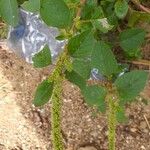
Source: leafsnapAmaranthus palmeri, commonly known as Palmer's amaranth, is a flowering plant species in the Amaranthaceae family. Native to North America, it is prevalent throughout many parts of the United States and Mexico. This plant typically grows up to 2 meters tall and features long, narrow green leaves with pointed tips. Its small flowers, which can be greenish-white or pinkish-red, grow on long spikes that can extend up to 1 meter in length. Palmer's amaranth is notable as an important crop weed that has developed resistance to many commonly used herbicides, posing a significant challenge for farmers. If not properly controlled, it can cause substantial yield losses. Despite this, the plant does have beneficial uses: it serves as a nutritious food source for both livestock and humans. In traditional medicinal practices, Palmer's amaranth has been valued for its anti-inflammatory properties and has been used to treat various ailments such as diarrhea and fever. Overall, Amaranthus palmeri is a fascinating plant with both positive and negative impacts on agriculture and holds potential for medicinal applications.
🌳 Although often labeled an invasive weed in American croplands, palmer amaranth has useful applications. Indigenous peoples used its seeds and leaves for food, taking advantage of its high nutritional content. Modern research has focused on the plant’s potential as a renewable energy source because of its rapid growth and abundant biomass production.
🎭 Recovery, Defense, Being unseen
Care Guide
💧 Water Every 7 days
Palmer's amaranth is well-suited to dry environments due to its high tolerance for drought, needing only minimal watering each week. As an annual herbaceous plant, its growth cycle is closely tied to water availability, thriving during periods of consistent moisture.
How should I water my Palmer's amaranth plant?
To water Palmer's amaranth, you have several options: use a garden hose with a spray nozzle, a watering can, or any other common watering tool. This plant is not too fussy about the type of water it receives, whether it's rainwater, tap water, or filtered water. However, avoid watering it from above as this can harm the leaves and flowers, and potentially cause disease. Instead, a drip irrigation system is often the best method as it evenly and directly applies water to the soil. If you have a container-grown Palmer's amaranth, you can use a similar approach but with tools like a cup, watering can, or your tap to water directly into the soil.
What should I do if I give my Palmer's amaranth plant too much or too little water?
The solution for underwatering Palmer's amaranth is simple. When you see that your plant lacks moisture, start watering it regularly. Overwatering can be a bigger problem, especially if you don't catch it early. When Palmer's amaranth is overwatered, it can get sick and eventually die. To prevent this, choose a good location for your plant, one with sunlight to dry the soil and good drainage to avoid water pooling. If you overwater potted Palmer's amaranth, consider moving it to a new pot. The previous pot may not have had good soil drainage or enough drainage holes. When repotting, use loose soil and an efficiently draining pot.
How frequently should I water my Palmer's amaranth plant?
To properly care for Palmer's amaranth, you need to water it regularly throughout the growing season. In the spring, watering once a week should be sufficient. However, as the weather gets warmer, you may need to increase watering to two or three times per week. Be careful not to exceed this rate, as it can harm the plant. Regardless of how often you water, make sure the soil remains moist but not soaked. If you're growing Palmer's amaranth in a pot, you'll need to water more frequently than if it were in the ground. Potted plants can heat up and dry out faster, so plan to water them a few times per week instead of just once.
How much water does my Palmer's amaranth plant need?
There are a few ways to decide how much water to give your Palmer's amaranth. Some gardeners rely on the feel of the soil to determine when to water. They suggest watering until the top six inches of soil feel moist. Alternatively, you can use a specific measurement as a guideline. Typically, Palmer's amaranth needs about two gallons of water per week, depending on the heat and how quickly the soil dries out. However, be cautious of overwatering if your plant doesn't need that much. When growing in a container, the method is slightly different. Make sure to water enough to moisten all the dry soil layers. You can test this by sticking your finger in the soil or looking for a small amount of excess water draining out of the pot.
How can I know if I'm giving enough water to my Palmer's amaranth?
Avoiding overwatering your Palmer's amaranth can be a bit challenging. While the plants have deep roots requiring weekly soil moistening, they are highly prone to root rot and browning due to excess water. Underwatering is less likely, as these plants can survive without additional watering for some time. However, if left too long without water, they may wilt and exhibit dry leaves.
☀️ Light Full sun
Palmer amaranth grows best with plenty of sunlight for optimal development. In its natural environment, the plant is accustomed to prolonged light exposure. It can tolerate lower light levels and still develop reasonably well, though it may not reach its full potential. Both too much and too little light can negatively affect its growth or health.
What are the sunlight requirements for Palmer's amaranth?
Palmer's amaranth requires full sun, which means it thrives best with more than 6 hours of sunlight daily. It can also tolerate partial sun, about 3-6 hours of sunlight. However, for optimal growth and health, finding the right balance of sun exposure is crucial. Watch how sunlight moves through your garden to choose the best spots that provide ample light without causing stress to the plant.
How does artificial lighting assist in the growth of indoor plants?
Indoor plants, including Palmer's amaranth, can benefit significantly from artificial lighting, especially when natural sunlight is insufficient, such as in winter or less sunny locations. Artificial lighting, like LED lights, can be customized to provide the necessary wavelengths of light, promoting healthier and faster growth. Depending on the plant's sunlight needs, the artificial lighting requirements vary: full sun plants need 30-50W/sq ft, partial sun plants 20-30W/sq ft, and full shade plants 10-20W/sq ft. The light source should be placed 12-36 inches above the plant for 8-12 hours daily to mimic natural daylight hours.
What are the symptoms of inadequate light exposure in Palmer's amaranth?
When Palmer's amaranth doesn't get enough light, several symptoms can occur: small or lighter-colored new leaves, leggy or sparse growth, faster leaf drop, slower or no new growth, and chlorosis. Additionally, excessive sunlight can lead to sunscald, leaf curling, wilting, and leaf scorching. These symptoms highlight the plant's need for an optimal amount of sunlight, whether it's grown indoors or outdoors.
What solutions can be applied to address light exposure issues in Palmer's amaranth?
To combat light exposure issues in Palmer's amaranth, indoor plants that are too large or not easily movable can benefit from using artificial light, turned on for at least 8 hours daily or professional plant grow lights for sufficient light. Outdoors, gradually introducing plants to sunnier spots can help them adapt without getting sunburned. Additionally, removing obstructions that block sunlight and, for smaller plants, considering transplanting during their dormant period to a location with ample sunlight and good drainage can markedly improve light exposure. Note that parts of the plant damaged by insufficient light may not recover, but new growth should be healthy with improved light conditions.
🌡️ Temperature 15–37.8°C
Palmer amaranth is native to warm climates and prefers temperatures between 68 and 100 °F (20 and 38 °C). In cultivation, it requires temperature moderation during very hot or very cold seasons to maintain healthy growth.
What is the native climate for Palmer's Amaranth?
Palmer's amaranth originates from environments that favor warm climatic conditions. It thrives in temperatures ranging from 68 to 100°F (20 to 38°C), indicating its preference for warm conditions. The plant is adapted to grow in such temperatures, requiring adjustments in cultivation practices to moderate the temperature during excessively hot or cold seasons to maintain its healthy growth.
Does Palmer's Amaranth require special frost protection measures?
Palmer's amaranth possesses a substantial resistance to cold, generally negating the need for special frost protection measures during the winter months. However, in conditions where winter temperatures plummet below -15°C, it becomes essential to provide cold protection. This can be accomplished by covering the plant with insulating materials such as soil or straw. Additionally, it is advisable to water the plant generously before the first freeze of autumn to ensure the soil remains moist and freezes, which aids in preventing drought and water scarcity for the plant during the winter and early spring.
How does Palmer's Amaranth react to low temperatures?
Palmer's amaranth exhibits significant tolerance to cold, optimally flourishing at temperatures above 20°C. While it generally should remain above 0°C during winter, exposure to temperatures falling below -15°C doesn't necessarily produce noticeable effects in the winter. However, such low temperatures can lead to reduced sprouting or a complete absence of sprouting come spring. To mitigate this, it's advised to remove any parts of the plant that fail to sprout in spring.
What are the effects of high temperatures on Palmer's Amaranth, and how can they be mitigated?
Palmer's amaranth should ideally be kept under 38°C during the summer months. When exposed to temperatures above 43°C, the plant may exhibit signs of stress, such as leaves becoming lighter in color, curling, susceptibility to sunburn, and in extreme cases, the entire plant may wilt and become dry. To address this, trimming away the sunburned and dried parts, moving the plant to a shaded area during the intense midday and afternoon sun, or utilizing a shade cloth can be beneficial. Additionally, watering the plant during the cooler morning and evening hours helps keep the soil moist and supports the plant's health.
💨 Humidity
🪴 Soil 6-7
🌱 Fertilizer
Palmer amaranth does well with regular, light fertilizer applications to encourage healthy leaf development. Fertilize Palmer amaranth roughly once a month during the summer. Nitrogen is vital for foliage, and adding nitrogen-rich fertilizers helps Palmer amaranth flourish.
🪴 Pot & Repot
✂️ Pruning
🌿 Propagating
🐛 Diseases & pets
☠️ Toxicity
Characteristics
- Plant Type
- Herb
- Life Cycle
- Annual
- Genus
- Amaranthus
- Family
- Amaranthaceae
- Hardiness Zone
- 7-12
- Mature Height
- 1.83 m to 2.44 m
- Mature Spread
- 10 cm to 61 cm
- Leaf Color
- Green
- Leaf Type
- Deciduous
- Flower Color
- Green
- Flower Size
- 7.62 cm to 15.24 cm
- Bloom Time
- Early summer, Mid summer
- Planting Time
- Spring
- Harvest Time
- Mid summer, Late summer
- Native Area
- Mexico, Cuba