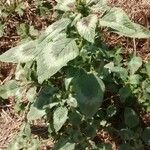
Amaranthus spinosus
Pigweed · Thorny amaranth · Thorny pigweed · Carelessweed · Prince-of-Wales-feather
Description
Source: leafsnapAmaranthus spinosus, commonly known as spiny amaranth, is a herbaceous plant that belongs to the Amaranthaceae family. It is native to tropical regions of the Americas but has since spread globally. The plant can grow up to 1 meter in height and features a spiny stem with ovate or lanceolate green leaves. The flowers of Amaranthus spinosus are small and inconspicuous, surrounded by green or reddish-brown bracts. The seeds produced by this plant are small and black. In many cultures worldwide, Amaranthus spinosus is commonly used as a food source. The leaves can be cooked like spinach or used raw in salads, while the seeds can be ground into flour for baking. In traditional medicine, Amaranthus spinosus has been valued for its anti-inflammatory properties and used to treat various ailments such as diarrhea, dysentery, and fever. However, it is important to note that this plant contains oxalates, which may cause kidney stones if consumed excessively. Therefore, it should be consumed in moderation, like any other food source. Overall, Amaranthus spinosus is an important herbaceous plant with various culinary and medicinal uses. Nonetheless, due to its oxalate content, it should be consumed in moderation to avoid potential health issues such as kidney stones.
🎭 Eternal life, Loyalty, Perpetual Friendship
Care Guide
💧 Water Every 3 days
Spiny amaranth flourishes in tropical climates where it requires consistent moisture, preferring to be watered weekly. Although it can withstand changes in humidity, it thrives best in moist conditions. Outdoors, spiny amaranth opportunistically grows during the rainy season, capitalizing on the abundant rainfall to boost its growth and reproduction.
What do I do if I give my Spiny amaranth too much or too little water?
To avoid underwatering Spiny amaranth, simply water it more regularly when you notice it lacks moisture. On the other hand, overwatering can lead to serious problems, such as diseases and the plant's decline or death. To prevent this, choose a suitable location for growing that gets enough sunlight to dry the soil and has good drainage to prevent waterlogging. If you have overwatered Spiny amaranth in a pot, consider changing it to a new pot with better drainage. When repotting, use loose soil and a pot that drains efficiently.
How frequently should I water my Spiny amaranth?
To help your Spiny amaranth thrive, it's important to water it consistently throughout the growing season. In the beginning of spring, you should water the plant about once per week. As the weather gets warmer, you may need to increase your watering to two to three times per week. However, be careful not to over water, as this can harm the plant. It's also important to keep the soil moist but not soggy, regardless of how often you water. If your Spiny amaranth is in a pot, you'll need to water it more frequently. Potted plants tend to dry out faster than those in the ground because the soil can heat up. In most cases, it's best to water a container-grown Spiny amaranth a few times per week, compared to just once per week for a plant in the ground.
How much water does my Spiny amaranth plant need?
Determining the proper amount of water for your Spiny amaranth can be approached in various ways. Some gardeners prefer to gauge the moisture of the soil by feeling it. This method suggests watering until the first six inches of soil feel moist. Another option is to use a specific measurement. Typically, watering your Spiny amaranth with about two gallons per week is recommended, taking into account the temperature and soil dryness. However, strict adherence to this guideline may result in overwatering if your plant requires less. When growing Spiny amaranth in a container, a different approach is needed. It is usually best to water until all layers of dry soil are moistened. To check, simply insert your finger into the soil to feel for moisture. Another indication is observing a slight trickle of excess water from the drainage holes when watering the soil.
How do I know if I'm giving enough water to my Spiny amaranth plant?
Spiny amaranth can be sensitive to both overwatering and underwatering. While they have deep roots that need to be moistened weekly, overwatering can lead to root rot and browning. Underwatering is less of a concern, as these plants can survive without supplemental watering for a while. However, if you go too long without watering, the plant may wilt and develop dry leaves.
How should I water my Spiny amaranth throughout the different seasons?
As the seasons change, the water needs of your Spiny amaranth plant will differ. In spring, watering once a week should be sufficient. However, as the summer heat arrives, you may need to increase watering to about three times per week. This is particularly important for Spiny amaranth plants growing in containers, as the soil in containers tends to dry out faster in warm weather. In autumn, when the temperature cools down and the sun is less intense, your Spiny amaranth may require slightly less water while still in bloom.
☀️ Light Full sun
Spiny amaranth grows best in places that get direct sunlight for most of the day. It can tolerate conditions with somewhat filtered light. Too much exposure can cause wilting, while too little light can limit vigorous growth. This preference comes from the plant originating in areas with abundant sun.
What are the sunlight requirements for Spiny Amaranth?
Spiny Amaranth thrives best in full sunlight, requiring more than 6 hours of unobstructed sunlight per day, but can also withstand partial sun, with about 3-6 hours of sunlight. Observing how sunlight moves through your garden will help you choose spots that provide the perfect balance of light and shade for your plants, ensuring their happiness and optimal growth.
Can Spiny Amaranth adapt to indoor environments?
Yes, Spiny Amaranth can adapt to indoor environments, especially in conditions where natural sunlight is limited. Indoor plants require adequate lighting for optimal growth, and when natural sunlight is insufficient, artificial lighting such as LED lights can be a vital solution. Properly chosen artificial lighting should mimic the specific wavelengths of light that Spiny Amaranth needs, usually requiring 30-50W/sq ft for full sun plants and 20-30W/sq ft for partial sun plants, placed 12-36 inches above the plant for 8-12 hours per day to mimic natural daylight hours.
What are the symptoms of inadequate light for Spiny Amaranth?
Symptoms of inadequate light for Spiny Amaranth include smaller new leaves, leggy or sparse growth, faster leaf drop, slower or no new growth, lighter-colored new leaves, chlorosis, sunscald, leaf curling, wilting, and leaf scorching. These symptoms indicate that the plant is not receiving enough sunlight, or in some cases, too much, which affects its ability to photosynthesize and grow healthily.
How can I ensure Spiny Amaranth receives adequate light?
To ensure optimal growth for Spiny Amaranth, indoors, gradually move the plant to sunnier locations each week until it receives at least 6 hours of direct sunlight daily, utilizing south-facing windows and keeping curtains open. Artificial lighting can also supplement natural light if needed. Outdoors, move plants gradually to sunnier spots to adapt, avoiding sudden changes in light intensity. If plants are in the ground with obstructions, consider pruning trees or bushes that block sunlight or transplanting the plant to a sunnier location during its dormant period for better exposure.
🌡️ Temperature 5–37.8°C
Spiny amaranth originates from temperate regions and prefers temperatures of 68 to 100 °F (20 to 38℃). When seasons change, keeping temperatures within that range ensures optimal growth. Monitor conditions and adjust them as needed.
What is the ideal temperature range for growing Spiny amaranth?
Spiny amaranth thrives in temperate environments, with an ideal temperature range being between 68 to 100°F (20 to 38°C). To ensure optimal growth, it's important to monitor and adjust the surrounding temperatures as the seasons change, maintaining them within this specified range.
Does Spiny amaranth require special frost protection during winter?
Spiny amaranth exhibits strong cold resistance, thus special frost protection measures are generally not required during winter. However, if winter temperatures are expected to plummet below -30°C, it's essential to safeguard the plant. Cold protection can be provided by covering the plant with soil or straw. Additionally, it's advisable to water the plant abundantly before the first freeze in autumn to keep the soil moist and prevent drought and water scarcity during winter and early spring.
How does low temperature affect Spiny amaranth, and what solutions are recommended?
Spiny amaranth is cold-tolerant and ideally should be kept above 20°C. In winter, maintaining the temperature above 0°C is advisable. When temperatures drop below -30°C, while there may not be visible changes during winter, a decrease in sprouting or even a complete lack of sprouting may occur in springtime. The recommended solution for affected plants in spring is to remove any parts that have failed to sprout.
What are the effects of high temperature on Spiny amaranth, and how can they be mitigated?
During the summer, it's crucial to ensure that the temperature surrounding Spiny amaranth does not exceed 38°C. Exposing the plant to temperatures above 43°C can result in lighter colored leaves, curling, susceptibility to sunburn, and in severe cases, the entire plant may wilt and become dry. To mitigate these effects, trim away the sunburned and dried-up parts, move the plant to a shadier location or use a shade cloth to protect it from the midday and afternoon sun, and water the plant in the morning and evening to maintain soil moisture.
💨 Humidity
🪴 Soil 5-7
🌱 Fertilizer
Spiny amaranth benefits from regular, weak applications of fertilizer to encourage healthy leaf growth. You should feed Spiny amaranth about once a month during the summer. Nitrogen is essential for foliage, and providing nitrogen-rich sources supports Spiny amaranth's thriving.
🪴 Pot & Repot
✂️ Pruning
🌿 Propagating
🐛 Diseases & pets
☠️ Toxicity
Characteristics
- Plant Type
- Herb
- Life Cycle
- Annual
- Genus
- Amaranthus
- Family
- Amaranthaceae
- Hardiness Zone
- 4-11
- Mature Height
- 30 cm to 91 cm
- Mature Spread
- 61 cm to 91 cm
- Leaf Color
- Green, Blue, Purple
- Leaf Type
- Deciduous
- Flower Color
- Green
- Flower Size
- 0.51 cm to 0.76 cm
- Bloom Time
- Summer
- Planting Time
- Autumn
- Harvest Time
- Mid summer, Late summer, Early fall
- Native Area
- Belize, Honduras, Mexico, Guatemala, Peru, Dominican Republic, Panama, Jamaica, Colombia, Bahamas, Paraguay, Argentina, Haiti, Bolivia, Venezuela, Brazil, Guyana, El Salvador, Nicaragua, Costa Rica