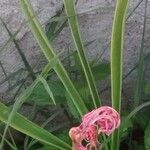
Amaryllis belladonna
Easter-lily · Belladonna lily · Naked ladies · Jersey-lily · Naked lilies
Description
Source: leafsnapAmaryllis belladonna, commonly known as the belladonna lily or naked lady, is a bulbous perennial plant native to South Africa. Belonging to the Amaryllidaceae family, it is celebrated for its vibrant pink flowers that blossom in late summer or early autumn. The trumpet-shaped flowers grow on tall stems that can reach heights of up to 60 cm. The plant’s leaves are long and strap-like, extending up to 50 cm in length. They emerge from the ground after the flowering period has concluded and will wither away before the next blooming season begins. Amaryllis belladonna thrives in well-drained soil and prefers full sun exposure, though it can tolerate partial shade. While it is drought-tolerant, the plant benefits from occasional watering during dry spells. For centuries, Amaryllis belladonna has been cultivated for its ornamental value. Today, numerous cultivars offer a variety of flower colors, ranging from white to deep pink. Beyond its aesthetic appeal, the plant has also held medicinal significance among indigenous South African peoples, who have used it to treat ailments such as fevers, coughs, and headaches. In summary, Amaryllis belladonna is a stunning plant that adds color and interest to any garden or landscape. It holds cultural significance both as an ornamental plant and as a medicinal herb.
🌳 The belladonna lily is frequently used as an indicator for diagnosing ecological changes because it is sensitive to environmental conditions. Gardeners and botanists use its flowering patterns and overall condition to signal seasonal shifts or changes in local ecosystems. Its presence can point to well-drained soils, and it is sometimes employed in phytoremediation efforts. Additionally, the bulbs of the belladonna lily have been used in various cultural contexts as a glue substitute and adhesive.
🎭 Self-respect, female beauty
Care Guide
💧 Water Every 7 days
The Belladonna lily is native to the Cape region of South Africa and thrives in a Mediterranean climate. It is drought-tolerant and only requires watering once every 1-2 weeks, allowing the soil to dry out in between. Ideally, it should be grown outdoors in full sunlight. The belladonna lily benefits from a watering schedule that aligns with the seasonal rainfall.
What should I do if I give my Belladonna lily too much or too little water?
The Belladonna lily is prone to overwatering, which can cause bulb rot. Signs of overwatering include a mushy bulb, floppy stems with spots, droopy flowers, and a yellow stalk. If the leaves turn yellow before the flowers bloom, it's a sign of overwatering. Bulb rot cannot be reversed and requires careful removal of the affected portions. Disinfect the pot and tools if using them. For outdoor plants, find a different planting location. Underwatering is less problematic, but signs include no blooms, wilted stalks, and browning on the flower petals. If underwatered, give the plant a good drink without saturating the surrounding soil. Avoid overwatering, as it can lead to root rot and fungus. Look for spots on leaves and buds, as well as discoloration and dying leaf tips as signs of fungus.
How frequently should I water my Belladonna lily?
The Belladonna lily is a low-maintenance and hardy plant that thrives when grown in the ground. Overwatering can harm the bulb, so it's important to avoid excessive watering while the plant is growing. After planting, water the lily once and then let it be until shoots appear. To determine if the soil needs watering, check its moisture level by inserting your finger about 2-3 inches below the surface. If the soil is still wet, there's no need to water the plant. For potted plants, check the water collection tray for standing water and avoid watering if it's present. A moisture sensor can provide a more accurate reading, ideally in the middle of the 'moist' range. Watering the Belladonna lily once per week is generally recommended for optimal results.
How should I change the watering for my Belladonna lily based on different conditions?
The Belladonna lily is a hardy plant that can survive harsh conditions. When planted outdoors, you can rely on natural conditions for water, as it doesn't need much maintenance and can tolerate drought. Just make sure the soil has good drainage. For potted Belladonna lilies, be cautious with watering to avoid bulb rot. Use well-drained soil, add sand or rocks for better drainage, and ensure the pots have drainage holes. During the growing phase, water about one inch per week to encourage blooming. Adjust watering based on humidity and temperature. Hot and dry climates may require more frequent watering, while humid climates may require less. Always check the soil moisture level and aim for well-drained, moist soil.
☀️ Light Full sun
Belladonna lily performs best when it gets uninterrupted sunlight, which supports optimal growth and flowering. It can also survive in areas with only partial sun. Although it favors sunny conditions, exposure to too much or too little light can impede growth and decrease flower production. Originally found in sunlit habitats, this plant has adapted to those conditions.
What are the sunlight requirements for Belladonna Lily?
Belladonna Lily requires full sun to thrive, which entails exposure to more than 6 hours of sunlight daily. It can also tolerate partial sun, meaning about 3-6 hours of sunlight. Observing how sunlight moves through your garden can help you choose optimal spots that provide the right balance of light and shade for the plant, ensuring its health and happiness. Continuous exposure to the sun's rays ensures optimal growth and blooming of Belladonna Lily; however, it can survive in less sunny locations too. Both excessive and scarce sunlight exposure can hinder the plant's growth and reduce flower production.
How can artificial lighting be used for Belladonna Lily indoors?
When natural sunlight is insufficient for indoor Belladonna Lilies, especially during winter or in less sunny spaces, artificial lighting offers a vital solution for optimal growth. LED lights are recommended for indoor plant lighting as they can be customized to provide the wavelengths of light needed by the plant. Full sun plants require 30-50W/sq ft, partial sun plants need 20-30W/sq ft, and full shade plants benefit from 10-20W/sq ft of artificial light. The light source should be placed 12-36 inches above the plant to mimic natural sunlight, ensuring the plant receives 8-12 hours of light per day.
What are the symptoms of inadequate sunlight in Belladonna Lily?
Inadequate sunlight can lead to several symptoms in Belladonna Lily, including leggy or sparse growth, which makes the plant look thin and stretched. New leaves may appear lighter in color or develop irregular patterns, indicating a lack of chlorophyll. Insufficient sunlight can also negatively affect the plant's flowering and fruiting potential. Excessive sunlight exposure can cause chlorosis (leaves turning yellow), sunscald (damage to leaves or stems), leaf curling (as a defense mechanism against sunlight), wilting (due to increased water loss), and leaf scorching (brown, dry edges on leaves).
What solutions are available for Belladonna Lily growing in inadequate sunlight?
For indoor Belladonna Lilies, gradually move the plant to sunnier locations each week until it receives at least 6 hours of direct sunlight daily, using south-facing windows for maximum exposure. Artificial light can also supplement natural light, keeping lights on for at least 8 hours daily. For outdoor plants, adjust their locations gradually to prevent sunburn, aiming for spots with optimal sunlight. Minimizing obstructions, such as pruning blocking tree branches, and transplanting smaller plants during their dormant period to sunny locations with good drainage, are effective strategies for plants not receiving enough sunlight.
🌡️ Temperature 15–35°C
The belladonna lily's native growing conditions are fairly warm, with temperatures from 60 to 90 ℉ (15 to 35 ℃). It prefers a similar temperature range when grown in home gardens or outdoor landscapes. During colder periods, lowering temperatures to about 50 to 60 ℉ (10 to 15 ℃) is recommended to promote proper dormancy.
What is the native growth environment for belladonna lily?
The belladonna lily thrives in relatively warm environments, where the temperature ranges between 60 to 90°F (15 to 35°C). This plant prefers a similar temperature range when cultivated in home gardens or outdoor landscapes. To encourage proper dormancy during colder seasons, it is recommended to adjust the temperature conditions to approximately 50 to 60°F (10 to 15°C). Belladonna lily possesses strong cold resistance, typically not requiring special frost protection measures in winter, unless the temperatures are expected to drop significantly. In anticipation of the first freeze of autumn, it is advisable to water the plant abundantly to ensure the soil remains moist and enters a frozen state, thereby helping to prevent drought and water scarcity for the plant during the colder months.
How does low temperature affect belladonna lily and what are the solutions?
Belladonna lily is cold-tolerant, performing best when temperatures are maintained above a certain minimum threshold. During winter, it's crucial to keep the temperature above this minimum limit to ensure the plant's survival and health. If temperatures fall below this threshold, the plant may not exhibit immediate adverse effects during the winter, but a decrease in sprouting, or a complete lack of sprouting, may be observed during spring. To address this issue, in spring, it is recommended to remove any parts of the plant that have failed to sprout, facilitating healthier growth for the remaining plant.
How does high temperature affect belladonna lily and what are the solutions?
During the summer months, it is important to ensure that the belladonna lily remains below a certain maximum temperature threshold. Exceeding this temperature can result in the leaves becoming lighter in color, exhibiting tendencies to curl, becoming susceptible to sunburn, and in severe cases, the entire plant may wilt and become dry. To mitigate these issues, it's advisable to trim away the sunburned and dried-up parts of the plant. Additionally, relocating the plant to a shaded area or utilizing a shade cloth to protect it from the midday and afternoon sun can be beneficial. Ensuring the plant is watered in the morning and evening to maintain soil moisture is also essential in combating the adverse effects of high temperatures.
💨 Humidity dry (<40%)
This plant prefers dry conditions, so don't mist it. However, watering it less often can also thrive in higher humidity.
🪴 Soil 6-7
🌱 Fertilizer
The best time to fertilize a Belladonna lily is in early spring, as it comes out of dormancy and begins active growth. Fertilizing supplies essential nutrients for healthy development. While Belladonna lilies have fairly low fertilizer requirements, applying fertilizer annually can improve their survival and encourage better, longer-lasting blooms.
Why do I have to put fertilizer on my Belladonna lily plant?
Fertilization is important for the Belladonna lily because it provides key nutrients for both above and below ground growth. While the overall fertilization needs for the Belladonna lily are relatively low, annual fertilization can be very beneficial. It helps keep the plant alive and encourages the production of better flowers that last longer. Therefore, if you want your Belladonna lily to look its best, remember to fertilize it annually.
When should I fertilize my Belladonna lily for the best results?
The best time to fertilize a Belladonna lily is late winter to early spring when it is transitioning from dormancy to active growth. Fertilizing at this time promotes healthy growth and sets the plant up for a successful season. While early spring is generally the most beneficial time to fertilize, fall is also an acceptable period. It is not recommended to feed the plant in summer or winter.
When is it not a good idea to add fertilizer to my Belladonna lily?
To avoid overfertilization and complications, it is best to fertilize your Belladonna lily only in late winter and early spring. This plant has low fertilization needs, so a single feeding per year is sufficient. Fertilizing during spring, summer, and fall can lead to overfertilization, except if you missed fertilizing in spring, then it's okay to feed in fall. It is also not necessary to fertilize in winter since the Belladonna lily is in a dormant phase and does not experience new growth.
What kind of fertilizer does my Belladonna lily require?
For growing Belladonna lilies, any balanced general-purpose fertilizer will work, but some nutrient blends are more beneficial. Many gardeners believe that higher phosphorus levels lead to stronger roots and better flowers. Therefore, using a phosphorus-rich fertilizer is recommended. It can be in granular or liquid form, as long as it contains enough nutrients. Additionally, using organic materials like compost and manure can also improve the soil for Belladonna lilies.
How can I fertilize my Belladonna lily?
The most common way to fertilize a Belladonna lily is by applying granular or pellet fertilizer to the soil surrounding the plant. It is important to fertilize when the plant is transitioning from its winter dormant phase to active growth. In early spring, wait for the plant to sprout shoots before applying the fertilizer. Alternatively, some people opt for liquid fertilizer, which should be diluted before application. Regardless of the type of fertilizer, it is recommended to moisten the soil before, during, and after fertilizing.
🪴 Pot & Repot Every 12 months
Repot Belladonna lily in early spring. Choose a pot that is wider than it is deep and has good drainage. Use a loamy, well-draining potting mixture enriched with compost. Gently remove old soil from the bulb and plant it at a depth equal to the bulb’s height. Water thoroughly after repotting and place the pot in a sunny spot. Avoid overwatering to prevent the bulb from rotting.
✂️ Pruning
The Belladonna lily showcases stunning, bell-shaped flowers on leafless stems. It's advisable to prune these plants from early to late spring. After the flowers have bloomed, remove any dead leaves to improve growth and air circulation, but be careful not to remove any green foliage. Regular pruning enhances flowering and promotes vigorous growth. For detailed pruning techniques, consult horticultural guides.
🌿 Propagating
🐛 Diseases & pets
☠️ Toxicity
Characteristics
- Plant Type
- Herb
- Life Cycle
- Perennial
- Genus
- Amaryllis
- Family
- Amaryllidaceae
- Hardiness Zone
- 7-10
- Mature Height
- 0.61 m to 1.52 m
- Mature Spread
- 61 cm to 91 cm
- Leaf Color
- Green
- Leaf Type
- Deciduous
- Flower Color
- Pink, White, Red
- Flower Size
- 7.62 cm
- Bloom Time
- Mid summer
- Planting Time
- Winter, Spring
- Harvest Time
- Late summer, Early fall
- Native Area
- South Africa