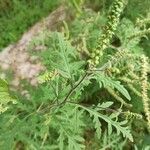
Ambrosia artemisiifolia
Annual ragweed · Ragweed · Roman wormwood · Short ragweed · Common ragweed
Description
Source: leafsnapAmbrosia artemisiifolia, commonly known as common ragweed, is a species of flowering plant in the sunflower family. Although native to North America, it has become invasive in many parts of the world. The plant can grow to a height of 1-2 meters and features green leaves that are deeply lobed and toothed. Its small, greenish-yellow flowers appear in late summer or early fall. Common ragweed is notorious for its highly allergenic pollen, which can trigger hay fever symptoms such as sneezing, a runny nose, and itchy eyes. Additionally, the plant produces a toxin that can inhibit the growth of surrounding vegetation. Despite its negative impact on human health and agriculture, common ragweed does offer some ecological benefits, including providing food for wildlife like birds and small mammals. To control this invasive plant, measures such as manual removal or herbicide application before flowering are recommended to prevent seed production. Early detection and prevention are also crucial in managing the spread of common ragweed before it establishes itself in new areas.
💡 Each year, when the pollen from blooming ragweed comes into contact with the skin, it releases water-soluble proteins that trigger allergic reactions. In the United States, 14.6 million people experience these allergic reactions due to ragweed.
🌳 Common ragweed, which produces large amounts of pollen, is well known for provoking allergies. That same feature makes it a possible biological weapon against aquatic pests. Current studies are examining common ragweed's potential to control those pests and maintain water quality. Additionally, its rapid propagation could make it a feasible source of biofuel.
🎭 Persistent liveliness, annoyance
Care Guide
💧 Water Every 3 days
Annual ragweed flourishes in a range of moisture conditions, demonstrating both drought tolerance and a positive response to regular watering. Ideally, it should be watered once a week. As an annual herb, ragweed grows vigorously during the rainy season, taking full advantage of the increased water availability to complete its life cycle.
When should I water my Annual Ragweed?
The ideal time to water your Annual Ragweed (Ambrosia artemisiifolia) involves looking for specific signs such as dry soil, wilted leaves, leaf discoloration, and slowed growth rate. If pressing your finger an inch into the soil reveals dryness, it's time to water. Wilted or droopy leaves, especially outside the midday heat, indicate the need for hydration. Yellowing leaves suggest insufficient water, and slowed growth may imply dehydration. However, be cautious of overwatering or delayed watering, as these pose significant risks like root rot from too much water, stress, and vulnerability to pests from too little water.
How should I water my Annual Ragweed?
Watering your Annual Ragweed effectively involves understanding its preference for slightly dry soil conditions and employing techniques that ensure deep, efficient hydration without overwatering. Using a drip irrigation system or soaker hoses helps deliver water directly to the roots, minimizing evaporation and foliage wetness, which could lead to disease. A watering can with a long spout allows for precise watering at the plant's base. Utilize a moisture meter to monitor the soil's moisture level accurately. It's crucial to avoid overwatering and foliage wetting to prevent root rot and disease.
How much water does Annual Ragweed really need?
The amount of water needed by Annual Ragweed varies depending on factors like pot size, root depth, and plant size. Ensure soil moisture is consistent but not waterlogged, allowing slight drying between watering sessions. The water should reach about 6-12 inches deep to match the root depth. Properly hydrated plants display green, healthy leaves, and sturdy stems. Overwatering signs include yellowing leaves and root rot, while underwatering is indicated by wilting and stunted growth. Balancing your watering routine is key to avoiding these issues.
What kind of water is best for Annual Ragweed?
Annual Ragweed thrives on tap water and rainwater, as these sources usually contain more nutrients than distilled or filtered water. While it has moderate tolerance to chlorine, letting tap water sit out for 24 hours can reduce chlorine levels, benefiting the plant. However, avoid water with high fluoride content due to the plant's mild sensitivity. Also, consider using soft water or leaching the soil periodically if hard water is your only option, as long-term exposure to hard minerals can be detrimental.
How do Annual Ragweed's watering needs change with the seasons?
Annual Ragweed's watering needs vary with the seasons. In spring, increase watering gently to support new growth, avoiding waterlogging. During summer, maintain soil moisture without overwatering; deep watering followed by a period allowing the topsoil to dry is beneficial. In autumn, reduce watering as the plant prioritizes seed production, but keep the soil from drying out completely. Winter requires significantly less watering due to the plant's dormancy, reduced evaporation rates, and lower temperature, aiming to prevent root rot.
☀️ Light Partial sun
Common ragweed needs moderate sunlight to thrive and can tolerate brighter light levels. It naturally grows in areas with abundant sun exposure. However, straying from its ideal light conditions can reduce its growth and compromise its overall health.
What are the sunlight requirements for annual ragweed?
Annual ragweed requires moderate to intense sunlight for optimal growth, thriving in environments that provide considerable sun exposure. The plant prefers partial sun, which means about 3-6 hours of sunlight, but it can also grow well in full sun conditions, requiring above 6 hours of sunlight. It's essential to observe the movement of sunlight through your garden to choose spots that offer a balance of light and shade, ensuring the plants grow healthy and happy.
How can artificial lighting benefit indoor plants, and what are the recommendations for its use?
Indoor plants, including annual ragweed, require adequate lighting for optimal growth, especially when natural sunlight is insufficient. Artificial lighting can be a vital solution, promoting faster, healthier growth. LED lights are recommended because they can be customized to provide specific wavelengths of light needed by plants. For full sun plants, 30-50W/sq ft of artificial light is needed, partial sun plants require 20-30W/sq ft, and full shade plants need 10-20W/sq ft. The light source should be placed 12-36 inches above the plant, mimicking natural sunlight distance, and the plants should receive 8-12 hours of light per day to mirror natural daylight hours.
What are some common symptoms of light deficiency in annual ragweed?
Symptoms of light deficiency in annual ragweed include smaller new leaves, leggy or sparse growth, early leaf drop, slower or ceased new growth, lighter-colored new leaves, chlorosis (leaves turning yellow), sunscald, leaf curling, wilting, and leaf scorching. These symptoms indicate inadequate sunlight exposure, affecting the plant’s ability to photosynthesize and maintain overall health.
What solutions can address light deficiency issues for indoor and outdoor annual ragweed plants?
To address light deficiency, gradually introduce the plant to sunnier spots each week until it receives 3-6 hours of direct sunlight daily. For large or non-movable indoor plants, consider using artificial light, keeping a desk or ceiling lamp on for at least 8 hours daily or investing in professional plant grow lights. For outdoor plants, move them gradually to sunnier locations to adapt without getting sunburned. If you're dealing with obstructions like trees, consider pruning to allow more sunlight through. For smaller plants, transplanting during their dormant period to a sunnier location with good drainage might be beneficial. Note that parts of the plant affected by insufficient sunlight may not recover, but new growth should be healthy after adjusting light exposure.
🌡️ Temperature 10–37.8°C
Common ragweed is native to temperate regions where temperatures generally range from 68 to 100 °F (20 to 38 ℃). It grows best within that temperature range. Seasonal adjustments may require heating or cooling to ensure the plant's optimal growth.
What is the ideal temperature range for growing Annual Ragweed?
Annual Ragweed, scientifically known as Ambrosia artemisiifolia, is native to temperate climates and thrives in temperatures ranging from 68 to 100°F (20 to 38°C). This plant exhibits strong cold resistance, making it adaptable to a wide range of temperatures. Although it generally does not require special frost protection measures during winter, if temperatures are expected to drop below -25°C, providing some form of cold protection such as covering the plant with soil or straw is recommended. Additionally, watering the plant abundantly before the first freeze in autumn helps keep the soil moist, preventing drought and water scarcity during winter and early spring.
How does low temperature affect Annual Ragweed and what solutions are recommended?
Annual Ragweed is notable for its cold tolerance, with optimal growth when temperatures are above 20°C. Even though it can withstand cold, temperatures dropping below -25°C may lead to issues such as a decrease in sprouting or no sprouting at all during springtime. The solution for this issue is relatively straightforward. In spring, gardeners should remove any parts of the plant that have failed to sprout, allowing for healthier growth during the growing season.
What should be done if Annual Ragweed experiences high temperatures?
During the summer months, it is crucial to ensure that the temperature around Annual Ragweed does not exceed 38°C. Exposure to temperatures above 43°C can cause the leaves to lighten in color, curl, become susceptible to sunburn, and in severe cases, result in the entire plant wilting and drying out. To mitigate these effects, sunburned and dried parts should be trimmed away. The plant should be moved to a shaded location, or a shade cloth can be used to protect it from the midday and afternoon sun. Additionally, watering the plant in the morning and evening will help keep the soil moist and support the plant's health during high temperatures.
💨 Humidity dry (<40%)
This plant prefers dry conditions, so don't mist it. However, watering it less often can also thrive in higher humidity.
🪴 Soil 6-7
🌱 Fertilizer
Common ragweed does well with frequent, light applications of fertilizer to encourage healthy leaf development. Fertilize roughly once a month during the summer. Nitrogen is essential for foliage, and providing nitrogen-rich sources helps Common ragweed thrive.
🪴 Pot & Repot Every 12 months
✂️ Pruning
These plants can grow rowdy and overcrowd other plants. Look for ragweeds with deeply lobed leaves; these are the younger plants that you can pull up to control the spread. You may opt to cut down older plants with pruning loppers to reduce reseeding.
🌿 Propagating
🐛 Diseases & pets
☠️ Toxicity
Ragweed is generally non-toxic; however, it is known for causing allergic reactions in sensitive individuals, pets, and livestock. The plant can induce seasonal rhinitis, contact dermatitis, and irritations.
Characteristics
- Plant Type
- Herb
- Life Cycle
- Annual, Biennial
- Genus
- Ambrosia
- Family
- Asteraceae
- Hardiness Zone
- 6-11
- Mature Height
- 0.2 m to 1.52 m
- Mature Spread
- 0.91 m to 1.22 m
- Leaf Color
- Green
- Leaf Type
- Deciduous
- Flower Color
- Yellow, Green, Brown
- Flower Size
- 2.54 cm
- Bloom Time
- Early summer, Mid summer
- Planting Time
- Autumn
- Harvest Time
- Mid summer
- Native Area
- Colombia, Bahamas, Cuba, Mexico, Peru, Ecuador, Costa Rica, Panama, Jamaica