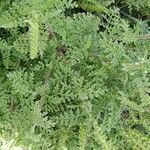
Ambrosia hispida
Bay-geranium · Coastal ragweed
Description
Source: leafsnapAmbrosia hispida, commonly known as woolly ambrosia or hispid bur ragweed, is a flowering plant in the sunflower family. Native to North America, it thrives in various habitats, including prairies, meadows, and open woodlands. This plant typically grows up to 3 feet tall, featuring woolly leaves that are deeply lobed with toothed edges. Its small, greenish-yellow flowers lack petals and sepals. Ambrosia hispida is notorious for its allergenic properties, producing large amounts of pollen that can trigger hay fever symptoms such as sneezing, runny nose, and itchy eyes. However, it also possesses medicinal qualities, historically used by Native Americans to treat ailments like fever and respiratory issues. In addition to its medicinal use, the plant's seeds serve as a food source for birds, while its leaves provide shelter for small animals such as rabbits. Despite these benefits to wildlife, Ambrosia hispida is considered invasive in some areas due to its rapid spread through wind-dispersed seeds. Thus, Ambrosia hispida plays a dual role in the environment: it supports wildlife and offers medicinal benefits, yet it also causes discomfort due to its pollen and can become invasive. This makes it a fascinating and complex species within the natural world.
🌳 Cuman ragweed is more than an irritating allergen; it contributes to the ecosystem by drawing in butterflies, including specialist lepidopteran species that depend on it. The plant serves as a larval host, offering food and shelter to the caterpillar stage of these insects, which later become butterflies — a process vital for keeping balance in their native ecosystems.
🎭 Bravery
Care Guide
💧 Water Every 7 days
☀️ Light Full sun
Cuman ragweed does best when exposed to the full intensity of daylight and can also persist in places with less, though still ample, sun. Its native habitat is open areas where continuous, unobstructed overhead light is typical. However, both excessive and insufficient light can negatively affect its growth.
🌡️ Temperature 10–35°C
Cuman ragweed is a plant native to temperate regions and prefers a moderately warm climate with temperatures of 68 to 95 °F (20 to 35 ℃). During seasonal changes, make sure cuman ragweed is maintained within this temperature range for optimal growth.
💨 Humidity
🪴 Soil 6-6
🌱 Fertilizer
A single fertilizer application in spring is typically enough for Cuman ragweed, although multiple feedings can maximize its growth. Apply fertilizer every four to six weeks. Fertilization improves the leaves' appearance and function, helping to maintain uniform color and a healthy texture. It also promotes root development and improves nutrient uptake for the plant's long-term health.
🪴 Pot & Repot
✂️ Pruning
Coastal ragweed flourishes in coastal areas because it can tolerate salt and grows vigorously. To maintain its health and appearance, prune it in early spring. This helps remove damaged branches, improve air circulation, and manage its size. Make sure to use clean, sharp tools and make cuts just above the nodes to encourage healthy regrowth.
🌿 Propagating
🐛 Diseases & pets
☠️ Toxicity
Characteristics
- Plant Type
- Herb
- Life Cycle
- Perennial, Annual
- Genus
- Ambrosia
- Family
- Asteraceae
- Hardiness Zone
- 6-10
- Mature Height
- 91 cm
- Mature Spread
- 8 cm to 15 cm
- Leaf Color
- Green, White
- Leaf Type
- Semi-evergreen
- Flower Color
- Yellow, Green
- Flower Size
- 2.54 cm
- Bloom Time
- Mid summer
- Planting Time
- Spring
- Harvest Time
- Mid summer, Late summer
- Native Area
- Mexico