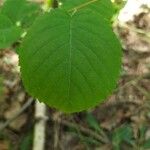
Amelanchier spicata
Garden Shadblow · Low Juneberry · Low Serviceberry · Running Serviceberry · Thicket Shadbush
Description
Source: leafsnapAmelanchier spicata, commonly known as the thicket serviceberry, is a deciduous shrub in the Rosaceae family. Native to North America, it thrives in a range of habitats, including forests, meadows, and rocky slopes. The plant generally grows to a height of 1 to 3 meters and has a spreading habit with multiple stems. The leaves of Amelanchier spicata are oval-shaped with serrated edges and a dark green color that turns reddish-orange in the fall. The plant produces small white flowers that bloom in early spring before the leaves emerge. These flowers are followed by edible berries that change color from green to red and finally to purple-black as they ripen. The thicket serviceberry is an essential food source for wildlife, including birds, bears, and small mammals, which feed on its berries. Additionally, it has medicinal properties; its bark was traditionally used by Native Americans to treat various ailments such as diarrhea. With its showy flowers in the spring and vibrant foliage in the fall, Amelanchier spicata is an attractive ornamental shrub. It is ideal for landscaping purposes and for naturalizing areas of your garden or landscape design projects.
Care Guide
💧 Water Every 7 days
☀️ Light Full sun
Low serviceberry does well when it gets abundant sunlight throughout the day, and it can also tolerate moderate light. However, too much or too little sun can inhibit its growth. Its origin in sunny habitats explains these light preferences.
🌡️ Temperature 5–32.2°C
Low serviceberry naturally occurs in regions with temperatures between 41 and 89.6 °F (5 to 32 ℃), commonly associated with temperate climates. As seasons shift, keep low serviceberry within that temperature range for optimal growth.
💨 Humidity
🪴 Soil 5-6
🌱 Fertilizer
The Low serviceberry plant needs adequate nutrients to produce fruit optimally. Apply fertilizer in early spring to encourage new growth and bloom development. Regular feeding keeps the plant healthy, yields more delicious fruit, and prevents nutrient-deficiency problems such as yellowing leaves and poor fruit production.
🪴 Pot & Repot
✂️ Pruning
🌿 Propagating
🐛 Diseases & pets
☠️ Toxicity
Characteristics
- Plant Type
- Shrub
- Life Cycle
- Perennial
- Genus
- Amelanchier
- Family
- Rosaceae
- Hardiness Zone
- 4-8
- Mature Height
- 0.91 m to 1.52 m
- Mature Spread
- 0.91 m to 1.52 m
- Leaf Color
- Green, Blue
- Leaf Type
- Deciduous
- Flower Color
- White
- Flower Size
- 2.54 cm
- Bloom Time
- Early spring, Mid spring
- Planting Time
- Spring, Summer
- Harvest Time
- Early summer, Mid summer