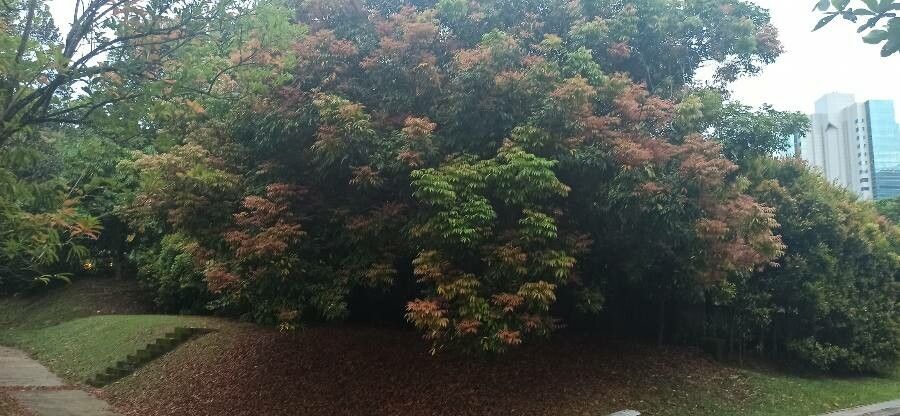
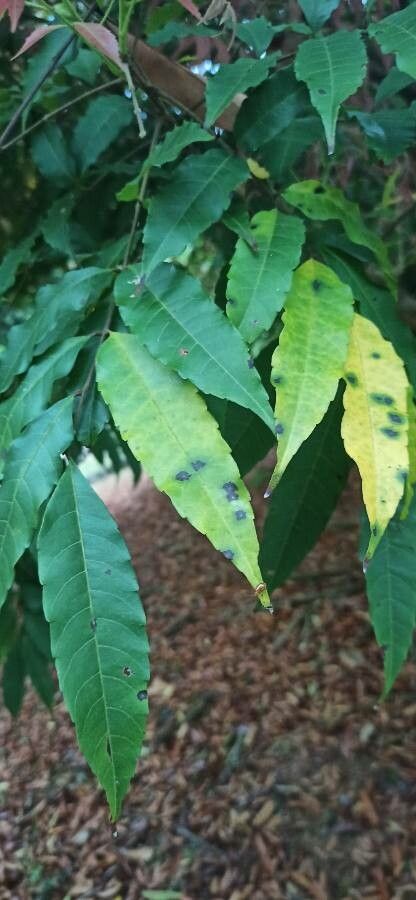
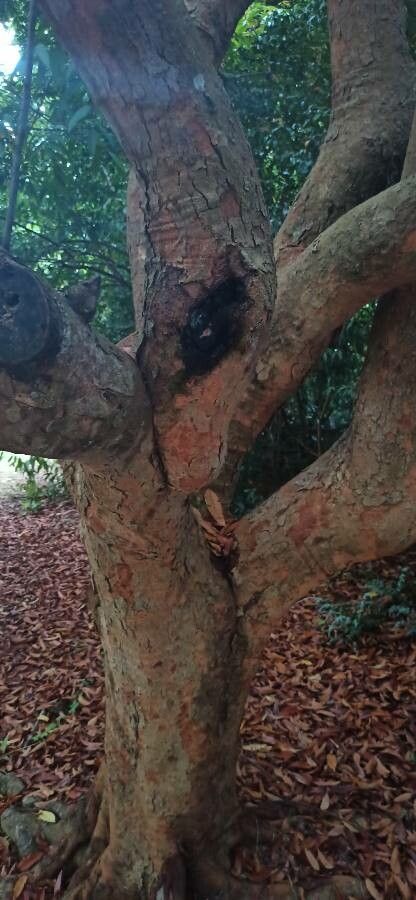
Amesiodendron chinense is a species of plant in the family Sapindaceae. It is found in China, Indonesia, Laos, Malaysia, and Vietnam.
Amesiodendron chinense has strong resistance to disease and is usually not susceptible to illnesses. In terms of care, this species is fairly low-maintenance. When grown outdoors it needs only limited watering, and larger plants typically do not require pruning. Smaller plants, however, should be pruned after they finish blooming. Amesiodendron chinenset is suitable for anyone with outdoor space, such as a garden or a deck, and does not demand extensive experience in plant care.
How to keep Amesiodendron Chinense.
Light
Amesiodendron chinense prefers bright, well-lit habitats. Coming from areas with abundant sunlight, it grows best when exposed to plenty of sun. It is, however, fairly resilient and can adjust to dimmer conditions. Still, insufficient or excessive light can negatively affect its health.
Water
Amesiodendron chinense is moderately drought-tolerant and thrives when the soil dries out a bit between waterings, which is about every 2 to 3 weeks. It prefers well-draining soil, as it is adapted to subtropical climates. Its growth cycle is optimized for periods of heavy rain followed by drier conditions.
Temperature
Amesiodendron chinense comes from tropical areas, where the climate is generally warm and humid. Consequently, it is adapted to high temperatures and humidity. It is sensitive to sudden temperature changes and prefers a stable thermal environment, so avoiding indoor temperature fluctuations is important. It typically does not tolerate cold and requires higher temperatures for growth. If the surrounding temperature falls too low, the plant may stop growing or even die.
Fertilizer
Fertilization is essential for the care of Amesiodendron chinense. Regular feeding during the growing season maintains the energy required for its showy leaves and supports overall growth. Failing to fertilize can lead to unhealthy foliage, reduced ornamental appeal, and stunted or weak growth that is prone to breaking.
Pruning
Pruning Amesiodendron chinense from early to late winter promotes growth by removing dead branches and improving air circulation. During this time, you can shape the plant to achieve the desired form and eliminate any crossing branches. Performing optimal pruning while the plant is dormant minimizes stress, stimulates spring growth, enhances visual appeal, and prevents overcrowding.
Botanical profile.
- Plant Type
- Tree
- Life Cycle
- Perennial
- Genus
- Amesiodendron
- Family
- Sapindaceae
- Hardiness Zone
- 9-11
- Mature Height
- 4.88 m to 24.99 m
- Mature Spread
- 0 cm to 0 cm
- Leaf Color
- Dark Green
- Leaf Type
- Evergreen
- Flower Color
- White, Pink, Green
- Flower Size
- 30.48 cm
- Bloom Time
- Mid spring, Late spring
- Planting Time
- Spring, Summer, Autumn
- Harvest Time
- Mid summer, Late summer
- Native Area
- Malaysia, Indonesia, Vietnam, Myanmar, Laos, Thailand, China
Reader questions.
What are the sunlight requirements for Amesiodendron chinense?
Amesiodendron chinense thrives in environments that offer abundant sunlight, making full sun conditions (above 6 hours of sunlight) ideal for its growth. It can, however, also survive in partial sun (about 3-6 hours of sunlight) conditions. It's essential to monitor the sunlight that moves through your garden to find a spot that provides the perfect balance of light and shade for your plants. Despite its preference for well-lit habitats, Amesiodendron chinense is capable of adjusting to less radiant settings. However, both insufficient and excessive light can adversely affect its health.
Can Amesiodendron chinense grow under artificial lighting?
Yes, Amesiodendron chinense can grow under artificial lighting, which becomes particularly useful when natural sunlight is insufficient, such as in winter or less sunny spaces. Indoor plants benefit from artificial lights, like LED lights, which can be customized to provide specific wavelengths necessary for plant growth. When using artificial lighting, full sun plants require 30-50W/sq ft, partial sun plants need 20-30W/sq ft, and full shade plants require 10-20W/sq ft of light. The light source should be placed 12-36 inches above the plant, mimicking natural sunlight conditions, and the plants generally need 8-12 hours of light per day.
What are the common symptoms of light deficiency in Amesiodendron chinense?
Common symptoms of light deficiency in Amesiodendron chinense include small, mature leaves, leggy or sparse growth, faster leaf drop, slower or no new growth, and lighter-colored or pale new leaves. These signs indicate the plant is not receiving sufficient sunlight, essential for its health and growth.
What are the symptoms of excessive sunlight exposure in Amesiodendron chinense?
Symptoms of excessive sunlight exposure in Amesiodendron chinense include chlorosis, where leaves lose their green color and turn yellow; sunscald, marked by pale, bleached, or necrotic areas on the plant tissue; leaf curling, a defense mechanism to minimize water loss; wilting, due to increased transpiration; and leaf scorching, characterized by brown, dry, and crispy leaf edges. These symptoms reflect the plant's struggle to cope with overexposure to sunlight.
How can I manage sunlight exposure for Amesiodendron chinense?
To manage sunlight exposure for Amesiodendron chinense effectively, you can gradually move indoor plants to a sunnier location, targeting at least 6 hours of direct sunlight daily, or use artificial light sources like desk or ceiling lamps for at least 8 hours daily. For outdoor plants, it's essential to adjust them gradually to sunnier spots to prevent sunburn. Additionally, identifying and minimizing obstructions that block sunlight, such as by pruning tree branches, and considering transplanting smaller plants during their dormant period to spots with better sunlight can be beneficial.