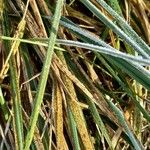
Ammophila arenaria
Marram Grass · Marram · European beach grass · Sea matgrass · European beachgrass
Description
Source: leafsnapAmmophila arenaria, commonly known as European beachgrass, is a perennial grass native to the coasts of Europe and North Africa. It has also been introduced to various regions worldwide, including North America and Australia. This plant features long, narrow leaves that can grow up to 1 meter in length, forming dense clumps or tussocks. It also produces tall stems that can reach heights of up to 2 meters, topped with large seed heads. Ammophila arenaria is well-suited for sandy coastal environments, where it plays a crucial role in stabilizing sand dunes. Its extensive root system helps trap sand, thus preventing erosion caused by wind and water. Additionally, the plant provides habitat for a variety of coastal animals, including birds, insects, and small mammals. However, when introduced into non-native habitats, Ammophila arenaria can become invasive. It often outcompetes native vegetation for resources like water and nutrients, leading to significant ecological damage if not properly managed. Overall, Ammophila arenaria is vital for maintaining healthy coastal ecosystems but requires careful management to prevent ecological imbalance in non-native settings.
Care Guide
💧 Water Every 7 days
European beach grass flourishes in coastal dunes due to its high tolerance for saltwater and resilience to drought, thanks to its deep roots. Watering it twice a week mimics the plant's natural wet-dry cycles. Adapted to withstand harsh coastal winds, European beach grass has sturdy foliage that efficiently conserves water, making it ideal for sandy, low-moisture soils.
What should I do if I give too much or too little water to my European beach grass?
Proper watering is essential for the health and performance of this beautiful ornamental grass. When planted in the ground, watering issues can be resolved. However, if European beach grass is in a container, an excessive or insufficient amount of water can quickly kill it. Insufficient or excessive watering can cause stunted growth, yellow leaves with brown tips in case of overwatering, and drooping leaves, weak seed head production, and browning of leaves in case of underwatering. If you suspect your European beach grass has been watered incorrectly, the first step is to determine if it is receiving too much or too little water. If it is receiving too much water, immediately stop watering it. It may take several weeks for heavily saturated soils to dry out, so patience is necessary. Once you observe new growth, test the soil for moisture and decide if it requires more water. For European beach grass that is not receiving enough water, the solution is straightforward: give it a thorough deep watering and observe if it improves. It is important to remember that long, deep watering is better than frequent shallow watering. This promotes the growth of deep roots, making the grass more resistant to drought and less susceptible to watering-related issues.
How frequently should I water my European beach grass?
The watering needs of European beach grass vary depending on its location. Generally, watering once a week is recommended. In hot climates, watering once or twice a week during the summer may be necessary. In moderate climates, watering once every seven days or more may be sufficient. Grass in containers typically need more frequent watering than grass in the ground. However, the location also matters, with shaded grasses needing less frequent watering than grasses in the ground. To determine when to water, there are a few signs you can look for. For grass in the ground, pressing your finger a couple of inches into the soil can indicate if it's dry. For potted grass, weighing the grass or feeling the pot can also tell you if it's light from lack of water. When the roots lack sufficient water, the grass blades may appear folded and thinner than usual. Although European beach grass is drought-tolerant, regular, deep waterings will result in a beautiful color. In its natural habitat, this grass grows in open scrubland with extreme heat, bright sun, and intermittent rain. While it can handle harsh, dry conditions, it still requires care and attention. Gardeners agree that it thrives best with consistent water. When initially planted, European beach grass needs more frequent watering until it develops deep roots. Potted grass can dry out quickly, especially when exposed to hot, direct sun. It's recommended to test the soil every 3 to 4 days and water only when it feels dry. European beach grass in the ground generally requires less watering, but this depends on the soil type. Heavy clay soil can hold moisture below the surface even if it feels dry on top, while sandy soils that drain quickly will need more frequent watering.
What do I need to pay attention to when watering my European beach grass in different seasons, climates, or stages of growth?
To determine if you are watering enough, observe the rate of growth of your grass. European beach grass tends to double in size in a year during the hottest months. If the weather is hot but the grass is not growing vigorously, adjust your watering schedule accordingly. In winter, watering once a month may be sufficient, but always check the soil moisture. During the growth cycle in warm months, the grass requires more water than usual. However, water needs are significantly reduced during winter and cooler months. Remember, it is crucial for the soil to completely dry out before adding water to European beach grass.
☀️ Light Full sun
European beach grass is a plant that favors abundant sunlight to grow vigorously. Native to coastal areas, it performs best in conditions similar to its natural habitat, characterized by intense, unshaded sunlight. Both too little and too much solar exposure can severely impede its development and overall health.
What are the sunlight requirements for European Beach Grass?
European Beach Grass requires above 6 hours of sunlight to ensure its vigorous growth, thriving best under strong, unobstructed sun conditions similar to its natural coastal habitats. It's crucial to watch the movement of sunlight through your garden to find spots that provide the perfect balance of light and shade, ensuring the plants' happiness. Insufficient sunlight can severely hamper its growth stages and overall health.
How can artificial lighting support the growth of indoor European Beach Grass?
Indoor plants, including European Beach Grass, require adequate lighting for optimal growth. When natural sunlight is insufficient, artificial lights can be a vital solution. LED lights are a popular choice because they can be customized to provide specific wavelengths of light needed by plants. The amount of artificial light required varies: full sun plants need 30-50W/sq ft, partial sun plants need 20-30W/sq ft, and full shade plants need 10-20W/sq ft. The light source should be placed 12-36 inches above the plant and for 8-12 hours per day to mimic natural sunlight.
What are the symptoms of inadequate light exposure in European Beach Grass?
When European Beach Grass is placed in rooms with inadequate lighting, it may exhibit symptoms such as small or sparse new leaves, leggy growth, faster leaf drop, slowed or ceased growth, and paler new leaves. Excessive sunlight can cause chlorosis, sunscald, leaf curling, wilting, and leaf scorching. These symptoms vary, with some indicating insufficient sunlight and others resulting from too much direct sun exposure.
What solutions are available for European Beach Grass experiencing light-related issues?
For light-related issues in European Beach Grass, indoor solutions include gradually moving the plant to a sunnier location to receive at least 6 hours of sunlight daily or using artificial light for large or immovable plants for 8 hours daily. Outdoors, gradually adapt plants to sunnier locations to avoid sunburn. Minimize obstructions by pruning trees or transplanting smaller plants to sunnier areas. It's important to note that parts of the plant affected by insufficient light may not recover, but new growth will be healthy with improved light exposure.
🌡️ Temperature 5–32.2°C
European beach grass comes from areas with steady temperatures and favors a range of 41 to 89.6°F (5 to 32℃). In cooler months, try to raise the temperature slightly when feasible.
What is European beach grass and where is it native to?
European beach grass, scientifically known as Ammophila arenaria, is native to regions with stable temperatures, typically ranging from 41 to 89.6°F (5 to 32°C). It thrives in conditions where the temperature does not fluctuate drastically, indicating its preference for environments with moderate climates.
How does European beach grass handle cold temperatures?
European beach grass exhibits strong cold resistance, making special frost protection measures generally unnecessary during winter. However, if temperatures are forecasted to plummet below -30°C, it is crucial to provide cold protection by covering the plant with insulating materials like soil or straw. Additionally, watering the plant abundantly before the first freeze in autumn is recommended to ensure the soil remains moist and enters a frozen state, which helps in preventing drought and water scarcity during the colder months.
What are the symptoms of European beach grass under low and high temperature stress?
Under low temperature stress, European beach grass is quite cold-tolerant, thriving best above 5°C and needing protection only below -25°C. If the temperature falls below -30°C, the plant may experience a decrease in sprouting or fail to sprout at all in spring, with the advised solution being to remove any parts that fail to sprout. In contrast, under high temperature stress, when temperatures exceed 32°C, symptoms may include leaves becoming lighter in color, curling, prone to sunburn, and the plant possibly wilting and drying out if temperatures go beyond 35°C. The recommended actions to mitigate high temperature damage include trimming away sunburned and dried-up parts, moving the plant to a shaded location during midday and afternoon hours, or using a shade cloth, along with watering the plant in the morning and evening to maintain soil moisture.
💨 Humidity dry (<40%)
This plant prefers dry conditions, so don't mist it. However, watering it less often can also thrive in higher humidity.
🪴 Soil 6-7
🌱 Fertilizer
European beach grass benefits from added nutrients to encourage healthy new growth. In spring, spreading some compost around the plant's base can effectively supply the nutrition it needs. Fertilizing supports vigorous growth and helps the plant better withstand diseases and pests.
Why should I put fertilizer on my European beach grass?
Fertilizing European beach grass is important for several reasons. Firstly, it provides your plant with essential nutrients for healthy new growth. Additionally, these additional nutrients also support the health of old growth and help your plant defend against diseases and pests.
When should I put fertilizer on my European beach grass?
To ensure the survival of European beach grass in your garden, it's important to understand when to fertilize it. This plant does not need a lot of nutrients, especially when it is dying back. While you can use diluted fertilizer at the beginning of the growing season, it's generally not advised. Instead, a better option is to apply mulch or compost around the base of the plant.
When is the best time to not put fertilizer on my European beach grass?
If you are not using packaged fertilizers, you don't have to worry about when to stop feeding European beach grass. Simply apply a layer of compost or mulch in the spring, and that will be sufficient to keep the grass happy all year. No need to mulch or compost during the winter when the plant is dormant.
What kind of fertilizer does my European beach grass need?
There's no need to quickly go to the garden center for fertilizer - European beach grass doesn't require it. Instead, in the spring, you can place a layer of compost to provide the necessary nutrients. Additionally, if you mulch your garden every year, the bark will also keep your plant well-nourished and content.
How can I add fertilizer to my European beach grass?
If you are using mulch or compost for European beach grass, the steps are the same. Start by putting down a layer of the material, making sure it covers the plant's base. If you decide to use both mulch and compost, remember to reduce the amount of compost. Adding a layer of mulch serves two purposes - it helps retain soil moisture and provides nutrients for your plant.
🪴 Pot & Repot
✂️ Pruning
European beach grass is characterized by its dense, tall growth, and it plays a crucial role in stabilizing sand dunes with its roots. For optimal health, prune the grass in early spring with sharp shears to remove any dead blades and encourage new growth. Regular maintenance is vital to ensure the grass remains vigorous, healthy, and effective at stabilizing dunes.
🌿 Propagating
🐛 Diseases & pets
☠️ Toxicity
Characteristics
- Plant Type
- Grass
- Life Cycle
- Perennial
- Genus
- Ammophila
- Family
- Poaceae
- Hardiness Zone
- 4-8
- Mature Height
- 1.22 m
- Mature Spread
- 3.05 m
- Leaf Color
- Green, Blue
- Leaf Type
- Deciduous
- Flower Color
- Yellow, Green, Cream, Brown
- Flower Size
- 1.52 cm to 2.03 cm
- Bloom Time
- Summer
- Planting Time
- Spring
- Harvest Time
- Late summer, Early fall, Mid fall
- Native Area
- Libya, Egypt, Turkey, Croatia, Morocco, Germany, Estonia, Romania, Latvia, Belgium, Portugal, Netherlands, Saudi Arabia, France, Tunisia, Cyprus, Bulgaria, Poland, Greece, Lebanon, Serbia, Lithuania, Norway, Italy, Spain, Denmark, Finland, Israel, Albania, Ireland, United Kingdom, Algeria