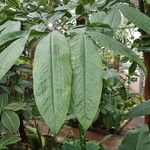
Amorphophallus titanum
Titan arum · Corpse flower
Description
Source: leafsnapThe Amorphophallus titanum, commonly known as the Titan Arum or Corpse Flower, is a rare and unique plant native to the rainforests of Sumatra, Indonesia. It is renowned for its enormous size and its distinctive odor, which resembles rotting flesh. The plant can grow up to 10 feet tall, and its inflorescence can reach up to 3 feet in diameter. The Titan Arum has a fascinating life cycle that begins with a single leaf emerging from an underground corm. This leaf can grow up to 20 feet tall and lasts for about one year before dying back. After several years of growth, the corm will produce an inflorescence that takes several weeks to fully develop. During this time, the plant emits a strong odor that attracts pollinators such as carrion beetles and flies, which are drawn by the smell of rotting flesh. Once pollinated, the plant produces bright red berries containing seeds, which are dispersed by birds. Due to habitat loss in its native range, as well as illegal harvesting for horticultural purposes or medicinal use in traditional medicine practices, the species has been classified as endangered on the IUCN Red List since 2004. Despite being difficult to cultivate outside of their natural habitat due to their specific requirements, such as high humidity levels, many botanical gardens around the world have successfully grown Amorphophallus titanum plants. With great care taken during the cultivation process, these gardens have made it possible for visitors from far and wide to witness the rare spectacle of the Titan Arum in bloom, which occurs once every few years.
Care Guide
💧 Water Every 7 days
The Titan Arum thrives in humid environments and can handle short dry periods, so it benefits from being watered every three weeks. Indoors, it is visually striking because of its large flowering structure. To maintain its impressive appearance during the growing season, it requires plenty of water.
How should I water my Titan arum plant properly?
To supply water to your Titan arum, there are several options available. If your plant is in a small indoor pot, you can easily bring it to your kitchen sink and use the faucet to add water. Hold the pot in your hands and stop watering when you see the water flowing out of the drainage holes. Just be careful not to do this in winter or cold climates as it can harm the plant's roots. Using tap water is generally fine, but if it has high levels of fluorine, chlorine, or salts, consider using rainwater or lake water. Additionally, the Titan arum responds well to overhead watering or watering directly into the soil, so you can use a watering can, hose, or any other tool of your preference.
What should I do if I give my Titan arum too much or too little water?
If you find that your Titan arum is not getting enough water, start by giving it a good watering. Make sure to water it deeply until excess water drains from the container's hole, or if it's outside, until the soil is completely moist. If you realize that your Titan arum is getting too much water, the first step is to reduce your watering schedule. It's also important to consider the soil and container it's in. If the soil or container doesn't allow for proper drainage, your plant may become overwatered again. To fix this, transfer your plant to looser soil and a container with larger drainage holes or a more porous material. Additionally, check the location of your plant. If it's in a confined space like a corner, consider moving it near a window or door to improve ventilation. Ensuring that your plants are in a well-ventilated area can help prevent overwatering to some extent.
How often do I need to water my Titan arum?
The Titan arum does not require consistent soil moisture. It is actually better to let the soil dry out between waterings. If you have a container garden with Titan arums, you can determine when to water by checking how dry the soil in the container is. If about half of the soil is dry, it's time to water. You can check by feeling the soil with your fingers or a stick, or you can use a soil moisture meter. If you grow Titan arums outdoors, you can plan to water them about once every other week, unless it has rained recently.
How much water does my Titan arum plant need?
To ensure your Titan arum plant has the right amount of moisture, you should wait for the top half of the soil to dry before adding water. The quantity of water required depends on factors such as the size of the container and the plant itself. For a small Titan arum in a small or medium-sized container, one to two cups of water should be enough to moisten the soil adequately. If your plant is larger, you will need to increase the amount of water accordingly. To confirm that the soil is properly moisturized, you can either stick your finger or a trowel into the soil and check for dampness or water until you see excess water draining from the container's bottom holes.
How do I know if I'm giving enough water to my Titan arum?
Both overwatering and underwatering can harm your Titan arum's health, but the effects of each problem are slightly different. If your Titan arum doesn't receive enough water, its leaves may turn yellow. Underwatering can also make the leaf margins brown and brittle. When a Titan arum is overwatered, its leaves may have both yellow and brown marks. Overwatering can also cause diseases like root rot, which may be visible on your plant. However, if you can recognize the signs of overwatering and underwatering, you have a good chance of fixing both problems.
☀️ Light Partial sun
Titan arum does best with moderate sunlight, which is necessary for healthy development. Native to rainforests with dappled light, it is adapted to grow without full sun exposure. Too much sun can damage it, while too little light restricts its growth and vigor.
What are the sunlight requirements for Titan arum?
Titan arum requires moderate sun exposure, thriving best in environments that mimic its native, light-dappled rainforest habitat. It does not require full sun exposure and too much sun can be harmful, while too little light can impede its growth and health. Ideally, it should receive about 3-6 hours of sunlight per day. When growing indoors or in spaces with limited natural light, especially during winter, it's beneficial to use artificial lighting to supplement light exposure. Indoor plants benefit from LED lights, which can be customized to specific wavelengths needed for plant growth, with varying requirements based on the plant's natural affinity for sun or shade.
What are the signs of insufficient light for Titan arum and how can it affect the plant?
When Titan arum does not receive enough light, it may exhibit several symptoms indicating light deficiency. These symptoms include smaller new leaves, leggy or sparse growth, premature leaf drop, halted or slow new growth, paler new leaves, chlorosis (yellowing leaves due to lack of chlorophyll), sunscald on the leaves or stems, leaf curling, wilting, and leaf scorching. Insufficient light affects the plant's ability to photosynthesize, leading to a reduction in growth, vigor, and overall health. Conversely, too much direct sunlight can also cause issues like chlorosis, sunscald, leaf curling, wilting, and leaf scorching.
How can you address and prevent light-related issues in Titan arum?
To optimize Titan arum's growth and mitigate light-related issues, gradually acclimating the plant to its ideal sunlight conditions is key. For indoor plants, shifting them to progressively sunnier spots each week until achieving 3-6 hours of sunlight daily can help. If moving the plant is not feasible, artificial lighting such as desk lamps or professional plant grow lights can be used to ensure it receives adequate light, at least 8 hours daily. For outdoor plants, similar gradual relocation to sunnier spots is recommended to avoid sunburn. Additionally, reducing obstructions that block sunlight or transplanting the plant during its dormant period to a sunnier location can significantly improve light exposure. It's important to remember, however, that parts of the plant already damaged by poor lighting may not recover, but new growth will be healthier with improved lighting conditions.
🌡️ Temperature 20–37.8°C
Titan arum is native to tropical regions, where the climate is usually warm and humid. Consequently, it is well suited to high temperatures and humidity. It does not tolerate sudden temperature shifts and prefers a steady temperature, so avoiding temperature fluctuations indoors is important. It typically cannot withstand cold and needs higher temperatures to grow. If the ambient temperature falls too low, the plant may stop growing or even die.
💨 Humidity dry (<40%)
This plant prefers dry conditions, so don't mist it. However, watering it less often can also thrive in higher humidity.
🪴 Soil 5-7
🌱 Fertilizer
Correct fertilization is essential for the Titan arum's health and appearance. Fertilize the Titan arum in summer, repeating the application once a month throughout the season. Nutrients drive growth and preserve the plant's tissues. Feeding the plant improves its floral display, ensuring the best blooms.
Why should I add fertilizer to my Titan arum plant?
Fertilization is important for the Titan arum, as it provides nutrients for its growth above and below ground. While the overall fertilization needs of the Titan arum are relatively low, annual fertilization can greatly benefit the plant. It helps keep the plant alive and may result in better and longer-lasting flowers. Therefore, for those wanting their Titan arum to thrive, regular fertilization is recommended.
When should I fertilize my Titan arum plant?
The best time to fertilize a Titan arum is in late winter to early spring when it is coming out of its dormant phase and starting to grow actively. Fertilizing during this time promotes healthy growth and sets the plant up for a good season. While it is generally best to fertilize in early spring, it is also okay to do it in the fall. However, it is not recommended to fertilize during summer or winter.
When is the best time to not fertilize my Titan arum?
To properly care for your Titan arum, it is recommended to fertilize it only during late winter and early spring. This plant has low fertilization needs, so a single feeding per year is sufficient. Avoid fertilizing during spring, summer, and fall to prevent overfertilization and potential complications. However, if you missed fertilizing in spring, it is acceptable to feed the plant in the fall. Also, refrain from fertilizing during the winter, as the Titan arum will be in a dormant phase without new growth.
What kind of fertilizer does my Titan arum plant require?
To care for your Titan arum, you can use any general-purpose fertilizer with balanced amounts of the three main plant nutrients. However, there are some specific blends that may be even more beneficial. For example, many gardeners believe that higher levels of phosphorus can lead to stronger roots and better flowers. Since the Titan arum is a flowering plant, using a phosphorus-rich fertilizer may be the best option. Whether in granular or liquid form, as long as the fertilizer contains plenty of nutrients, it will be suitable. Besides synthetic fertilizers, you can also improve the soil for your Titan arum using organic methods such as compost, manure, and similar materials. These can greatly contribute to creating a healthy growing medium.
How do I give my Titan arum plant the nutrients it needs?
To fertilize a Titan arum, the most common method is to use granular or pellet fertilizer on the soil surrounding the plant. It is important to remember that the best time to fertilize is when the plant is transitioning from its dormant phase to active growth. In early spring, once the plant begins to send shoots through the soil, you can apply the fertilizer. Alternatively, you can use liquid fertilizer, but make sure to dilute it with water before application. Whether you use granular or liquid fertilizer, it is essential to moisten the soil before, during, and after fertilizing.
🪴 Pot & Repot Every 12 months
✂️ Pruning
The Titan arum, known for its large inflorescence, requires minimal pruning from early to late spring. It is important to remove any dead foliage using sterilized tools to prevent infections. Conducting regular pest checks is also crucial. Pruning helps improve airflow and light penetration, which enhances the plant's vigor. At the same time, it is important to maintain a balance to avoid stressing the plant.
🌿 Propagating
🐛 Diseases & pets
☠️ Toxicity
Characteristics
- Plant Type
- Herb
- Life Cycle
- Perennial
- Genus
- Amorphophallus
- Family
- Araceae
- Hardiness Zone
- 10-11
- Mature Height
- 2.44 m to 4.57 m
- Mature Spread
- 4.57 m
- Leaf Color
- Dark Green, Forest Green
- Leaf Type
- Deciduous
- Flower Color
- Purple
- Flower Size
- 30.48 cm
- Bloom Time
- Summer
- Planting Time
- Spring, Summer, Autumn
- Harvest Time
- Late summer, Early fall, Mid fall
- Native Area
- Indonesia