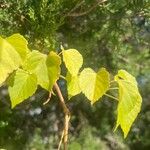
Ampelopsis cordata
Heartleaf peppervine · Heart-leaf ampelopsis · Heart-leaf peppervine · False grape · Raccoon-grape
Description
Source: leafsnapAmpelopsis cordata, commonly called heartleaf peppervine, heart-leaf peppervine, or heart leaf peppervine, is a vine found in the U.S. states Alabama, Arkansas, Connecticut, Delaware, Florida, Georgia, Iowa, Illinois, Indiana, Kansas, Kentucky, Louisiana, Maryland, Missouri, Mississippi, North Carolina, Nebraska, Ohio, Oklahoma, South Carolina, Tennessee, Texas, Virginia, West Virginia. It grows in open woodlands, flood plains, and river banks.
Care Guide
💧 Water
The heart-leaf pepper vine flourishes in moist, woodland-like settings and prefers soil that remains evenly moist. Once established, it has a moderate tolerance for drought. Ideally, it should be watered twice a week. Frequently cultivated outdoors, the heart-leaf pepper vine benefits from mulching, which helps retain moisture and mimic its natural environment.
☀️ Light Full sun
Heart-leaf pepper vine comes from open habitats, like sunny meadows and forest margins, which provide abundant light. It thrives in Full Sun but can also tolerate Partial Sun, adapting well to various sunlight conditions.
🌡️ Temperature 0–32.2°C
Heart-leaf pepper vine adapts well to temperature, able to endure higher heat and wide temperature swings. In hot weather, attention should be paid to watering and providing suitable shade to avoid sunburn. However, the vine has relatively poor tolerance for low temperatures. Although it can bear some cold, excessively low conditions may lead to frost damage.
💨 Humidity
🪴 Soil 6-8
🌱 Fertilizer
Fertilize your Heart-leaf pepper vine in early spring to encourage healthy growth. Regular feeding boosts overall health, leading to vigorous development, increased tolerance of challenging conditions, and enhanced resistance to pests and diseases. Keep to a consistent fertilization schedule to maintain foliage that is vividly colored and lush in appearance.
🪴 Pot & Repot
✂️ Pruning
To promote the healthy growth of a heart-leaf pepper vine, it is best to prune in early spring, concentrating on removing any dead or damaged branches and managing any excessive overgrowth. It is important to avoid heavy pruning while the plant is actively growing, as this can stress the plant. Regular maintenance not only improves air circulation but also reduces the risk of disease and results in a fuller, more attractive plant for your garden.
🌿 Propagating
🐛 Diseases & pets
☠️ Toxicity
Characteristics
- Plant Type
- Vine
- Life Cycle
- Perennial
- Genus
- Ampelopsis
- Family
- Vitaceae
- Hardiness Zone
- 3-8
- Mature Height
- 3.66 m to 10.97 m
- Mature Spread
- 3.05 m to 4.88 m
- Leaf Color
- Green, Dark Green
- Leaf Type
- Deciduous
- Flower Size
- 0.51 cm to 0.76 cm
- Bloom Time
- Early summer, Mid summer
- Planting Time
- Spring, Summer, Autumn
- Harvest Time
- Late summer, Early fall, Mid fall
- Native Area
- Mexico