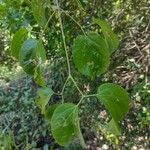
Amphilophium crucigerum
Monkey comb · Monkey's-Comb
Description
Source: leafsnapAmphilophium crucigerum is a species of flowering plant in the family Bignoniaceae, native from Mexico through Central America into South America as far south as Argentina. It was first described by Carl Linnaeus (as Bignonia crucigera) in 1753. The synonym Pithecoctenium crucigerum has often been used.The species has become an invasive weed in Australia. Chemical investigation of methanol extracted from this species yielded the iridoid glycoside theviridoside along with five phenylethanoid glycosides (verbascoside, isoverbascoside, forsythoside B, jionoside D and leucosceptoside B), these last all active against DPPH.
Care Guide
💧 Water
Amphilophium crucigerum flourishes in tropical rainforests, where it needs high humidity and consistent moisture. To replicate its natural environment, water it twice a week. This epiphytic vine is quite resilient, making it well-suited for outdoor growth in regions that experience regular rainfall.
☀️ Light Full sun
Monkey-comb is native to open habitats, such as sunny meadows and forest edges, which provide abundant light. It flourishes in Full Sun but can also tolerate Partial Sun, adapting well to a range of sunlight conditions.
🌡️ Temperature 20–37.8°C
Monkey-comb comes from tropical areas where the climate is generally warm and humid. Consequently, it is adapted to high temperatures and humidity. It does not tolerate sudden temperature changes and favors a steady temperature, so avoiding indoor temperature fluctuations is important. It usually cannot stand cold and needs higher temperatures to grow. If the surrounding temperature falls too low, the plant may stop growing or even die.
💨 Humidity
🪴 Soil 6-8
🌱 Fertilizer
The best time to fertilize a Monkey-comb is in early spring, when it comes out of dormancy. Doing so promotes overall growth and flower development. Fertilizing improves the foliage, stems, and branches and encourages flowers that are large, vibrant, and long-lasting. It also helps move nutrients from the roots to the flowers and enhances the plant's health and resistance to disease.
🪴 Pot & Repot
✂️ Pruning
Amphilophium crucigerum is a vigorous climbing plant with vibrant flowers and lush foliage. To keep it healthy and thriving, prune it in early spring. Remove any dead stems and shape the plant to encourage new growth. This process improves airflow and light penetration, which helps reduce the risk of disease. Regular maintenance ensures that the plant remains prolific and visually appealing.
🌿 Propagating
🐛 Diseases & pets
☠️ Toxicity
Characteristics
- Plant Type
- Vine
- Life Cycle
- Perennial
- Genus
- Amphilophium
- Family
- Bignoniaceae
- Hardiness Zone
- 9-11
- Mature Height
- 10.06 m to 14.94 m
- Mature Spread
- 4.88 m to 7.92 m
- Leaf Color
- Dark Green, Forest Green
- Leaf Type
- Semi-evergreen
- Flower Color
- Lavender
- Flower Size
- 4.06 cm to 6.35 cm
- Bloom Time
- Summer, Early fall, Mid fall
- Planting Time
- Spring, Summer, Autumn
- Harvest Time
- Fall, Early winter, Mid winter
- Native Area
- Colombia, Belize, Cuba, Honduras, Mexico, Guatemala, Bolivia, Venezuela, Peru, El Salvador, Nicaragua, Ecuador, Costa Rica, Panama, Jamaica