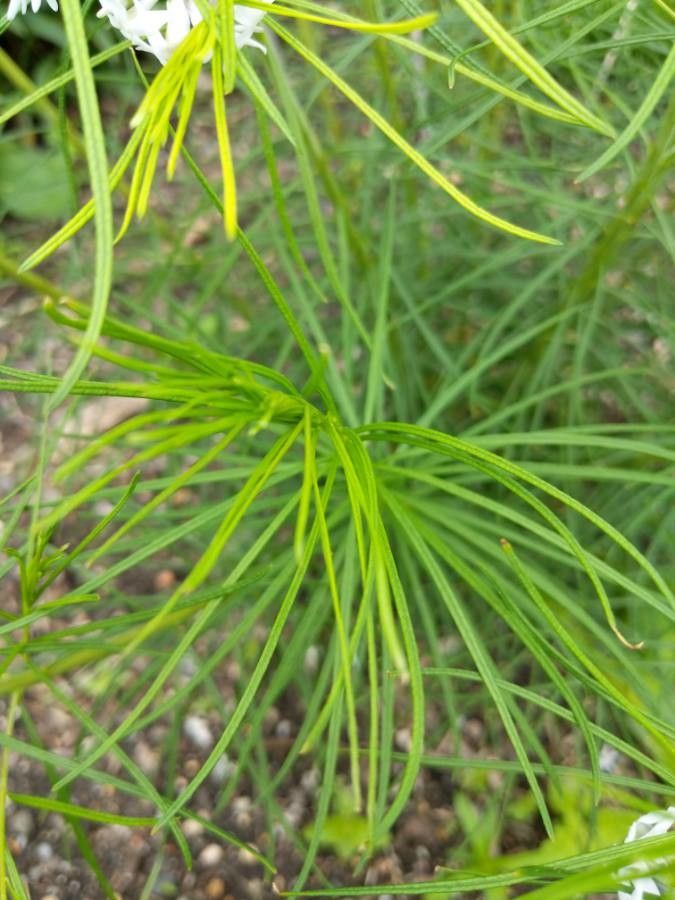
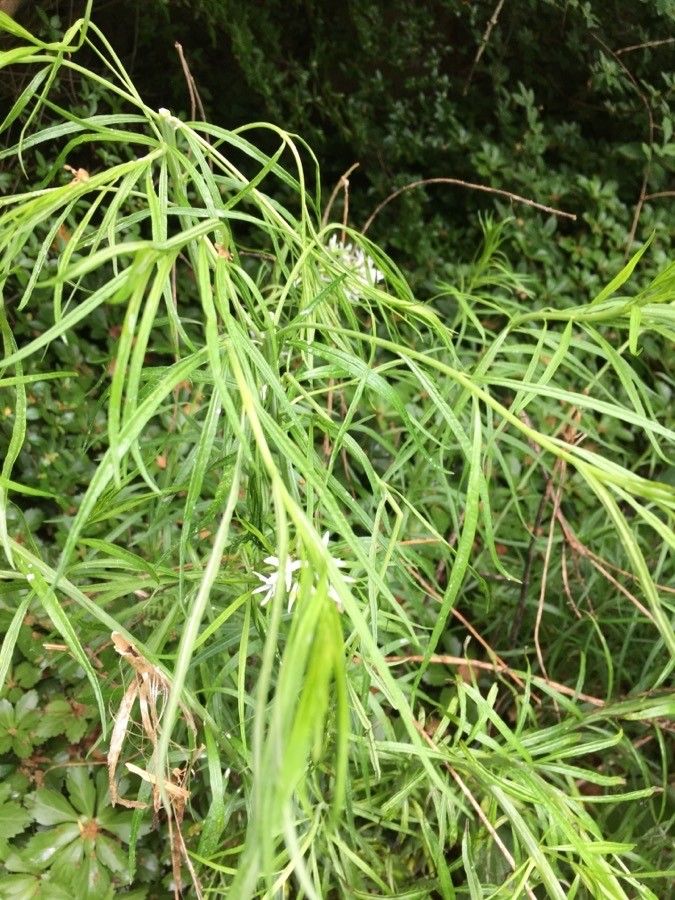
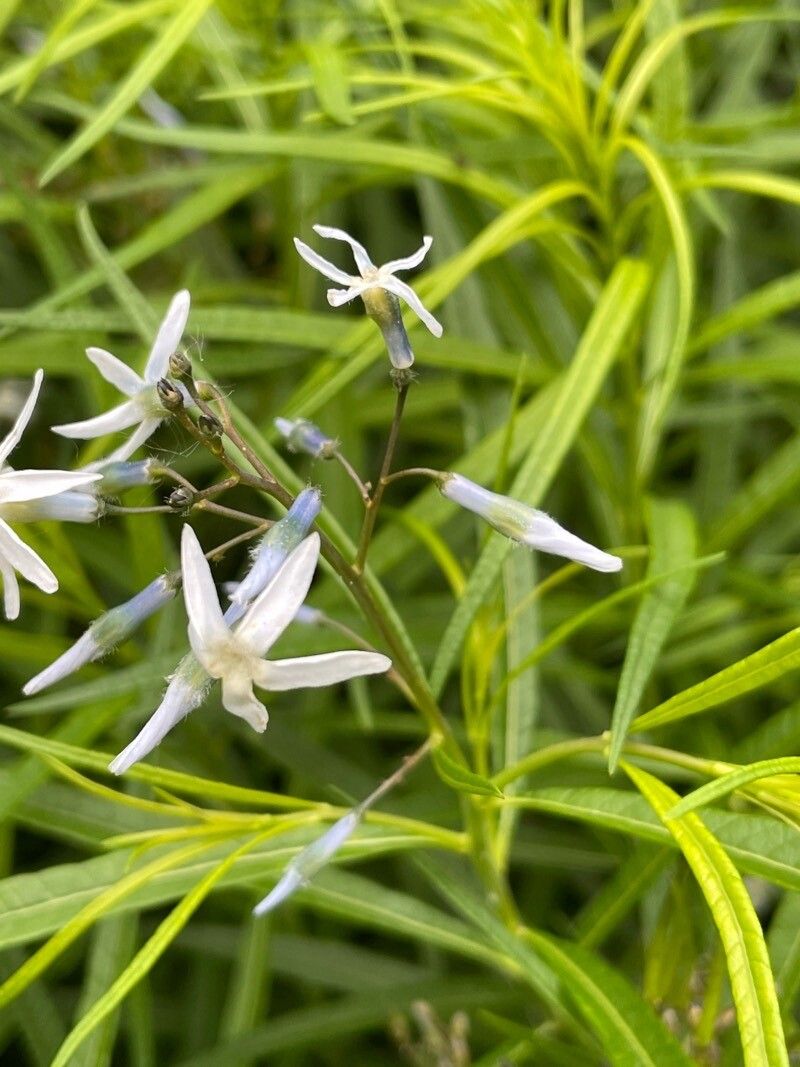
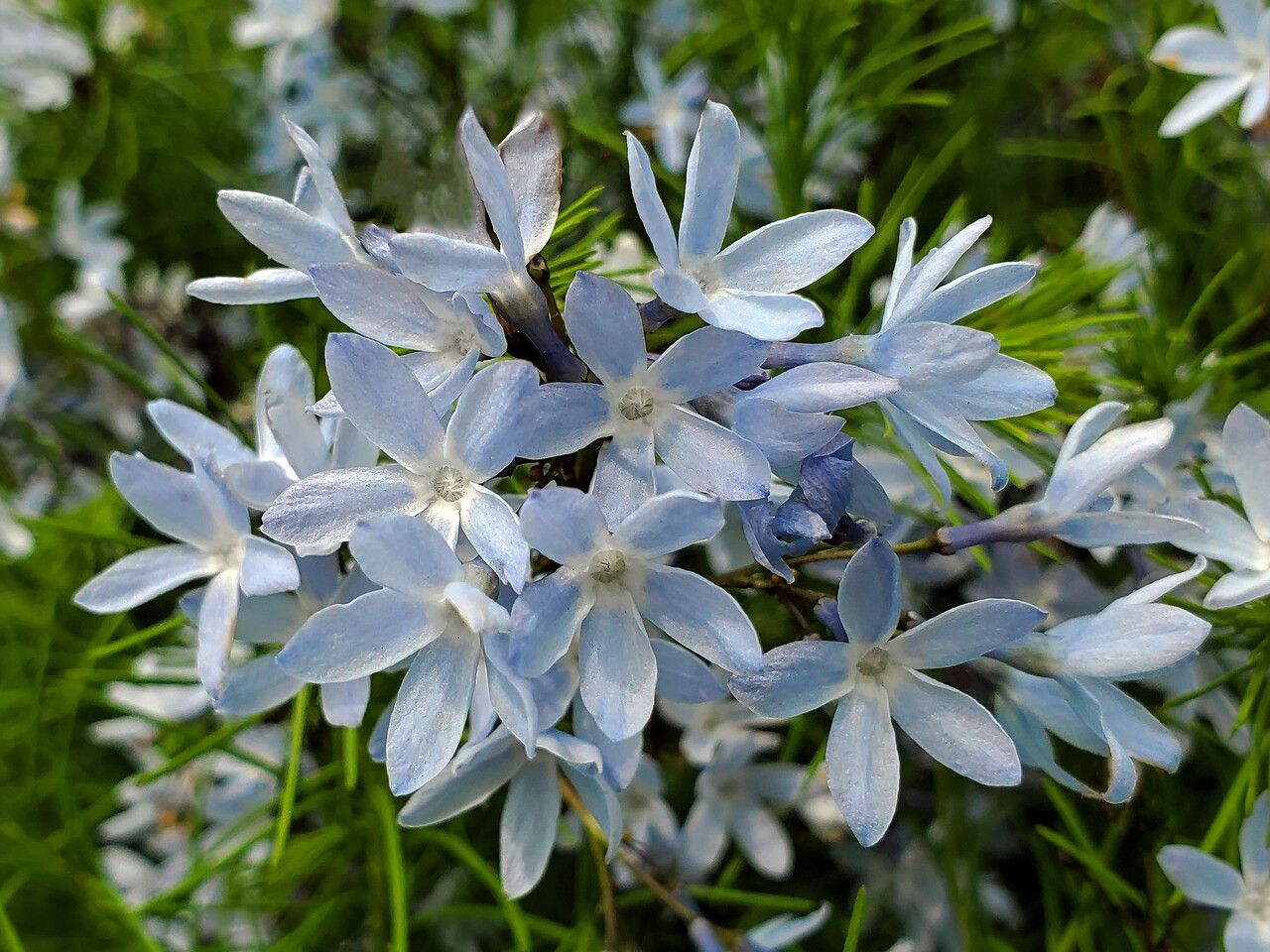
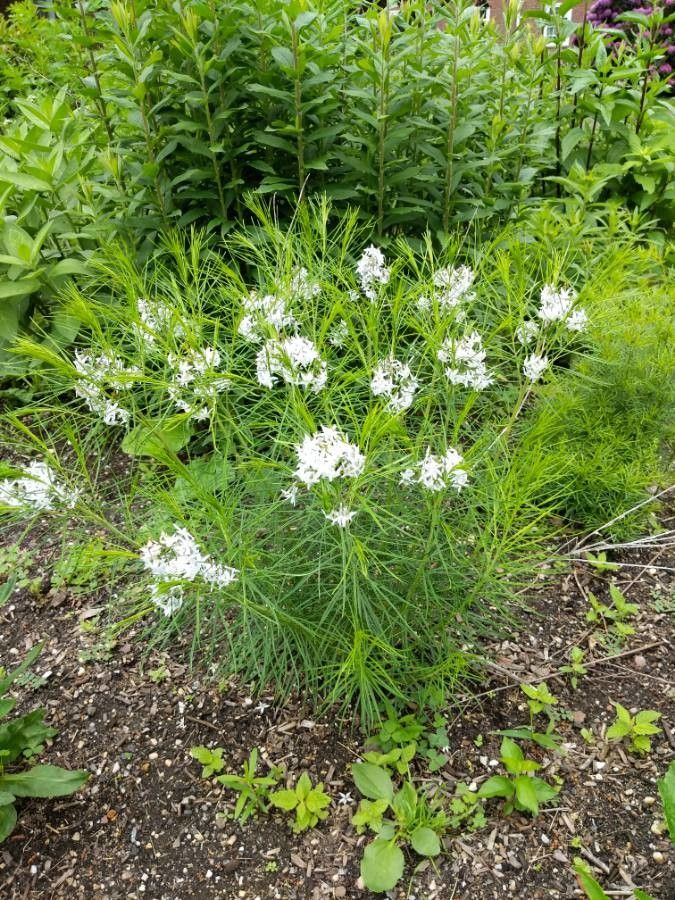
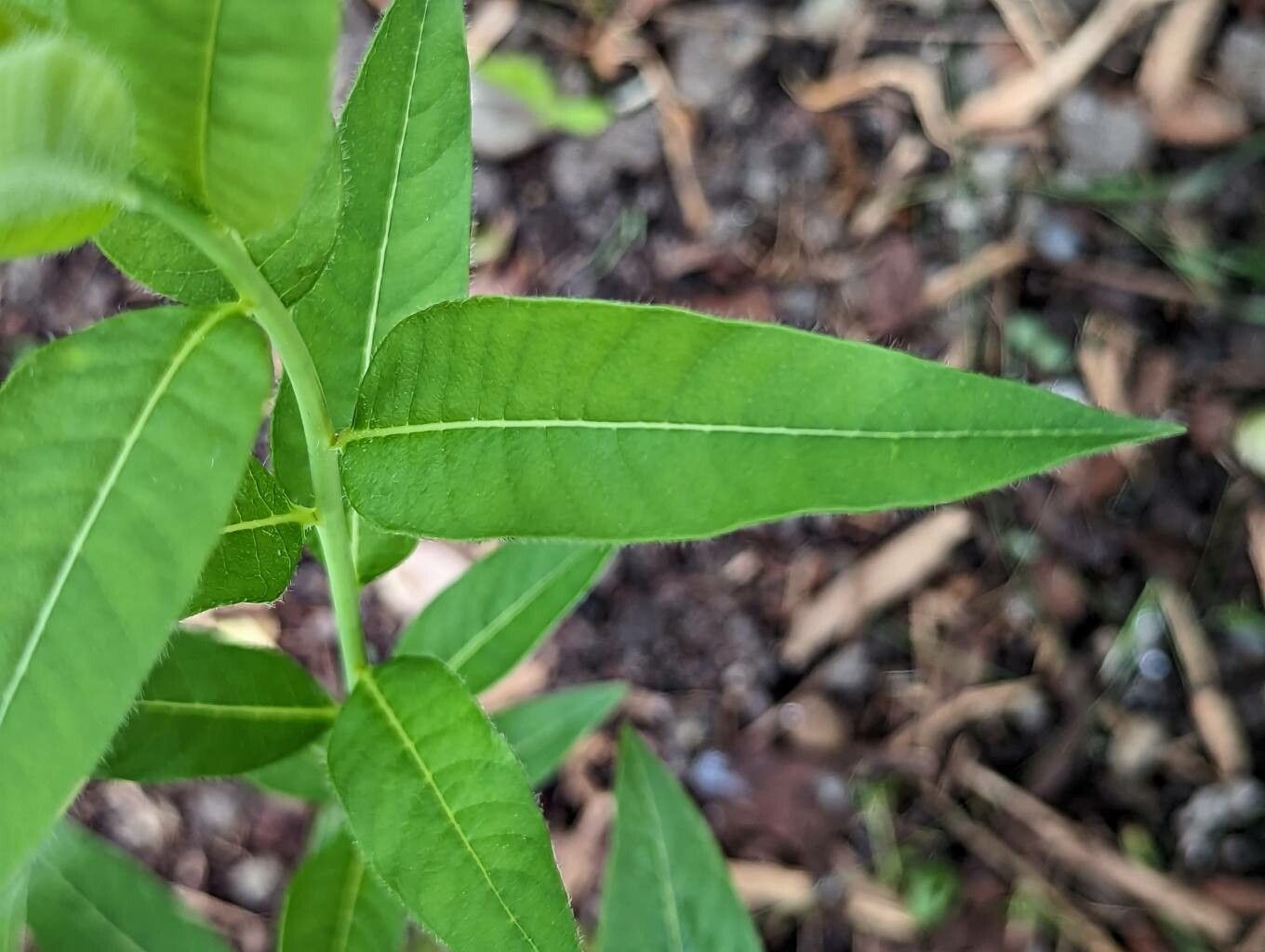
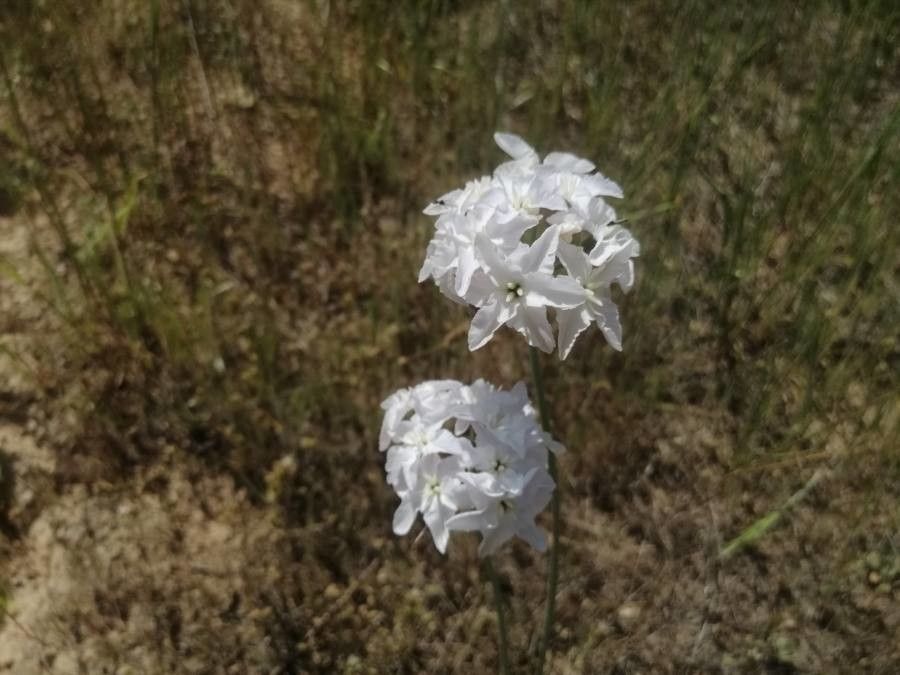
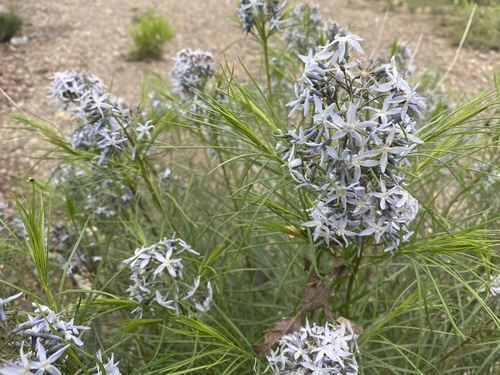
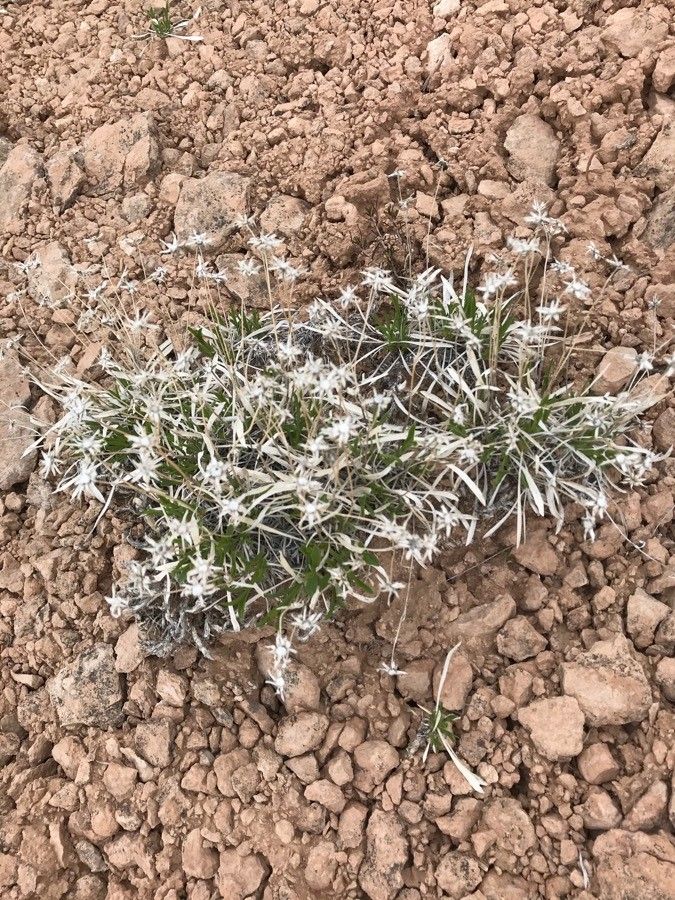
Amsonia ciliata, the fringed bluestar, is a North American species of flowering plant in the dogbane family, first described in 1788.
Fringed Bluestar has good resistance to disease and generally is not prone to illnesses. However, it can be affected by pests and diseases present in its surroundings. These infections are usually minor. For care, this plant requires a moderate level of maintenance. It should be pruned regularly to maintain a neat appearance and healthy growth. Fertilizing can also help encourage flowering. Fringed Bluestar is suitable for anyone with an outdoor area, such as a garden or patio, and does not need extensive gardening experience. It may demand more attention when grown indoors.
How to keep Amsonia Ciliata.
Light
Fringed Bluestar flourishes in full, unobstructed sunlight but can tolerate situations where it receives sunlight only intermittently during the day. As in its native, largely sun-drenched habitats, fringed Bluestar endures and grows best when ample sunlight is available. However, if light is excessively limited or too intense, it may suffer stunted growth or reduced vigor.
Water
The Fringed Bluestar flourishes in moderately moist environments and needs to be watered weekly. Native to areas with regular rainfall, it is well-suited to consistent hydration. Being an outdoor plant suited for temperate climates, the Fringed Bluestar goes dormant during colder months, at which point its water requirements decrease significantly.
Temperature
Fringed Bluestar is native to areas where temperatures range from 68 to 95 °F (20 to 35 ℃). Fond of warmth, Fringed Bluestar thrives in high-temperature climates. To promote optimal growth, adjust temperatures seasonally to replicate its native environment.
Fertilizer
The best time to fertilize a Fringed Bluestar is in early spring, as it comes out of dormancy and starts active growth. Fertilization supplies essential nutrients needed for healthy development. Although Fringed Bluestar has relatively low fertilizer requirements, applying fertilizer annually can improve its survival and encourage better, longer-lasting blooms.
Pruning
To encourage bushier growth and remove damaged wood, prune the Fringed Bluestar after it blooms in late spring. Light pruning in early spring can also improve the plant's health, resulting in denser foliage and more abundant flowers. These practices ensure vibrant displays throughout the growing season.
Botanical profile.
- Plant Type
- Herb
- Life Cycle
- Perennial, Annual
- Genus
- Amsonia
- Family
- Apocynaceae
- Hardiness Zone
- 5-9
- Mature Height
- 61 cm to 91 cm
- Mature Spread
- 61 cm to 91 cm
- Leaf Color
- Green, Yellow
- Leaf Type
- Deciduous
- Flower Color
- Blue, White
- Flower Size
- 2.54 cm
- Bloom Time
- Mid spring, Late spring
- Planting Time
- Spring, Autumn
- Harvest Time
- Summer
Other names.
Reader questions.
How should I water my Fringed Bluestar plant?
To properly water the Fringed Bluestar, it is best to use filtered water at room temperature. Tap water may contain harmful particles. The Fringed Bluestar is accustomed to a warm environment, so avoid using cold water as it can be a shock. Additionally, overhead watering should be avoided to prevent foliage problems. Instead, thoroughly soak the soil with filtered room temperature water. This helps the roots absorb nutrients and expand throughout the soil.
Why should I put fertilizer on my Fringed Bluestar plant?
Fertilization benefits the Fringed Bluestar and other plants in various ways. It provides essential nutrients for overall growth, both above and below the ground. Although a Fringed Bluestar can sometimes survive without fertilization, its overall fertilization needs are relatively low. However, annual fertilization is highly advantageous, as it promotes plant survival and encourages the production of better, longer-lasting flowers. Therefore, those seeking to enhance the appearance of their Fringed Bluestar should prioritize annual fertilization.
What are the sunlight requirements for Fringed Bluestar?
Fringed Bluestar thrives best in full sun, requiring above 6 hours of sunlight daily, but it can also grow in partial sun, with about 3-6 hours of sunlight. It's essential to watch how sunlight moves through your garden to ensure your plants get the right balance of light and shade. Fringed Bluestar, originating from sun-drenched landscapes, performs optimally in ample sunlight. However, it can endure intermittent sunlight throughout the day. Insufficient or excessive light exposure may hinder growth or reduce vitality.
What is the ideal temperature range for the growth of Fringed Bluestar?
Fringed Bluestar thrives in regions with temperatures ranging from 68 to 95 °F (20 to 35 °C), loving warm climates for optimal growth. It is native to areas within this temperature range and adjusts well to similar seasonal temperatures in cultivation. Despite its strong cold resistance, it requires specific care when temperatures are expected to drop below its cold tolerance threshold during winter.
What should I do if I give my Fringed Bluestar plant too much water or too little water?
Overwatering and underwatering can both harm your Fringed Bluestar plant, but overwatering is more common. When this plant gets too much water, its stems and leaves may wilt and turn yellow. Overwatering for a long time can also cause diseases like root rot, mold, and mildew, which can kill the plant. Underwatering is less likely for the Fringed Bluestar because it can tolerate dry conditions. However, it can still happen, and when it does, the leaves become brittle and brown. It's important to notice the signs of overwatering early. Some diseases caused by overwatering, like root rot, may not be fixable if you wait too long. If you see early signs of overwatering, reduce watering immediately. You should also check the soil drainage. If it's poor, replace it with well-draining potting mix. If you notice signs of underwatering, simply water more regularly until the signs go away.
When should I fertilize my Fringed Bluestar plant?
The best time to fertilize a Fringed Bluestar is in the late winter to early spring when it is coming out of dormancy and entering a phase of active growth. Fertilizing during this time will promote healthy growth and give the plant a great start for the season. While early spring is generally the most advantageous time to fertilize, it is also acceptable to fertilize in the fall. However, it is not recommended to fertilize during the summer or winter seasons.
How can artificial lighting support indoor Fringed Bluestar plants?
Indoor Fringed Bluestar plants benefit from artificial lighting, especially when natural sunlight is scarce, such as in winter or less sunny spaces. For optimal growth, consider the following: Choose LED lights for their ability to provide specific wavelengths needed by plants. Full sun plants require 30-50W/sq ft, partial sun plants need 20-30W/sq ft, and full shade plants need 10-20W/sq ft of artificial light. Positioning the light source 12-36 inches above the plant mimics natural sunlight. Most plants, including Fringed Bluestar, need 8-12 hours of light per day.
How should I protect Fringed Bluestar during cold winter months?
Special frost protection measures are generally not required for Fringed Bluestar due to its strong cold resistance. However, if temperatures are expected to drop below its growth limit, protecting the plant is important. You can cover the plant with soil or straw to insulate it against the cold. Additionally, watering the plant abundantly before the first freeze in autumn helps keep the soil moist and prevents drought and water scarcity during winter and early spring.
How often do I need to water my Fringed Bluestar plant?
To determine if your Fringed Bluestar plant needs water, there are different methods depending on whether it is in a pot or in the ground. For potted plants, the most precise way is to stick your finger into the soil and if the first two to three inches are dry, it's time to water. If it is grown in the ground, you can use the same method and water when the top few inches of soil are dry. Typically, during spring and early fall, watering once a week is sufficient, but in very hot weather, it may need to be increased to twice or more per week. However, mature and well-established Fringed Bluestar plants have a good ability to endure drought.
When is the best time to not fertilize my Fringed Bluestar?
To properly fertilize your Fringed Bluestar, it's important to know when and when not to fertilize. The best time to fertilize is during late winter and early spring. This plant has low fertilization needs, so a single annual feeding will be sufficient. Avoid fertilizing during spring, summer, and fall as excessive fertilization can cause problems. The only exception is if you missed fertilizing in spring, you can then fertilize in fall. Additionally, there is no need to fertilize during winter as the plant is in a dormant phase and won't be producing new growth.
What are the signs of light deficiency in Fringed Bluestar?
Symptoms of light deficiency in Fringed Bluestar include smaller new leaves, leggy or sparse growth, faster leaf drop, slower or no new growth, and lighter-colored new leaves. These signs indicate the plant isn't receiving adequate sunlight, leading to a reduction in chlorophyll and essential nutrients. Additionally, excessive sunlight exposure can cause chlorosis, sunscald, leaf curling, wilting, and leaf scorching, negatively affecting the plant's health.
What are the signs of Fringed Bluestar being affected by low temperatures?
Fringed Bluestar exhibits remarkable cold tolerance but thrives best when temperatures remain above its minimum suitable growth temperature. If the temperature falls below its growth limit, the plant might not show noticeable changes during winter, yet there could be a decrease in sprouting or complete lack of sprouting come springtime. This highlights the importance of monitoring and adjusting care according to winter temperatures to ensure spring growth.