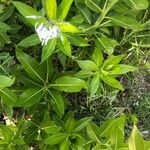
Amsonia orientalis
Blue star · European bluestar
Description
Source: leafsnapAmsonia orientalis, the European bluestar, is a species of flower in the dogbane family. It is found in European Turkey, and may be extirpated from Greece. Other historical populations appear to be lost. It is threatened by habitat loss, collection for ornamental use, and over-harvesting for research. It contains many glycosides and glycoalkaloids, and also has broad antimicrobial activity. Amsonia orientalis is the only European member of its genus. One other species (Amsonia elliptica (Thunb.) Roem. & Schult.) is found in East Asia, while all the others are native to North America.
Care Guide
💧 Water
Blue Star plants thrive in temperate regions that offer moderate moisture and good drainage. They do best with weekly watering to maintain their vitality, though they can tolerate short dry spells. Typically grown outdoors, Blue Star plants adjust their water absorption during the growing season to optimize flowering.
☀️ Light Full sun
Blue Star is a sun-loving, perennial herbaceous plant native to open habitats, commonly found in meadows and grasslands. It prefers full sun but can also tolerate partial sun.
What are the sunlight requirements for Blue Star plants?
Blue Star plants require full sun, meaning they need more than 6 hours of sunlight a day, but they can also thrive in partial sun conditions, which is about 3-6 hours of sunlight. It's essential to monitor the movement of sunlight through your garden to find spots that offer a healthy balance of light and shade to ensure the well-being of your plants.
What is Blue Star, and how does it grow best?
Blue Star, scientifically known as Amsonia orientalis, is a sun-loving perennial herbaceous plant that naturally grows in open habitats like meadows and grasslands. It flourishes in full sunlight but can also tolerate partial sun. This indicates it is versatile and can adapt to varying levels of sunlight, making it a suitable choice for sunny to partially shady garden spots.
How can artificial lighting support the growth of indoor Blue Star plants?
Artificial lighting is crucial for indoor Blue Star plants, especially when natural sunlight is not sufficient. LED lights are recommended because they can be adjusted to provide specific light wavelengths necessary for plant growth. Full sun plants need 30-50W per square foot, partial sun plants 20-30W per square foot, and full shade plants 10-20W per square foot. The light source should be placed 12-36 inches above the plant, for 8-12 hours per day to simulate natural daylight conditions. This strategy promotes healthier and faster growth indoors.
What are the symptoms of light deficiency in Blue Star plants?
Symptoms of light deficiency in Blue Star plants include small leaves, leggy or sparse growth, faster leaf drop, and slower or halted growth. These issues arise when the plant doesn't receive enough light, leading to less energy for growth. Insufficient sunlight can also cause lighter-colored new leaves, chlorosis (yellowing leaves), and even physical damage such as sunscald, leaf curling, wilting, and leaf scorching, indicating the plant's struggle to adapt to the inadequate light conditions.
How can I improve the light conditions for my Blue Star plants?
Improving light conditions for Blue Star plants involves several strategies. Indoors, gradually move your plants to sunnier locations or use artificial lighting, like desk lamps or professional grow lights, for at least 8 hours daily. Outdoors, gently transition your plants to brighter areas to prevent sunburn. Reducing obstructions, such as pruning blocking trees or transplanting the plant to a sunnier spot, can significantly enhance light exposure. Remember, while parts of the plant damaged by poor light may not recover, new growth will be healthy once conditions improve.
🌡️ Temperature 5–35°C
Blue Star can tolerate a wide range of temperatures, but its distribution can still be constrained by different combinations of moisture and heat. It grows best in warm summer climates with sufficient rainfall or regular watering. Extended periods of cloudy, rainy weather or prolonged high temperatures raise the chance of Blue Star dying. In winter, protecting it from the cold can increase the plant's survival rate.
💨 Humidity
🪴 Soil 6-7
🌱 Fertilizer
The best time to fertilize a Blue Star is in early spring, when it is coming out of dormancy and beginning active growth. Fertilizing supplies essential nutrients needed for healthy growth. Although Blue Star has relatively low fertilizer requirements, applying fertilizer annually can improve its survival and encourage better, longer-lasting flowers.
🪴 Pot & Repot
✂️ Pruning
Blue Star is a plant known for its striking starry blue flowers and its resilience, requiring only minimal pruning. For the best results, prune optimally from early to late spring, after the plant has finished flowering. Focus on removing dead stems and encouraging healthy buds. This practice enhances flowering, improves air circulation, and prevents leggy growth, resulting in a vibrant plant.
🌿 Propagating
🐛 Diseases & pets
☠️ Toxicity
Characteristics
- Plant Type
- Herb
- Life Cycle
- Perennial
- Genus
- Amsonia
- Family
- Apocynaceae
- Hardiness Zone
- 5-9
- Mature Height
- 49 cm
- Mature Spread
- 49 cm
- Leaf Color
- Green
- Leaf Type
- Deciduous
- Flower Color
- Purple, Blue
- Flower Size
- 1.02 cm to 2.03 cm
- Bloom Time
- Mid spring, Late spring
- Planting Time
- Spring, Summer
- Harvest Time
- Early summer, Mid summer
- Native Area
- Turkey, Greece