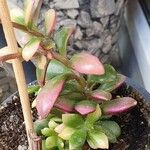
Anacampseros telephiastrum
Sunrise · Sunrise Rose · Sunrise Rubber Rose
Description
Source: leafsnapAnacampseros telephiastrum is a species of succulent plant native to the southern Karoo region of the Western Cape and Eastern Cape Provinces of South Africa, from Robertson in the west, to Somerset East in the east.
Care Guide
💧 Water
The large-flowered sandrose, native to arid regions, is highly drought-tolerant and thrives with very little moisture. It needs watering only every three weeks and benefits from being planted in a well-draining cactus mix to prevent root rot. This makes it an ideal low-maintenance indoor plant.
What should I do if I give my Large-flowered sandrose too much water or too little water?
Large-flowered sandrose and other succulents are typically resilient to long periods without water. However, if you forget to water your Large-flowered sandrose for a month or more, you may notice it looking thirsty or damaged. Signs of underwatering include a lackluster and wrinkled appearance, dried up or brown and crispy leaves, and completely dried out soil. To address underwatering, thoroughly water the plant by submerging the pot in water for 5-10 minutes until you feel moisture on the soil's surface. Overwatering is dangerous and can be fatal to Large-flowered sandrose. Excessive moisture leads to root rot, which hampers nutrient and water absorption by the roots. This occurs when wet conditions allow fungi and bacteria to thrive in the soil and attack the roots. Symptoms of overwatering include yellow, swollen, and translucent organs that may burst open, followed by browning or blackening, and easy leaf loss. To mitigate overwatering, adjust the plant's growing conditions for better air ventilation and water less frequently. Saving an overwatered plant can be difficult but not impossible. Early detection is key to preventing extensive damage. Start by removing the plant from its pot, gently removing wet soil from the roots, and rinsing them in room-temperature water to remove fungus and assess root health. If the roots show signs of dark brown or black, soft, mushy, or slimy rot, it may be difficult to save the plant. In such cases, it is best to propagate new Large-flowered sandrose from healthy stems. However, if only a portion of the roots are affected, remove any unhealthy roots with sterilized cutting tools, dip the remaining healthy roots in fungicide, and repot the plant in fresh, well-draining soil. While not always successful, this approach gives the plant a chance to recover and generate new growth in the following growing season.
How frequently should I water my Large-flowered sandrose?
Determining when to water Large-flowered sandrose depends on the dryness of the soil. To check, either insert your finger into the pot or use a moisture meter to assess the soil below the surface. When using a deep pot, a stick or chopstick can serve the same purpose. If the soil feels slightly moist, it is best to wait a few days and check again. In general, watering Large-flowered sandrose every two weeks during summer and once a month in winter is recommended, but various factors can influence the frequency. The following section outlines these considerations to help you determine the appropriate watering schedule.
What do I need to think about when watering my Large-flowered sandrose?
To determine how to properly water your Large-flowered sandrose, there are a few key environmental factors to consider, such as the size of the container, the type of soil used, the temperature, and the humidity. The container and soil will dictate how frequently and how much water should be used. It is essential to use a container with adequate drainage holes to allow excess water to escape. Smaller containers have less soil capacity and will hold less moisture, while larger pots will retain water for longer periods and require less frequent watering. Be cautious not to place your sandrose in an oversized pot, as this can result in overwatering. During repotting, it is best to move to a container only slightly larger than the current one, and a shallow container is preferable since sandrose has shallow root systems. Watering requirements will vary based on the season. In winter, sandrose growth slows down, and energy and water consumption decrease significantly. Cooler winter air reduces evaporation, resulting in the soil staying wet for longer durations than in the summer. Additionally, the general climate of your location plays a role in watering frequency. If you reside in a humid area with abundant rainfall, you will need to water less frequently compared to a dry, arid climate. Keep in mind that even within the same geographic location, conditions can fluctuate with the seasons and the use of indoor heating or air conditioning. For outdoor planting, once the Large-flowered sandrose establishes a root system in the ground, it generally does not require additional watering beyond what it receives from precipitation and dew. However, during extended dry periods, occasional watering may be necessary. In areas where sandrose can only be grown in a container, it can be moved outdoors during the spring and summer, as long as the temperature is suitable, and brought back indoors when temperatures begin to drop. Potted sandrose kept outside typically needs more water than the same plant kept indoors due to increased sun exposure, even if it is on a shaded porch.
How do you water Large-flowered sandrose?
To effectively water Large-flowered sandrose, start by thoroughly soaking it and allowing it to fully dry out before watering again. This plant can tolerate periods of drought, so it's okay if it becomes quite dry before watering. It's better to err on the side of giving too little water rather than too much. When watering, make sure to thoroughly soak the soil throughout the entire pot. Avoid pouring water in just one spot - instead, try to cover the entire rim of the planter to ensure all sides of the plant get wet. The amount of water needed depends on the size of the container and how much the soil absorbs. Once the drainage holes start to release water, let it drain into the saucer for about 20-30 minutes to allow dry pockets of soil to absorb the water. After that, remove any excess water in the saucer to prevent waterlogging. Bottom-watering is also an effective method for Large-flowered sandrose, as it ensures the soil is thoroughly soaked. This involves placing the pot in a saucer of water and letting the soil absorb moisture through the drainage holes. You'll know the soil has absorbed enough water when the top layer feels moist. Although bottom-watering takes more time than top-watering, it guarantees an even distribution of water throughout the pot. In its natural habitat, Large-flowered sandrose experiences a relatively dry climate with minimal rain. When it does rain, the soil becomes thoroughly moist. To mimic this, bottom-water your plant when the soil is completely dry. It's also better to water deeply rather than frequently with light watering for Large-flowered sandrose.
☀️ Light Full sun
The large-flowered sandrose benefits from a full day of light, which encourages optimal development. Its origins in sun-soaked areas suggest it will thrive under similar conditions. Although it needs plenty of sun, it still does reasonably well with less light. Too much shade can stunt its growth, while excessive sun exposure may scorch it.
What are the sunlight requirements for the Large-flowered Sandrose?
The Large-flowered Sandrose requires 'full sun,' defined as above 6 hours of sunlight per day, to thrive. However, it can also manage in 'partial sun' conditions, which means about 3-6 hours of sunlight. The plant appreciates a day-long soak of light for optimal development, thanks to its origins near sun-soaked terrain. While it can grow in lesser light, too much shade might stunt its growth, and excessive sun exposure could lead to scorching. Observing how sunlight moves through your garden will help in choosing spots that offer a perfect balance of light and shade, ensuring the plant's happiness.
How can artificial lighting be used for the Large-flowered Sandrose?
Indoor plants like the Large-flowered Sandrose require adequate lighting for optimal growth, especially when natural sunlight is insufficient, such as in winter or less sunny spaces. Artificial lights provide a vital solution, promoting faster, healthier growth. LED lights are a popular choice because they can be customized to provide specific wavelengths of light needed by plants. Full sun plants need 30-50W/sq ft, partial sun plants 20-30W/sq ft, and full shade plants 10-20W/sq ft of artificial light. The light source should be placed 12-36 inches above the plant to mimic natural sunlight, and most plants need 8-12 hours of light per day.
What are the signs of insufficient or excessive light in the Large-flowered Sandrose?
The Large-flowered Sandrose shows several symptoms when the light is insufficient: new leaves may grow smaller, the plant may become leggy or show sparse growth, experience faster leaf drop, slower or no new growth, and lighter-colored or yellow leaves indicating chlorosis. Excessive sunlight can cause sunscald, leaf curling, wilting, and leaf scorching. These symptoms reflect the plant's struggle with the environment, signaling the need to adjust its exposure to light.
What solutions are available for addressing the Large-flowered Sandrose's light needs?
To ensure optimal light for the Large-flowered Sandrose, gradually move the plant to a sunnier location, aiming for at least 6 hours of direct sunlight if indoors, utilizing south-facing windows and keeping curtains open during the day. Artificial light, such as desk, ceiling lamps, or professional grow lights, can supplement natural light for at least 8 hours daily. Outdoor plants should be moved to sunnier spots gradually to prevent sunburn, and parts of plants affected by insufficient light may not recover, though new growth should be healthy. Minimizing obstructions like pruning trees or transplanting to sunnier locations with good drainage helps outdoor and ground-planted Sandroses receive adequate sunlight.
🌡️ Temperature 20–37.8°C
Although Large-flowered sandrose tolerates some heat, it mainly prospers and grows in cooler seasons and becomes dormant in summer. In hot summer temperatures, provide shade to avoid scorching from intense sunlight. Watering should be reduced or stopped during the hottest part of the year to prevent root rot. Winter and spring are when Large-flowered sandrose shows vigorous growth. As long as the temperature does not fall too low, it will continue to grow steadily.
What are the ideal growing conditions for Large-flowered sandrose?
Large-flowered sandrose, scientifically known as Anacampseros telephiastrum, prefers warm environments to thrive. It needs higher temperatures, particularly during its growing season, to promote its growth and metabolism. The plant enjoys abundant sunlight, appropriate moisture levels, and good ventilation. Care should be taken to avoid exposing the plant to excessively low temperatures and overwatering. Additionally, it's crucial to prevent excessively high temperatures and overly dry conditions. During winter, the plant enters a dormant state and should be moved indoors if temperatures are expected to drop below 0°C. It is best placed near a south-facing window to ensure it receives as much sunlight as possible, with the option to use supplemental lighting if natural light is insufficient. Watering should be reduced or stopped when temperatures fall below 20°C to prevent root rot, especially for plants grown outdoors.
How do I care for a Large-flowered sandrose impacted by low temperatures?
The Large-flowered sandrose prefers high temperatures and struggles with low temperature conditions. If temperatures fall below 20°C, the plant’s growth slows, and it becomes crucial to protect it from freezing conditions. Should the temperature drop below -5°C, the plant may show weakness, wilt, and become prone to root rot. After mild frost damage, symptoms such as gradual withering may appear after about a week. In such cases, it’s advisable to trim off frostbitten areas and check for root rot. If root rot is detected, affected roots should be removed, and the plant can be propagated through cuttings. To aid recovery, the plant should be moved to a warmer indoor location near a south-facing window for ample sunlight, or use supplemental lighting if necessary.
What should I do if my Large-flowered sandrose experiences high temperatures?
During the summer, the Large-flowered sandrose should be kept in conditions below 38°C to avoid heat stress. Exposure to temperatures above 43°C can halt its growth, lead to water loss, wilting, and increase the risk of sunburn. To manage these issues, you should first remove any sunburned and rotten parts of the plant. Then, protect the plant from the harsh afternoon sunlight until it shows signs of recovery and resumes growth. If the plant has suffered from root rot due to overwatering or excessive heat, cease watering until new roots start to form, indicating recovery.
💨 Humidity
🪴 Soil 6-7
🌱 Fertilizer
For the large-flowered sandrose, light applications of fertilizer once or twice a year during the growing season are enough. Do not fertilize in winter or in summer when the plant is dormant. Cut back on fertilizer for plants that have been repotted and wait a couple of months after repotting before applying feed. Fertilizing promotes healthy growth and encourages flowering.
Why should I put fertilizer on my Large-flowered sandrose?
Fertilizing Large-flowered sandrose is important for adding nutrients to the soil. Although it does store water and nutrients, applying plant food during the growing season is necessary for supporting healthy growth. Additionally, fertilizing can also encourage mature specimens to produce blooms in the growing season.
When should I put fertilizer on my Large-flowered sandrose for the best results?
Large-flowered sandrose plants require a small amount of fertilizer during their growing season. It is recommended to fertilize them 1-2 times a year, specifically in the spring and autumn. However, avoid fertilizing in the dormant seasons of winter and summer. If you have recently repotted your sandrose plant, decrease the amount of fertilizer used and wait a few months before applying any fertilizer.
When should I not put fertilizer on my Large-flowered sandrose?
The Large-flowered sandrose, like other plants, goes through a dormancy period when it stops growing. During this time in both summer and winter, it's best to avoid using fertilizer. It's also recommended to wait a few months after repotting in the spring before resuming fertilization.
What kind of fertilizer does my Large-flowered sandrose plant need?
To properly fertilize Large-flowered sandrose, it is recommended to use a liquid plant food specifically made for succulents and cacti. It's important to dilute the fertilizer with water to half-strength in order to avoid excessive buildup in the soil. Apply the diluted fertilizer to the base of the plant and water it thoroughly, ensuring any extra moisture drains out of the container or is absorbed into the ground.
How can I make my Large-flowered sandrose grow better?
When fertilizing Large-flowered sandrose, it's easier to use liquid plant food, although you can also use granules. Just follow the instructions on the packaging and remember to dilute liquid fertilizers to half-strength. Whether you choose granules or liquid plant food, make sure to apply it to the soil. Cover the granules with a thin layer of soil and water the plant, regardless of the type of plant food you are using.
🪴 Pot & Repot Every 2 years
Repot the large-flowered sandrose every two years in the spring. Use a slightly larger, well-draining pot to prevent root rot. After repotting, place the plant in bright, indirect sunlight. Water it sparingly, only when the soil feels dry to the touch, to maintain optimal health.
✂️ Pruning
Offsets are propagated by sunrise. You may need to wait a few years for the mother plant to generate an offset before you may propagate from it. Take an offset from the main plant using a sharp knife to begin this process. Clean the offset of any leftover soil after removing it.
🌿 Propagating
🐛 Diseases & pets
☠️ Toxicity
Although there isn't much information on the toxicity of these plants, they are typically regarded as being safe near people and animals. When in doubt, exercise caution. If you think you may have been poisoned, call your local poison control center, your veterinarian, or the ASPCA Animal Poison Control Center right once.
Characteristics
- Plant Type
- Succulent
- Life Cycle
- Perennial
- Genus
- Anacampseros
- Family
- Anacampserotaceae
- Hardiness Zone
- 9-11
- Mature Height
- 15 cm
- Mature Spread
- 10 cm to 20 cm
- Leaf Color
- Green, Dark Green
- Leaf Type
- Semi-evergreen
- Flower Color
- Pink, White
- Flower Size
- 3.56 cm
- Bloom Time
- Summer, Early fall
- Planting Time
- Spring, Summer, Autumn
- Harvest Time
- Late summer, Fall
- Native Area
- South Africa