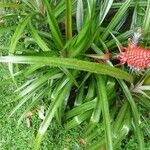
Ananas bracteatus
Wild pineapple · Red pineapple
Description
Source: leafsnapThe pineapple (Ananas comosus) is a tropical plant with an edible fruit; it is the most economically significant plant in the family Bromeliaceae. The pineapple is indigenous to South America, where it has been cultivated for many centuries. The introduction of the pineapple to Europe in the 17th century made it a significant cultural icon of luxury. Since the 1820s, pineapple has been commercially grown in greenhouses and many tropical plantations. Pineapples grow as a small shrub; the individual flowers of the unpollinated plant fuse to form a multiple fruit. The plant is normally propagated from the offset produced at the top of the fruit, or from a side shoot, and typically mature within a year.
Care Guide
💧 Water Every 7 days
☀️ Light Partial sun
Red pineapple prefers habitats filled with sunlight, though it can also survive in areas with less light, despite this impacting its growth. Its origin from sun-rich environments means that the growth phases of red pineapple might be slower without sufficient sun, while too much sunlight could potentially lead to stress and inhibit its development.
🌡️ Temperature 20–37.8°C
The red pineapple thrives in its natural habitat, where the weather typically varies from 68 to 100°F (20 to 38 ℃). This is the temperature spectrum that the plant largely favors. Depending on the season, appropriate modifications can be implemented to mimic these circumstances whenever feasible.
💨 Humidity normal (40-60%)
This plant will thrive in moderate humidity, which is probably the level in your home. However, misting it a few times a week can be very beneficial. Make sure the room has good ventilation.
🪴 Soil 5-6
🌱 Fertilizer
Opt for natural fertilizers like fish emulsion or compost instead of artificial fertilizers for Red pineapple. Ensure young plants receive an ample amount of nitrogen and phosphorus during the spring. Introduce compost or fertilizer either before or following planting. For established plants, add either a balanced or deficiency-specific fertilizer in the spring. Lack of nutrients may result in compact leaves, underdeveloped branches, leaves with a yellow or bronze hue, sour fruits, early dropping of fruits, and cracking.
🪴 Pot & Repot
✂️ Pruning
🌿 Propagating
🐛 Diseases & pets
☠️ Toxicity
Characteristics
- Plant Type
- Herb
- Life Cycle
- Perennial
- Genus
- Ananas
- Family
- Bromeliaceae
- Hardiness Zone
- 9-11
- Mature Height
- 0.91 m to 2.13 m
- Mature Spread
- 0.91 m to 1.22 m
- Leaf Color
- Green
- Leaf Type
- Evergreen
- Flower Color
- Red
- Flower Size
- 2.03 cm to 3.05 cm
- Bloom Time
- Summer, Early fall
- Planting Time
- Spring, Summer, Autumn
- Harvest Time
- Late summer, Fall