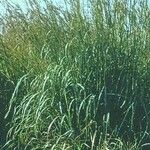
Andropogon gerardii
Big bluestem · Blue-stem-grass · Turkeyfoot · Bluejoint · Tall bluestem
Description
Source: leafsnapAndropogon gerardii, commonly known as big bluestem, is a tall grass species native to North America. This warm-season grass can grow up to 8 feet tall and features blue-green leaves that turn reddish-brown in the fall. With its deep root system, big bluestem is drought-tolerant and capable of withstanding wildfires. As a key component of the prairie ecosystem, big bluestem provides food and habitat for many species of wildlife, including birds, insects, and mammals. Historically, Native Americans also used it for medicinal purposes. Today, big bluestem is widely used in prairie restoration projects and valued in landscaping for its ornamental qualities. It thrives in full sun and can adapt to a wide range of soil types. Overall, Andropogon gerardii plays a crucial role in maintaining the biodiversity of North American grasslands while also adding aesthetic value to gardens and landscapes.
🌳 Big Bluestem is more than a tall feature of the prairies; it is also an important contributor to renewable energy. Researchers are examining its use as a biomass source for producing biofuels, which could reduce dependence on fossil fuels and help lessen the impacts of climate change. This application relies on its vigorous growth and high cellulose content, offering a sustainable and environmentally friendly fuel alternative.
Care Guide
💧 Water Every 7 days
Big Bluestem thrives in tallgrass prairies due to its excellent drought tolerance and moderate moisture requirements. For optimal health, water big bluestem twice a week, allowing the soil to dry slightly between waterings. Its deep root system efficiently accesses water, which minimizes the need for irrigation during the growing season.
☀️ Light Full sun
Big Bluestem flourishes when it's continuously exposed to the sun, promoting strong development. It typically grows in areas where there is an abundance of sunlight in its native habitat, but it can also tolerate spaces with scattered light. Nevertheless, excessive shade can result in poor growth and diminished vitality.
What are the sunlight requirements for Big Bluestem?
Big Bluestem thrives when exposed to constant sunlight, which fosters its robust growth. Ideally, it requires full sun, meaning above 6 hours of direct sunlight daily, but it can also tolerate partial sun, or about 3-6 hours of sunlight. However, it's important to note that too much shade can lead to sparse growth and reduced vigor of the plant. Observing how sunlight moves through your garden will help you choose the perfect spots that provide a balance of light and shade, ensuring the happiness and health of your Big Bluestem.
How can indoor Big Bluestem plants receive adequate lighting?
For indoor Big Bluestem plants, when natural sunlight is insufficient, particularly in less sunny spaces or during winter, artificial lights offer a vital solution. LED lights are recommended due to their ability to be customized to provide specific wavelengths needed for optimal growth. Full sun plants should receive 30-50W/sq ft of artificial light, partial sun plants need 20-30W/sq ft, and full shade plants require 10-20W/sq ft. The light source should be placed 12-36 inches above the plant, mimicking natural sunlight conditions, and plants typically need 8-12 hours of light per day to thrive.
What are the symptoms of inadequate lighting in Big Bluestem?
Symptoms of light deficiency in Big Bluestem include smaller new leaves compared to previous ones, leggy or sparse growth due to increased spacing between leaves or stems, faster leaf drop as the plant conserves resources, slower or halted growth as the plant enters survival mode, and lighter-colored new leaves indicating a lack of chlorophyll. Additional problems like chlorosis, sunscald, leaf curling, wilting, and leaf scorching can occur due to light issues, reflecting the plant's struggle with its current light exposure.
How can I address sunlight issues for my Big Bluestem plant?
To address sunlight issues for Big Bluestem, gradual relocation to sunnier spots can help, whether indoors or outdoors. For indoor plants, gradually move them to a location where they receive at least 6 hours of direct sunlight daily, utilize a south-facing window, or use artificial light such as desk, ceiling lamps, or professional grow lights for at least 8 hours a day. Outdoor plants should also be moved gradually to avoid shock and potential sunburn. In gardens, reducing obstructions by pruning or relocating the plant to sunnier locations with good drainage can significantly improve sunlight access. Remember that parts of the plant affected by prior inadequate light may not fully recover, but new growth should be healthy with improved light conditions.
🌡️ Temperature 0–35°C
Big Bluestem is indigenous to temperate areas, flourishing in temperature extents varying from 32 to 95 °F (0 to 35 ℃). Its development is most beneficial during milder seasons. Usually, there's no need for adjustments related to seasonal temperatures.
What are the ideal temperature conditions for Big Bluestem?
Big Bluestem thrives in temperate regions, with its growth being optimal in conditions ranging from 32 to 95°F (0 to 35°C). Although it has strong cold resistance and usually doesn't require special frost protection measures, attention should be given when winter temperatures are expected to fall below -35°C. In such cases, cold protection can be offered by covering the plant with soil or straw, and it's beneficial to water the plant abundantly before the first freeze to ensure the soil stays moist and enters a frozen state to prevent drought and water scarcity during the colder months.
How does Big Bluestem respond to low temperatures?
Big Bluestem is quite cold-tolerant and grows best with temperatures above 0°C. During winter, ensuring the temperature remains above -30°C is advisable. If temperatures drop below -35°C, there might not be immediate visible damage during winter, but a decrease in sprouting or even no sprouting can occur in the following spring. To manage potential non-sprouting in spring resulting from low winter temperatures, removing any parts of the plant that have failed to sprout is recommended.
What should be done if Big Bluestem experiences high temperatures?
In the summer months, Big Bluestem's temperature should ideally stay below 35°C. If it exceeds 38°C, the plant may show signs of stress, such as lighter colored leaves that are prone to curling, susceptibility to sunburn, and in severe cases, wilting and drying of the entire plant. To mitigate these issues, sunburned and dried-up parts should be trimmed away. Moving the plant to a shadier location or using a shade cloth to protect it from midday and afternoon sun can also be beneficial. Additionally, watering the plant during the cooler morning and evening hours helps keep the soil adequately moist.
💨 Humidity
🪴 Soil 6-7
🌱 Fertilizer
Typically, a one-time application of fertilizer in the spring is adequate for Big Bluestem, although the growth can be optimized with multiple feedings. It should be fed once per month to one and a half month intervals. Fertilization boosts the look and operation of the leaves, encouraging regular color and a healthy texture. It also promotes the growth of roots and the absorption of nutrients, which contributes to the ongoing health of the plant.
🪴 Pot & Repot
Big Bluestem needs excellent drainage in pots to thrive. Proper drainage prevents excess water from accumulating, which can cause root rot.
✂️ Pruning
Big Bluestem is characterized by its tall, bluish-green stems and grows well in a variety of soil types. To promote healthy growth and prevent overcrowding, it is best to prune the plant in early spring by cutting it back to 2-4 inches. This not only enhances its vigor but also improves its ornamental appeal.
🌿 Propagating
🐛 Diseases & pets
☠️ Toxicity
Big bluestem is also called “ice cream grass” as wildlife and livestock eat this plant. Every part of this plant can be eaten and for these animals, it tastes good. There is not enough proof that this plant is toxic to pets and humans but it is better to take precautions.
Characteristics
- Plant Type
- Herb
- Life Cycle
- Perennial
- Genus
- Andropogon
- Family
- Poaceae
- Hardiness Zone
- 3-9
- Mature Height
- 0.91 m to 3.66 m
- Mature Spread
- 61 cm
- Leaf Color
- Green, Blue, Purple
- Leaf Type
- Deciduous
- Flower Color
- Red, Purple, Brown
- Flower Size
- 2.54 cm
- Bloom Time
- Mid summer
- Planting Time
- Spring, Winter
- Harvest Time
- Mid summer, Late summer, Early fall