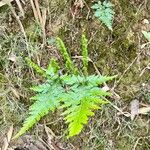
Anemia adiantifolia
Pine fern · Pineland fern
Care Guide
💧 Water
☀️ Light Full shade
Pineland fern is native to habitats such as forest understories or rocky areas that provide natural shade. It prefers Full Shade but can tolerate Partial Sun.
🌡️ Temperature 20–37.8°C
Pineland fern comes from tropical areas where the climate is usually warm and humid. Therefore it is adapted to high temperatures and humidity. It dislikes sudden temperature changes and prefers a steady thermal environment, so avoiding temperature swings indoors is important. It generally does not tolerate cold and needs warmer conditions to grow. If the ambient temperature falls too low, the plant may stop growing or even die.
💨 Humidity
🪴 Soil 6-7
🌱 Fertilizer
🪴 Pot & Repot
✂️ Pruning
The Pineland fern has delicate fronds and requires minimal pruning, which is best done in early spring. To encourage better growth and improved air circulation, remove any dead or damaged fronds. Be cautious not to over-prune, and make sure to sterilize your tools before use. For optimal health and lush foliage, cut the fronds at their base.
🌿 Propagating
🐛 Diseases & pets
☠️ Toxicity
Characteristics
- Plant Type
- Fern
- Life Cycle
- Perennial
- Genus
- Anemia
- Family
- Schizaeaceae
- Hardiness Zone
- 9-11
- Mature Height
- 30 cm to 91 cm
- Mature Spread
- 20 cm to 40 cm
- Leaf Color
- Light Green, Medium Sea Green
- Leaf Type
- Evergreen
- Planting Time
- Spring, Summer, Autumn
- Native Area
- Colombia, Bahamas, Belize, Cuba, Honduras, Mexico, Guatemala, Venezuela, Nicaragua, Ecuador, Costa Rica, Jamaica